Key facts
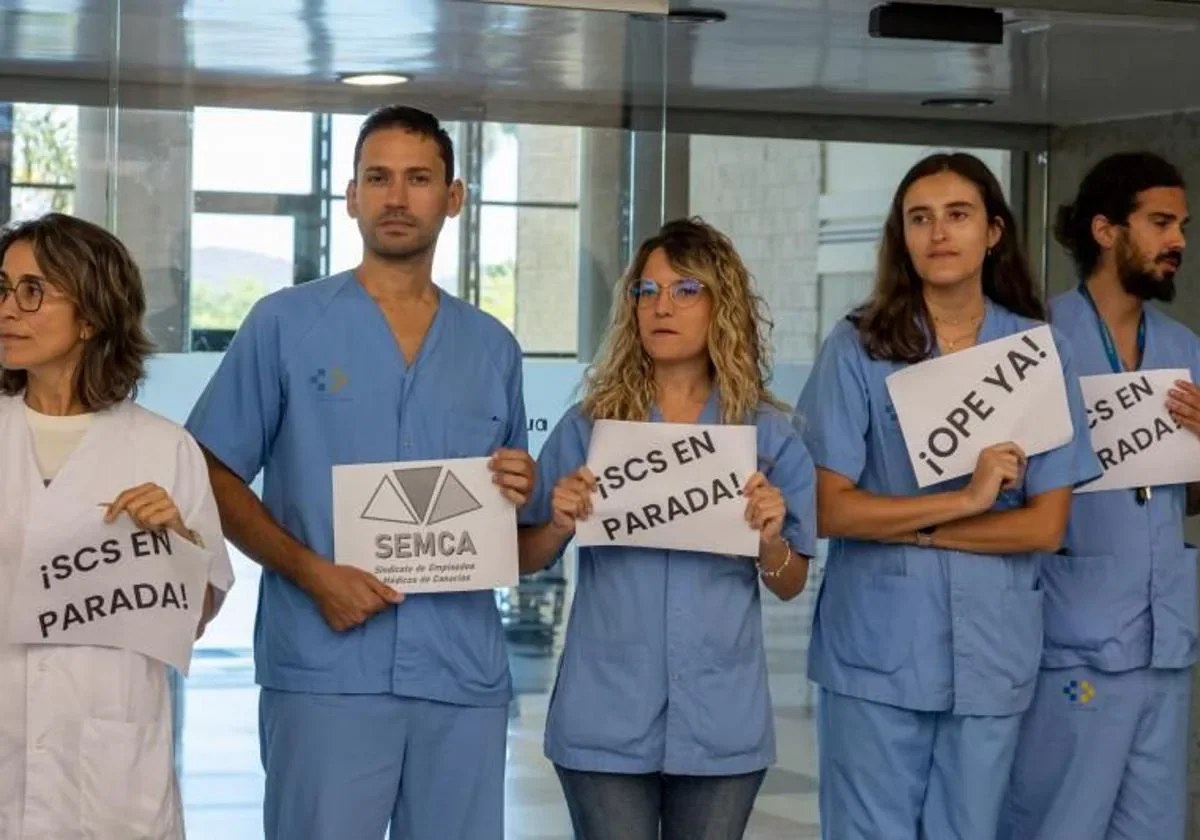
Today's strike day: Friday, 29 May 2026 — new regional protest action
Tally so far (as of 26 May): over 45,000 cancelled appointments, around 1,200 postponed operations
Economic impact: around €4 million per strike day
On strike: SEMCA and CESM unions, primary care and hospital doctors
Strike participation 25 May: officially 6.3% per SCS — unions claim higher figures
Threat: indefinite strike from September if no deal is reached
Sources: Canarias7, Diario de Avisos, RTVC, Libertad Digital Canarias
Anyone who falls ill in the Canary Islands on Friday and needs to use the public health service should expect longer waits. Tomorrow, Friday 29 May, brings another regional doctors' strike — the fourth strike week so far this year.
The figures released by the Servicio Canario de Salud (SCS) on Wednesday are blunt: over 45,000 outpatient appointments cancelled, around 1,200 operations postponed. Each strike day costs roughly €4 million — and cumulative costs run into the millions as the conflict drags on. A&E units stay open, the legal minimum service is guaranteed — but anything that can be put off is being put off.
Contents
What the doctors want
It isn't only about money. At the heart of the dispute is the demand for a separate professional statute («Estatuto Marco») that legally recognises the specific training and workload of doctors — apart from the general nursing and administrative staff of the health system. That demand is national, not just Canarian.
At regional level, three concrete points are on the table. First: implementation of agreements that the Canarian government signed with doctors' unions back in 2023 and that, according to the unions, are «completely stalled». Second: a revision of the pay for on-call shifts («guardias»), which the unions say are the worst-paid in Spain. Third: a reorganisation of workload — shorter on-call shifts, fewer patients per day, transparent transfer rules between posts.
The regional health authority points to the national ministry, saying the professional statute is not a Canarian competence. The unions disagree: the islands have enough devolved powers to meet at least the regional demands.
What the government is now offering
Today, the day before Friday's strike, SCS director Adasat Goya has announced that the regional government would put forward a package of measures «in the coming days». What is known so far: a cap on the length of on-call shifts, higher pay per on-call hour, and a reorganisation of patient quotas and clinic schedules.
Goya acknowledged that the economic damage of the strikes is at the same time narrowing the room for negotiation: «We're under pressure from the finance ministry to contain the growth of health spending.» Translation: more money for doctors would have to come from somewhere else — a politically delicate operation in a system already under strain.
Whether the package is enough will become clear next week. SEMCA has made clear that without concrete commitments it does not rule out an indefinite strike from September. Four weeks of partial strikes have already pushed the system to its limit — an indefinite strike would be a different scale of crisis.
What this means for you
Emergencies: A&E departments remain open. The legally guaranteed minimum service («servicios mínimos») covers life-threatening conditions, births and urgent interventions.
Planned appointments: Anyone with an appointment in the coming weeks should check with their health centre that it still stands. Many are being moved. The SCS app «miSCS» and the web portal show the current schedule.
Tourists: Anyone holidaying in the Canaries with EU coverage (EHIC/GHIC or Spanish SIP/TSI) gets the normal public service in an emergency. For non-urgent matters, longer waits or referral to private clinics may follow — which gets expensive without supplementary travel insurance.
Where possible: Routine check-ups that aren't urgent can be pushed back beyond the summer. Anyone on chronic medication should get repeat prescriptions sorted in good time.
The bigger picture
The Canarian conflict doesn't stand alone. Similar tensions exist across several Spanish regions. The structural problems — an ageing medical workforce, posts that are hard to fill especially on the smaller islands, high pressure in emergency rooms — won't be fixed overnight.
What the strikes are exposing: the Canarian public health system is still functioning, but under growing strain. Caritas Tenerife reported this week that over 12,000 people on the island live in chronic poverty — exactly the group hit hardest by delays in public care. Those who have private insurance or can switch are doing so. Those who can't wait longer.
Friday will be just one more strike day. By September, things could get more serious.
Frequently asked questions
- Am I affected as a tourist?
- In an emergency, no — A&E units stay open and EU citizens with EHIC/GHIC have access. For non-urgent issues, appointments may be moved or a private doctor may be needed. Check whether your travel insurance covers private care.
- What are «servicios mínimos»?
- The legally guaranteed minimum service during a strike: A&E, urgent surgery, births, life-threatening conditions. This care is protected.
- When is the next strike day?
- Tomorrow, Friday 29 May. More strike weeks are possible. Without a deal, SEMCA is threatening an indefinite strike from September.
- How can I check whether my appointment still stands?
- Through the «miSCS» app or the Servicio Canario de Salud web portal. If unsure: call your local health centre.
- Why are doctors striking in the first place?
- Main demands: a separate professional statute («Estatuto Marco»), enforcement of agreements signed with the Canarian government in 2023, better pay for on-call shifts (the worst-paid in Spain, according to the unions) and shorter on-call shifts.