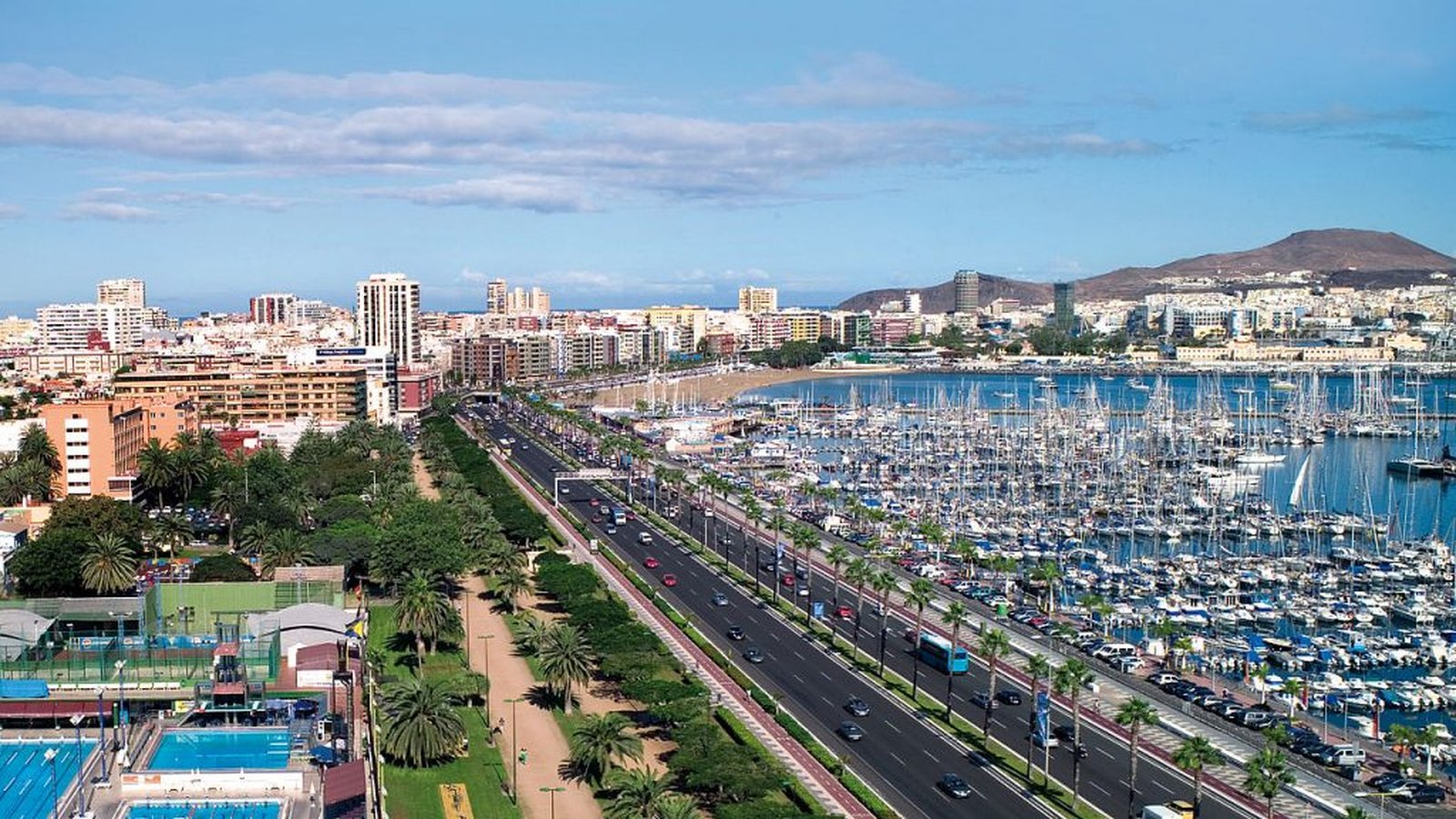
Housing prices Las Palmas — April 2026
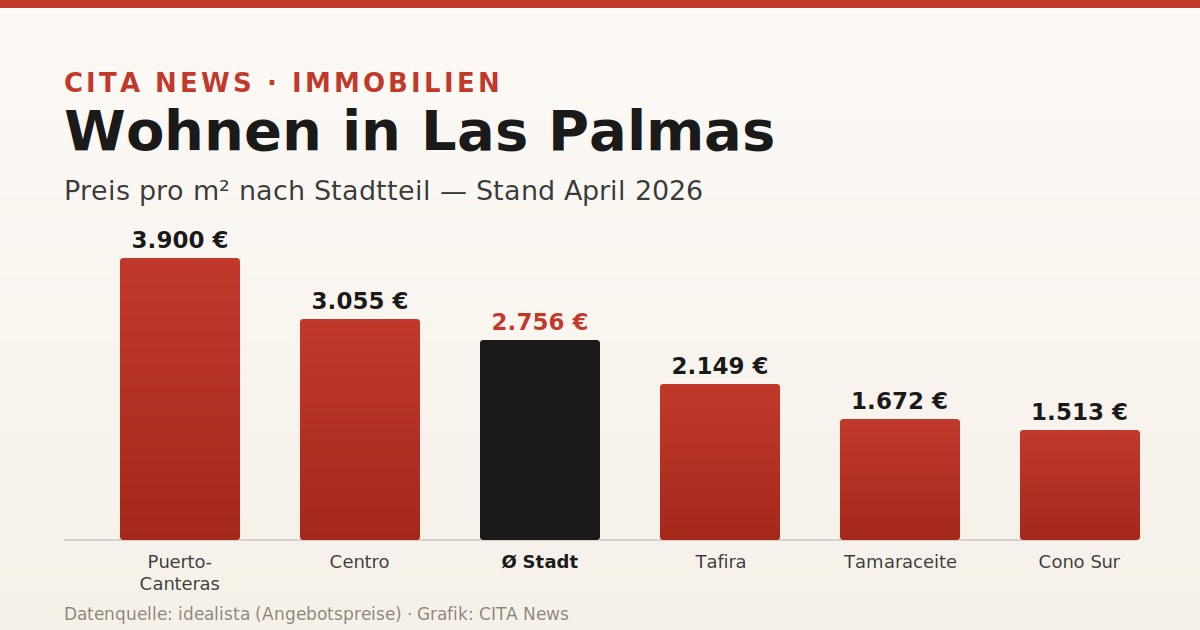
- Average: €2,756/m², an all-time high in the idealista series; +13% year on year
- In relation: just above the Spanish average (€2,748/m²)
- Priciest district: Puerto-Canteras, around €3,900/m²
- Cheapest: Cono Sur, €1,513/m²
- Context: the Canaries are one of Spain's lowest-income regions; the data is the idealista asking-price index, not notarised deeds
Anyone hunting for a flat in Las Palmas de Gran Canaria — a German early retiree, say, or a young Canarian family — has run into a figure this spring that gives pause: the square metre in the capital costs more than the Spanish average for the first time in April 2026, and this in a region where incomes sit far below the national mean. The gap between what housing costs and what people earn has rarely been this stark.
The figure: €2,756 per square metre, the highest since the portal idealista began tracking the city. That is 2.9 percent more than the previous month and 13 percent more than a year earlier. For comparison, the Spanish average that same month was €2,748. Las Palmas has overtaken it — narrowly.
Contents
Where it's expensive, and where (still) affordable
The average masks wide gaps between neighbourhoods. The priciest is Puerto-Canteras, near the city beach, at around €3,900 per square metre, followed by Centro at €3,055. At the other end sit Carretera del Centro in the Cono Sur at €1,513 and Tamaraceite-San Lorenzo at €1,672 — both well below the mean.
The momentum is striking: Ciudad Alta rose 19.4 percent year on year, Tafira 17.4 percent. The only large district in negative territory is, of all places, the historic Vegueta-Triana at −0.8 percent. Buy today, and you pay more above all where the bargains used to be — the cheaper areas are catching up fastest.
One of the poorest regions — and pricey housing all the same
The real fault line shows only against incomes. According to the statistics office INE, the Canaries are Spain's third-weakest region by income per head; it sits more than 20 percentage points below the national average, and the poverty risk reaches about a quarter of the population. Tourism is booming, with three record years running, yet the prosperity is not reaching residents — partly because the population is growing fast and dragging the per-head figure down (Canarias Ahora).
That is exactly where the problem lies for locals: in Madrid or Barcelona high square-metre prices are nothing new, but wages rise with them. In the Canaries they do not, at least not at the same pace. For many young families, buying — and increasingly even renting — in the capital is slipping out of reach.
Why experts urge caution
For buyers and investors, too, the situation carries risk. In its latest stability report, the Bank of Spain flagged an overvaluation of more than 20 percent in parts of the Canaries against the fundamentals of income and employment. The benchmark cited is the 2007 boom, when the square metre reached €2,450 in inflation-adjusted terms — and then crashed 45 percent. The level itself is not yet the alarm point, but the speed of the rise counsels restraint (merca2).
An important caveat: the €2,756 is a portal index of asking prices, not a notarised value — the actual purchase price may be lower. Anyone searching in Las Palmas should look at surrounding municipalities within a short commute, check regional rent subsidies (not yet defined for 2026), and not let a record headline rush them into a hasty purchase.