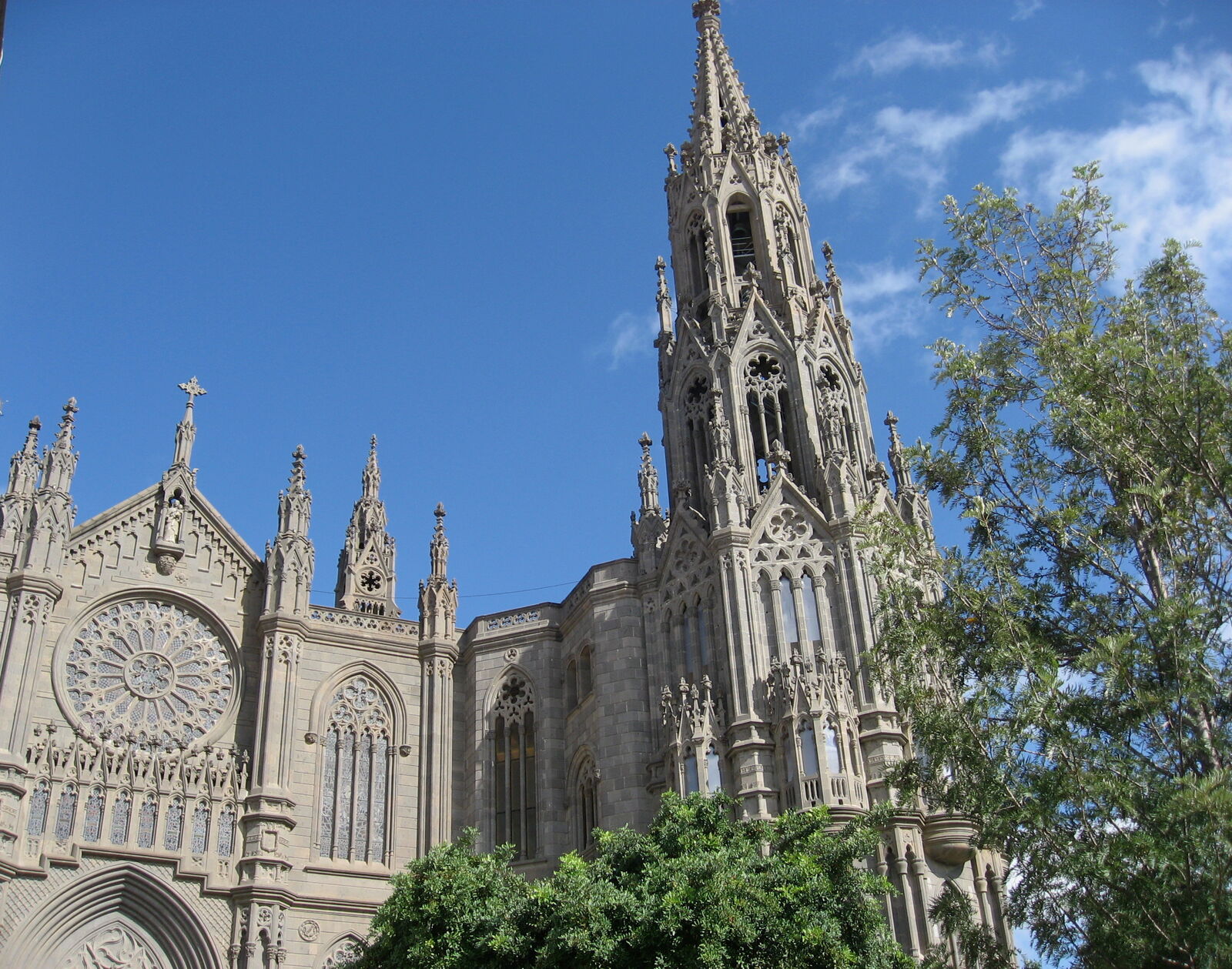
Walk down a narrow lane in Arucas on a quiet afternoon. The dark volcanic stone of the houses takes on a bluish tint in the slanting light, the faint sweetness of rum drifts over from the Arehucas distillery, and above the rooftops the neo-Gothic towers of San Juan Bautista church keep their thousand-year vigil. You find yourself wondering: why is this alley called what it's called? Who lived here? What happened at this corner a century ago? Until now, nobody had written down the answers. On 12 March 2026, that changed.
The Ayuntamiento de Arucas launched "Legado en piedra. Callejero del centro histórico de Arucas" — the first historical street guide this town has ever had. Written by historian and documentalist José Iván Rodríguez, published by the council, and funded by the Cabildo de Gran Canaria (Cabildo) through the "Arucas en Acción" programme.
36 Streets, Centuries of Stories
The book works through 36 streets in Arucas's protected historic centre — their names, their origins, and how they changed across the centuries. Each one is a small biography: a craftsman whose workshop defined a whole neighbourhood, a religious festival that gave a lane its name, a long-forgotten alderman, a local legend passed down through generations in the way that only small towns manage to preserve.
Those generations are the real source material. Rodríguez built his research on the foundations laid by Labrantes de la palabra, a collective that has spent 25 years recording the oral history of Arucas by sitting down with its oldest residents and listening. Stories that would otherwise have died with their tellers are now preserved — and now, through this book, finally mapped.
"Legado en piedra" — Key Facts
Full title: Legado en piedra. Callejero del centro histórico de Arucas
Author: José Iván Rodríguez, historian and documentalist
Published: 12 March 2026
Publisher: Ayuntamiento de Arucas
Funded by: Cabildo de Gran Canaria, "Arucas en Acción" project
Content: 36 streets of the historic centre — origins and centuries of development
Prologue: Ramón Díaz Hernández, Professor of Human Geography, ULPGC
Available: In Arucas schools and digitally at the municipal library
The Voices That Shape a Book
The prologue was written by Ramón Díaz Hernández, Professor of Human Geography at the Universidad de Las Palmas de Gran Canaria (ULPGC). It's a fitting choice: a town's street plan is a social map as much as a geographical one — it tells you where power sat, where the poor lived, where trades clustered, where the church cast its longest shadow. A geographer reads all of that in a street grid.
The book is available in Arucas's schools and can also be read digitally at the municipal library. It was designed to work as educational material — but it is equally an open invitation for any curious visitor to walk the old quarter with the book in hand.
"Merezco una calle" — Women Claim Their Place
Alongside the launch of the street guide, IES Santiago Santana, one of Arucas's secondary schools, presented a project worth pausing over: "Merezco una calle" — "I Deserve a Street." Students examined how many streets in the historic centre are named after women. The result will surprise no one familiar with public space anywhere in the world: almost none. The project names the imbalance and proposes women who deserve to be written into the town's geography — permanently, and in stone.
Together, the two initiatives show what local history can actually do: it explains how a place became what it is, and it opens up a conversation about what it could still become.
Arucas: More Than a Day Trip
Most visitors to Gran Canaria know Arucas, if they know it at all, as a pleasant half-day excursion from Las Palmas — bus line 210 from San Telmo station, about 40 minutes. The Church of San Juan Bautista, built between 1909 and 1977 from the distinctive blue local stone and often described as cathedral-like in its ambition, is the obvious landmark. The municipal park and the Plaza de la Constitución offer shade and air. The 17th-century Casa de la Cultura hosts exhibitions and events. The Arehucas rum distillery offers tours.
But the soul of Arucas lives in its lanes. In the way the houses are built, the way doors and windows face each other across an alley only three metres wide, the way a street bends unexpectedly because a monastery garden once stood there. That is what "Legado en piedra" unlocks — and it makes a second, third, fourth visit more than worthwhile. See the official Gran Canaria Tourism guide to Arucas (Gran Canaria) for practical visitor information.
A Legacy Worth Reading
The title — "Legacy in Stone" — is precise. Arucas has written itself into its buildings. The blue stone is not just a building material; it is an identity. And that identity now has a book to go with it.
José Iván Rodríguez has given something back that too many towns have lost: the stories behind the names we walk past every day without a second thought. Not as dry local chronicle, but as living document — fed by the memories of people who grew up in these alleys, played in them, worked in them, and loved them.
If you're planning a trip: our complete Gran Canaria travel guide covers everything you need. Also worth reading: the Maspalomas Carnival guide and everything we know about Las Palmas as European Capital of Culture 2031.
Practical tools for your trip: Gran Canaria weather and ferry connections to the Canary Islands.