Copernicus expects the highest level on La Graciosa: a daily mean of 24 µg/m³ PM10 and up to 3 µg/m³ of Saharan dust. No calima tomorrow; on Friday, light calima on Gran Canaria, Tenerife, La Gomera and El Hierro.
Copernicus forecast retrieved on 13 October 2026 at 08:10 (Canary time). Next update: 11:10.
Colour = calima level, number = PM10 daily mean in µg/m³ at the island's most affected place. Tap or click an island to open its page with the 48-hour outlook.
Measured Now
Gran Canaria13 stations · highest: ITC20
Tenerife18 stations · highest: La Hidalga19
Lanzarote1 station: Ciudad Deportiva11
Fuerteventura2 stations · highest: Casa Palacio12
La Palma4 stations · highest: San Antonio5
La Gomera2 stations · highest: Residencia Escolar8
El Hierro1 station: Echedo5
La Graciosano station–
Latest hourly PM10 values from the Canary Islands government's air-quality network, as of 08:00 (Canary time, provisional data). The stations stand mainly in towns and industrial areas, not on every beach. All readings on the Canary Islands government portal →
Official AEMET Warnings
AEMET, Spain's weather agency, has no warning for dust or poor visibility in force for the Canary Islands (as of 08:10). Its warnings are authoritative; this page does not replace them.
Today's forecast shows no calima in the Canary Islands, so no special precautions are needed. The advice below applies as soon as the level rises to light or higher.
Asthma, Heart and Lungs
People with chronic respiratory or cardiovascular disease are in the risk group during calima. The Canary Islands health authority advises them to stay indoors while dust is in the air and to call 112 if breathing problems get worse.
Children and Older People
Children and older people are also among the sensitive groups. During calima they should stay indoors where possible, keep doors and windows closed and drink enough water.
Outdoor Sport
During calima the health authority advises everyone to avoid exertion outdoors. Move your run, ride or hike to a day without calima, or take it indoors.
Windows and Home
Keep windows and doors closed during calima and air your home only once the forecast is back to “no calima”. Wipe dust off furniture and floors with a damp cloth so it does not swirl up again.
Terrace, Pool and Car
Clean the terrace, pool and car once the calima has passed, or fresh dust will settle again. Rinse the dust off with water rather than sweeping it dry.
At the Beach
Beach flags and local council notices apply. During calima, long hours in the sun and sport on the beach are a poor idea: drink plenty and take breaks in the shade.
Flights
Strong calima can reduce visibility enough to delay or divert flights. Before you set off for the airport, check your flight status with your airline or with Aena.
The health advice follows the Dirección General de Salud Pública of the Servicio Canario de la Salud (Gobierno de Canarias). It does not replace medical advice; in case of breathing difficulties, call 112. Health authority advice (in Spanish) →
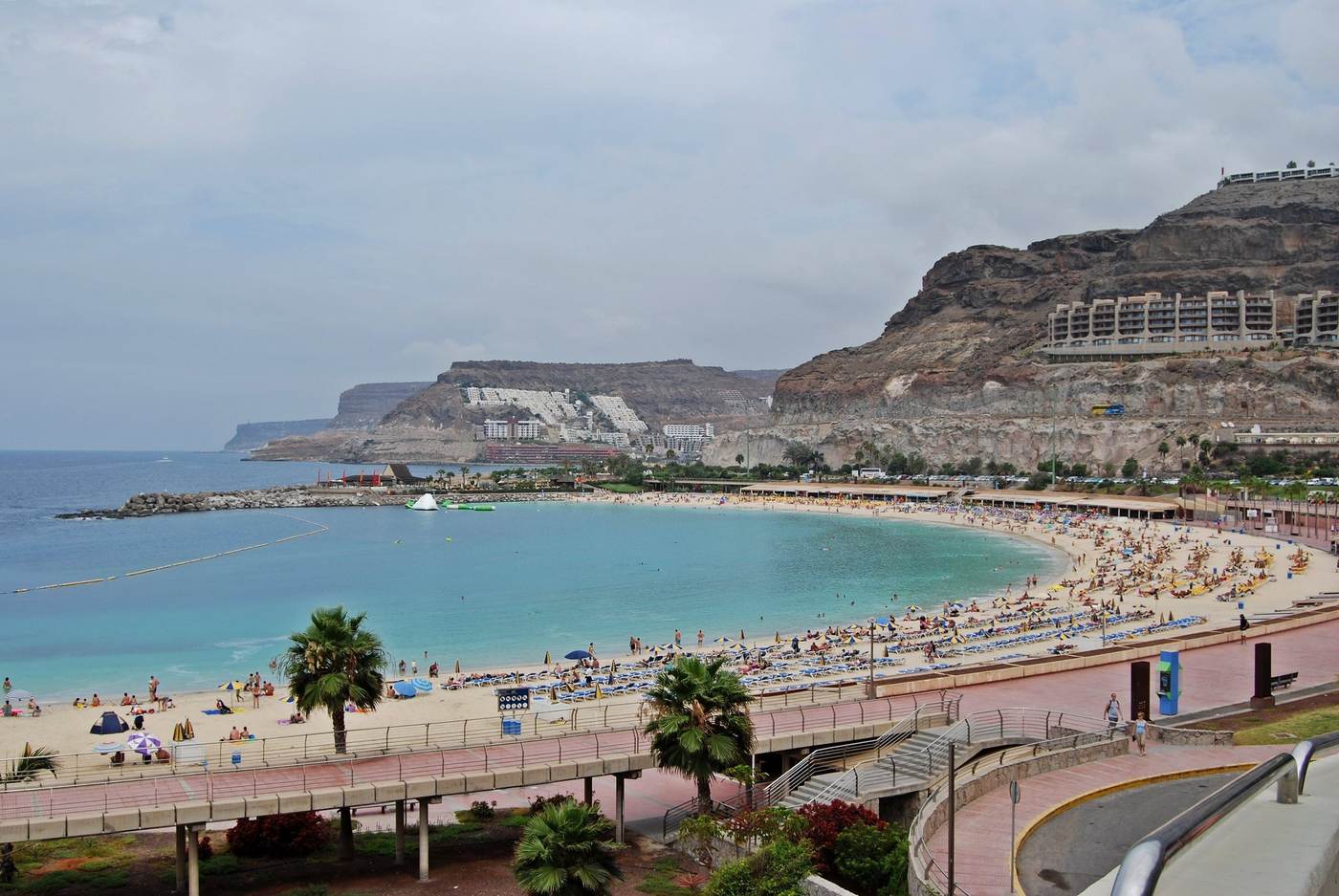
Photo: Felix König, CC BY-SA 3.0 (Wikimedia Commons).
No. Copernicus expects no calima on any island today; the highest daily mean of PM10 is 24 µg/m³ on La Graciosa, against an EU limit of 50 µg/m³. Retrieved at 08:10 (Canary time). The Canary Islands government's monitoring network last measured no more than 20 µg/m³ PM10 (ITC, Gran Canaria, 07:00).
When is the next calima expected in the Canary Islands?
According to Copernicus, Friday brings light calima on Gran Canaria, Tenerife, La Gomera and El Hierro. The forecast runs to Saturday and is updated six times a day.
When is calima bad for your health?
The EU limit for PM10 is a daily mean of 50 µg/m³; above that we rate calima as moderate, and from 100 µg/m³ as strong. During calima the Canary Islands health authority advises everyone to avoid exertion outdoors and keep windows closed; children, older people and anyone with chronic respiratory or cardiovascular disease should stay indoors where possible.
Is there an official calima warning?
No. AEMET, Spain's weather agency, currently has no warning for dust or poor visibility in force for the Canary Islands (as of 08:10). Its warnings are authoritative and published on aemet.es.
How This Forecast Works
The values come from the forecast of the EU's Copernicus programme (Copernicus Atmosphere Monitoring Service, CAMS), retrieved via Open-Meteo. For each island we use the main resort and the capital or a second resort; the island's level is the highest value of these places.
A day's level follows the higher of two values: the daily mean of PM10 particulate matter and the highest hourly value of Saharan dust near the ground. If the model shows less than 10 µg/m³ of Saharan dust, the day counts as calima-free, because higher PM10 values then mostly come from other sources such as sea salt.
no calimaPM10 below 35 µg/m³ and Saharan dust below 30 µg/m³
light calimaPM10 35–49 µg/m³ or Saharan dust 30–79 µg/m³
moderate calimaPM10 50–99 µg/m³ (above the EU daily limit) or Saharan dust 80–199 µg/m³
strong calimaPM10 from 100 µg/m³ (twice the EU limit) or Saharan dust from 200 µg/m³
The EU limit for PM10 is a daily mean of 50 µg/m³ (Directive 2008/50/EC), and since 2021 the World Health Organization has recommended no more than 45 µg/m³ as a daily mean. These are model values for grid cells about 45 kilometres wide, not measurements; the readings of the Canary Islands government's air-quality network appear under “Measured Now”.
The page is updated six times a day, at 05:10, 08:10, 11:10, 14:10, 17:10 and 20:10 (Canary time). Copernicus runs its model twice a day; each new run appears at the next refresh. If the data source fails, the last complete forecast stays online with its own time stamp.