The numbers in context
Canaries by 15 May 2026: 3,018 arrivals on 36 boats (pateras and cayucos).
Same period 2025: 10,822 arrivals on 175 boats.
The drop: 72.1 percent fewer people, nearly 80 percent fewer boats.
Spain total by sea: minus 52 percent (6,782 arrivals).
Land arrivals in Ceuta and Melilla: up 246 percent (2,265 people).
Record year 2024 on the Canaries: 46,843 arrivals.
Contents
The figures in detail
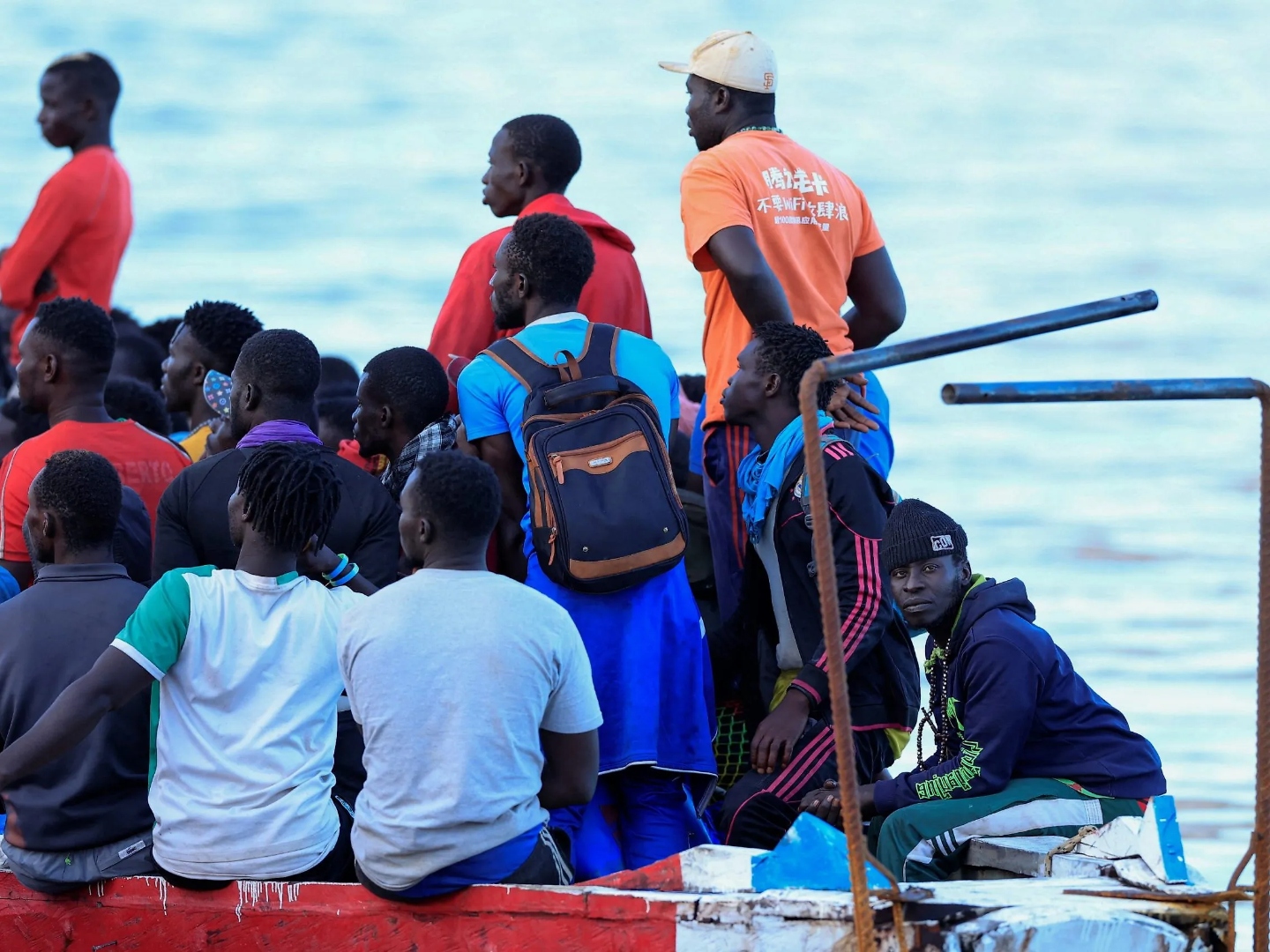
The figures the Spanish Interior Ministry released on Monday in its fortnightly briefing are the clearest in years — and can be read in several directions. The headline: 3,018 people have arrived on the Canary Islands between January and 15 May, in 36 boats. In the same period last year, the figure was 10,822 in 175 boats. A 72.1 percent drop in arrivals, almost 80 percent in the number of boats.
How the routes are shifting
Step back three paces and a pattern emerges that isn't accidental. Movements across the Mediterranean and Atlantic are shifting. While the Atlantic route to the Canaries — via Mauritania and Senegal — is emptying, land arrivals into Ceuta and Melilla from Morocco are up 246 percent year-on-year, from 654 to 2,265 people. Sea arrivals to the Spanish mainland are up 24 percent. The routes aren't gone, they're moving.
Behind the shift sit factors that aren't spelled out in the official briefings but are well known to researchers. Reinforced patrols off the Mauritanian and Senegalese coast, cooperation agreements with countries of origin, fresh Frontex resources for the Atlantic route. On the other side: political instability in the Sahel, which is still putting people on the move — but increasingly along other routes, or towards Algeria, from where the Mediterranean crossing is much shorter.
The political backdrop
On the Canaries themselves, the drop is most visible at the ports that became receiving points in recent years — Arguineguín in southern Gran Canaria, La Restinga on El Hierro. Reception figures for the first four months reached 2,276 — the islands that had to handle 46,843 arrivals in the record year of 2024 are catching their breath. The reception centres, social services and medical staff worked through hard months in 2024. Now the situation is easing.
Anyone tempted to declare a strategic success should keep two things in view. First: the Atlantic route is, according to UNHCR data, one of the world's deadliest. In 2025, 1,214 people died or disappeared on it. That figure won't drop to zero in 2026 — it will only fall proportionally with the lower arrival numbers. Second: what falls in one place tends to appear in another. The rise in Ceuta and Melilla shows it. Migration doesn't vanish, it finds other routes.
What the data does not tell us
Politically the topic has resurfaced on the islands in recent weeks. Fernando Clavijo's regional government is negotiating with Madrid over the redistribution of unaccompanied minor migrants to other Spanish regions — an issue that has stretched the islands' reception system. The current easing on the route buys the negotiations time, but doesn't solve them. The reception centres are still full of people who arrived in the months and years before and are working through the Spanish asylum system.
For the Canaries as a whole, this is less a single news day and more a long cycle. What started in 2020 with a few thousand arrivals peaked in 2024 with nearly 47,000 — a number that pushed the islands' political and logistical capacity to its limit. The current drop is a breathing space. How long it lasts depends on things decided far from the islands: in Brussels, in Rabat, in Dakar, in Niamey. As of today, the Interior Ministry reports a markedly easier situation on the Canaries than twelve months ago — and that, without drawing political conclusions, is information that matters.