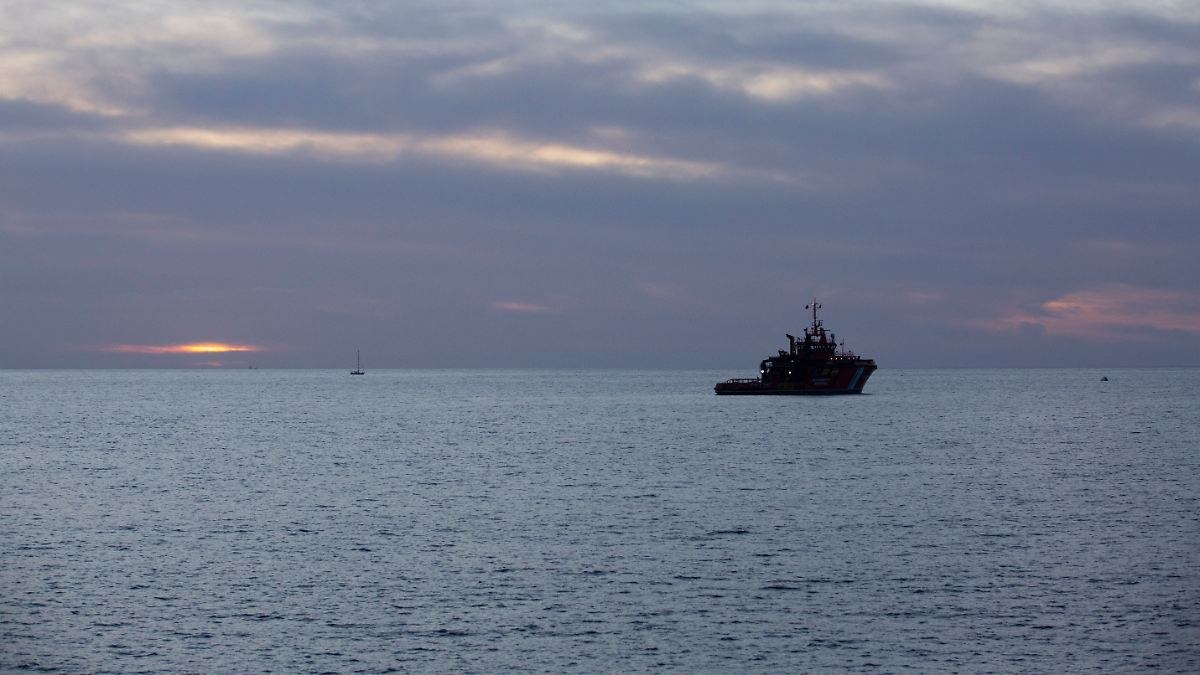
When drug trafficking in Spain used to be discussed, the gaze turned almost automatically to the Strait of Gibraltar or the coasts of Galicia. Those days are over. In the shared assessment of the Guardia Civil, the National Police and the anti-drug prosecutor's office of the province of Las Palmas, there are currently «more drugs and weapons than ever» off the Canaries.
The smugglers' modernisation, the investigators say, is making seizures increasingly difficult. At the same time they stress that «cooperation and effort» are holding the line effectively. The islands' geography is both a blessing and a burden: it links the Atlantic route with the African one and has thus become, as one official puts it, a «strategic logistics base» for criminal organisations.
The decisive shift: from smuggler to service provider
What is truly new is not the quantity but the business model. «The local organisations in the Canaries no longer simply want to bring in and sell cocaine», explains a captain of the Comandancia de Las Palmas. «They have reinvented themselves to provide logistical support — with fuel, boats and transfers on the high seas.»
This brings higher profits and a greater sense of impunity. Investigators describe this model as «Crime as a Service»: a service company for other criminal organisations, specialised in supplying the technical and logistical means for transport.
How the trade works at sea
The heart of it lies far out in the Atlantic. Speedboats, the so-called «narcolanchas», set out at night from rivers in the south of Spain, from the Moroccan coast or from Portugal. Some reach over 40 knots, more than 70 kilometres per hour.
On the open sea they meet «mother ships», the «nodrizas». These stay out for months at a time and function like floating hotels and fuel stations — with tanks for up to 100,000 litres of fuel, a cargo of cocaine and rest areas for the crews. The speedboats take on the goods and carry them back towards the coast, avoiding large ports.
Then there is the technology: encrypted satellite communications, phones that are hard to trace, a coded language, night operations. So-called «halcones marinos», lookouts, report the position of patrol boats and monitored zones.
Two operations that reveal the pattern
Two investigative successes illustrate the situation. Operation «Sombra Negra», concluded in early 2026 and carried out in two phases in June and November 2025, led to 105 arrests in Andalusia and the Canaries. The logistics organisation dismantled is believed to have shipped 57 tonnes of cocaine into Europe in the last year alone, worth more than 1.5 billion euros. The first phase in the Canaries in June brought 48 arrests and 29 searches on Lanzarote, Gran Canaria and Fuerteventura. The case was directed by central investigating court number 3 and the special anti-drug prosecutor's office, with international involvement from the DEA, Europol, Morocco, Portugal, France, Colombia and Cape Verde.
On 1 May 2026 came Operation «Abisal»: a Guardia Civil vessel, the «Duque de Ahumada», boarded the cargo ship «Arconian» south of the Canaries off the coast of Western Sahara. According to investigators it served as a mother ship supplying smaller boats.
What official reports say
The assessment of the investigators on the ground matches broader analyses. Europol warned in early 2026, in a report titled «Diversification of maritime cocaine trafficking», that the flow of cocaine into Europe had reached an «unprecedented» level — driven by high production in Latin America and growing demand in the EU. The Canaries and the Guadalquivir are named as key points.
The annual report of the Departamento de Seguridad Nacional, presented in June 2026, likewise speaks of a «growing vulnerability» in the Canaries–Atlantic arc. It points to more than 600 speedboats in the area of the Strait of Gibraltar and to increased aggressiveness by the smugglers towards the security forces.
Why this concerns the islands
For the people of the Canaries this is more than a series of spectacular police operations. Where the logistics networks of organised crime take hold, the environment changes too: more money, more weapons, more potential for violence. The security forces stress that the trade cannot be entirely eradicated — the goal is to contain it.
Precisely because the islands' location, their open waters and their proximity to West Africa make the Canaries attractive to the smugglers, the pressure is likely to persist. Investigators are counting on international cooperation and the targeted dismantling of the logistics to hold their ground.
Frequently asked questions
- Why have the Canaries become so important for the cocaine trade?
- Because of their geography: they link the Atlantic route with the African one and lie close to West Africa, which serves as a storage and transhipment point. The open waters make meetings on the high seas easier.
- What does «Crime as a Service» mean in this context?
- Local networks no longer merely import drugs themselves but sell logistics to other organisations: fuel, boats, transfers and technology. This brings higher profits at lower direct risk.
- What were operations «Sombra Negra» and «Abisal»?
- «Sombra Negra» (2025, concluded early 2026) led to 105 arrests and dismantled a logistics organisation. «Abisal» was the boarding of the cargo ship «Arconian» south of the Canaries on 1 May 2026.
- Were 57 tonnes of cocaine really seized?
- No. The 57 tonnes are the quantity the organisation is believed to have moved in one year. Around 10,400 kilograms were seized in Operation «Sombra Negra».
- Does the presumption of innocence apply to those arrested?
- Yes. All those arrested are suspects. Guilt or innocence is decided by a court.
Read on
- Canary Islands on 13 Oct: fiestas, opera and storytellingCanary Islands · 13 October
- Grandchildren’s Law: vote suspended for 163,020, report saysCanary Islands · 13 October
- Migrant arrivals to the Canaries plunge 72 percent — what's behind the lowest figure in yearsCanary Islands · 19 May
- Canaries as stepping stone: is Gran Canaria becoming the bridge between Latin America and Africa?Gran Canaria · 17 April
- Canaries 12 Oct: Pilar fiestas, Fetish Pride, DJ brunchCanary Islands · 12 October
- All events on the Canary Islands →
As of 11.07.2026. Sources include Canarias7, Europol («Diversification of maritime cocaine trafficking»), Diario de Avisos, El Día and the annual report of the Departamento de Seguridad Nacional. Details of investigations reflect the reported position; the presumption of innocence applies to all those arrested until a court reaches a final decision. The names of alleged participants are withheld to protect personal rights and the ongoing proceedings.