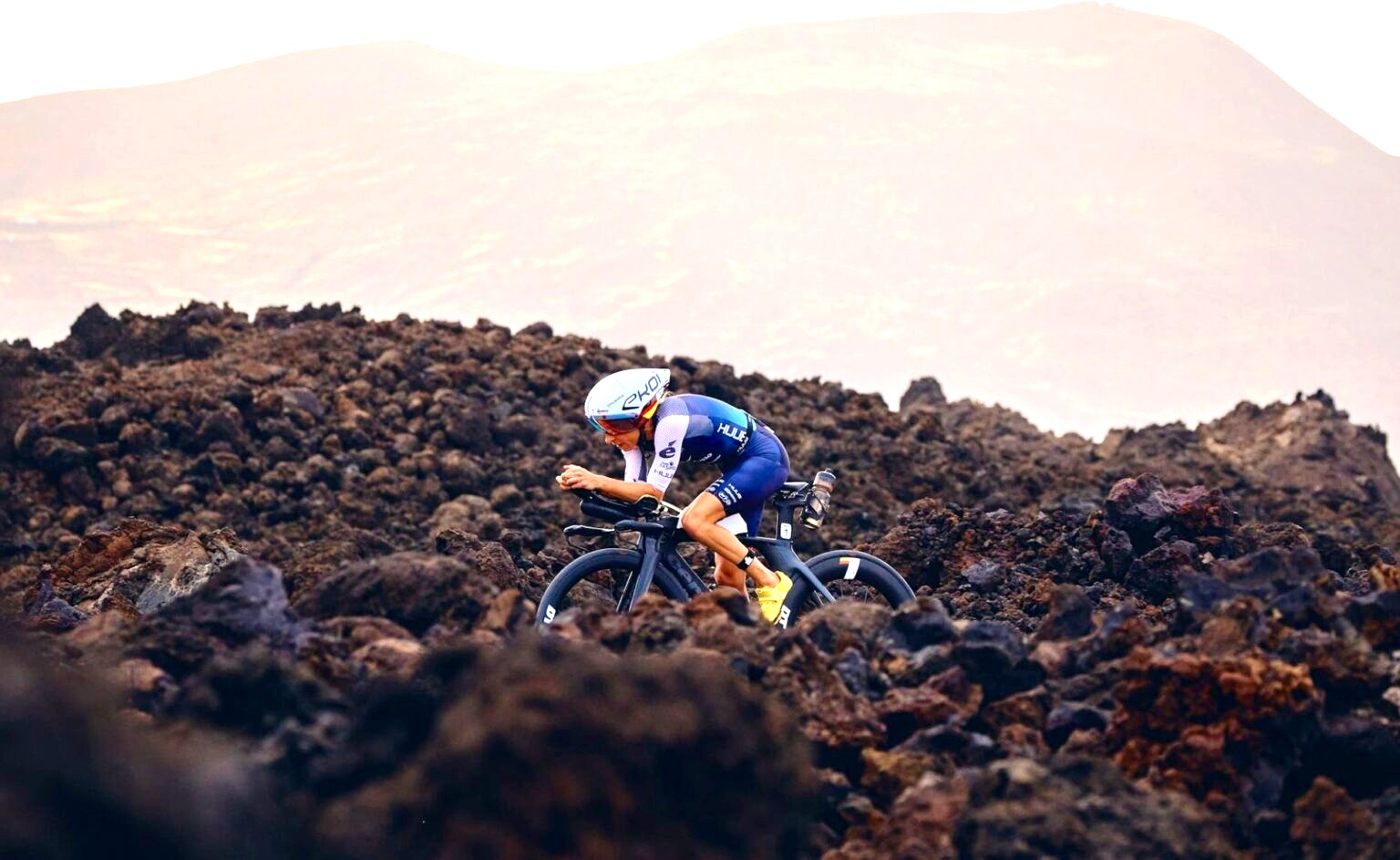
Anyone stepping into the Atlantic at Playa Grande in Puerto del Carmen just after seven on Saturday, 23 May 2026, knows the next fifteen hours will not be ordinary. A 3.8-kilometre swim in open water, 180.2 kilometres on the bike through black lava fields and over the notorious climb to Mirador del Río, a 42.2-kilometre marathon along the coast — that is the IRONMAN Lanzarote. As of today, one of the toughest long-distance races on the international calendar, in a league with Kona and Nice.
The 34th edition will be historic on more than one count. It is the last time Club La Santa — the sports complex in the north of the island that has organised the race since 1992 — will run it and lend it its name. In a joint statement with the IRONMAN brand on 14 April 2026, both parties confirmed that the Club will step back from the organisation after this year. The race will continue, but from 2027 onwards under the direct management of the IRONMAN Group. In what exact form, remains open.
Why the course is in a class of its own
Since its first edition in 1992, IRONMAN Lanzarote has earned a reputation as the hardest IRONMAN course in Europe. More than 2,500 metres of elevation gain on the bike leg, combined with the trade winds that barely let up between Timanfaya National Park and Mirador del Río. Professional triathlete Lucy Charles-Barclay, who won the race in 2017 and again in 2025, has called it "one of the fairest races in the world" — which in the language of the sport means: you can't fake your way through this. Only strength and mental resilience count.
The route takes in landscapes most people only know from documentaries: the lava fields of Timanfaya, the vineyard bowl of La Geria, the coast at Puerto del Carmen, the long climb to Mirador del Río with views across to La Graciosa. The marathon ends back in Puerto del Carmen, where thousands of spectators stay on the finish line well into the night — for the athletes who need more than fourteen hours to cross it.
In the 2025 edition, with 1,150 starters, 91.5 percent of participants rated the event positively — five points up on the previous year. The winners were France's Dylan Magnien and Britain's Lucy Charles-Barclay, with Spain's Jordi Montraveta second among the men.
50,000 athletes in 34 years
Numbers that show the scale: according to Club La Santa, around 50,000 athletes have raced in Lanzarote since 1992. These are not abstract figures — these are 50,000 people who invested months of preparation, bought flights, booked hotel rooms, organised nutrition plans. For the island, IRONMAN has been one of the most important drivers of sports tourism for decades.
The list of supporters reads accordingly like a who's who of Canarian institutions: the Canary Islands government, the Cabildo de Lanzarote, Lanzarote Sports Destination, and the councils of all seven municipalities on the island stand behind the event. For the race weekend, several thousand friends, family, and spectators are expected alongside the athletes — in a week when the island is already seeing high pre-season occupancy.
2027 remains open
The announcement from Club La Santa just under a week ago leaves open what the race will look like after 2026. The Cabildo de Lanzarote told the EFE news agency that the event will stay on the island. In what organisational form, under which brand, with which local partner — none of that has been communicated so far.
Fabio Cabrera, the race director, thanked all institutions, security forces, emergency services, sponsors, Club La Santa employees and the hundreds of volunteers "whose dedication makes the event possible every year" in the farewell statement. The Club itself will remain active in sports — with events including the Vuelta Ciclista a Lanzarote, the Volcano Triathlon (Spain's oldest triathlon), and the 4 Stage MTB Race Lanzarote.
More than a sporting event
For the competitors stepping into the water at Puerto del Carmen on the morning of 23 May 2026, it will first of all be a day of personal extremes. For Lanzarote, it marks the end of a 34-year chapter under a name that became known far beyond the island. Registration has been open since August 2025, and places are limited; anyone wanting to be there in 2026 should not wait too long.
What stays is the course — swimming at Playa Grande, cycling through Timanfaya and La Geria, fighting up to Mirador del Río, running back to the coast. That has barely changed in 34 years, and won't change in 2027 either. Only the name above the start line will be different.