The Numbers — and Why They Confuse
Headlines swing between "Canaries overwhelmed" and "arrivals collapse." Both are true — depending on the time frame.
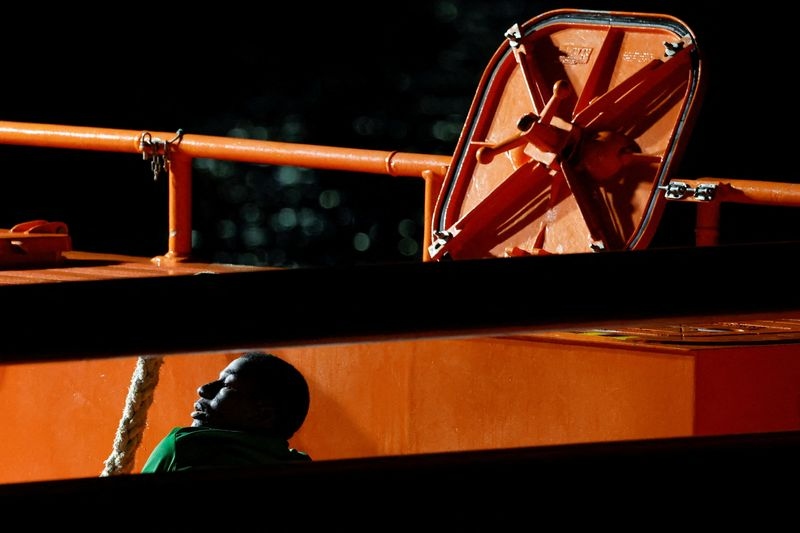
2024 was the record year: 46,843 migrants reached the Canary Islands by irregular means. More than ever before — more than during the "cayuco crisis" of 2006, when 31,000 arrived.
2025 saw arrivals drop by 42.6 per cent. Strengthened cooperation with Morocco, Senegal and Mauritania was bearing fruit.
2026, first quarter: another sharp decline. By mid-March, only 1,334 migrants had arrived — 85 per cent fewer than the same period the year before. Instead of 138 boats, just 13.
But since April 2026, numbers are climbing again. Around 550 people reached El Hierro, Fuerteventura, Lanzarote and Gran Canaria in just a few weeks. The Atlantic Route — the deadliest migration route in the world — is active again. The reason: tightened border controls between West African countries are pushing people onto the longer, more dangerous sea route towards the Canaries.
In the first quarter of 2026, four people died on the Atlantic route and one is missing. In the same period in 2025, there were nine dead and 137 missing. The numbers are smaller — but each one is a person.
The Route — 1,500 Kilometres of Open Atlantic
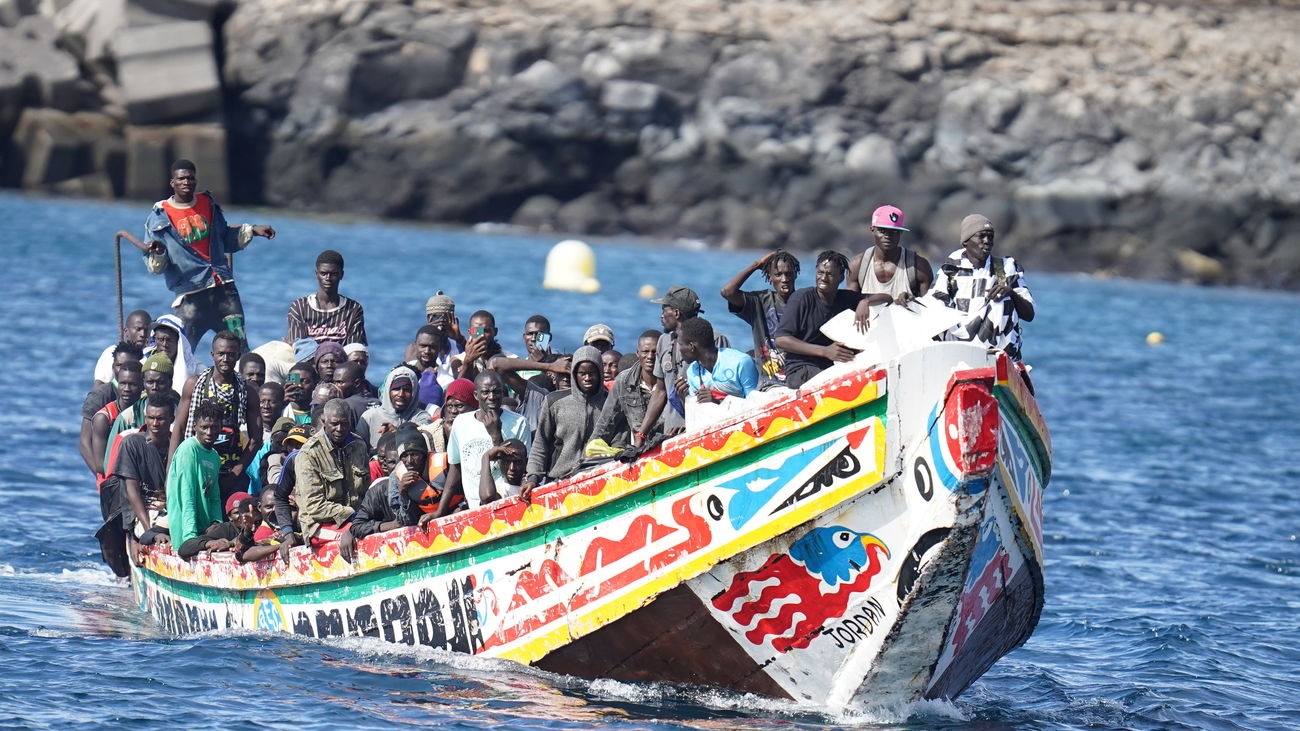
The Atlantic Route (Ruta Canaria) runs from the West African coast — Senegal, Gambia, Mauritania, Western Sahara, Morocco — across the open Atlantic to the Canary Islands. The shortest crossing, from the Moroccan coast near Tarfaya to Lanzarote, is around 100 kilometres. But many boats depart further south — from Senegal or Gambia it is over 1,500 kilometres. The crossing takes days, sometimes weeks.
The vessels are cayucos (large wooden fishing boats) and pateras (small rubber dinghies or motorboats). They are not built for the open sea. Anyone who misses the current or loses the engine drifts into the open Atlantic. The organisation Caminando Fronteras estimated the death toll on the Atlantic route for 2024 at over 10,000 — figures that can never be fully verified, because most boats vanish without a trace.
Who is on board: mainly young men from Mali (31 per cent), Senegal (29 per cent) and Guinea (12 per cent). But also women, children, pregnant women. The reasons: war (Mali), economic hopelessness, climate change (drought in the Sahel), political instability.
What Happens When a Boat Arrives
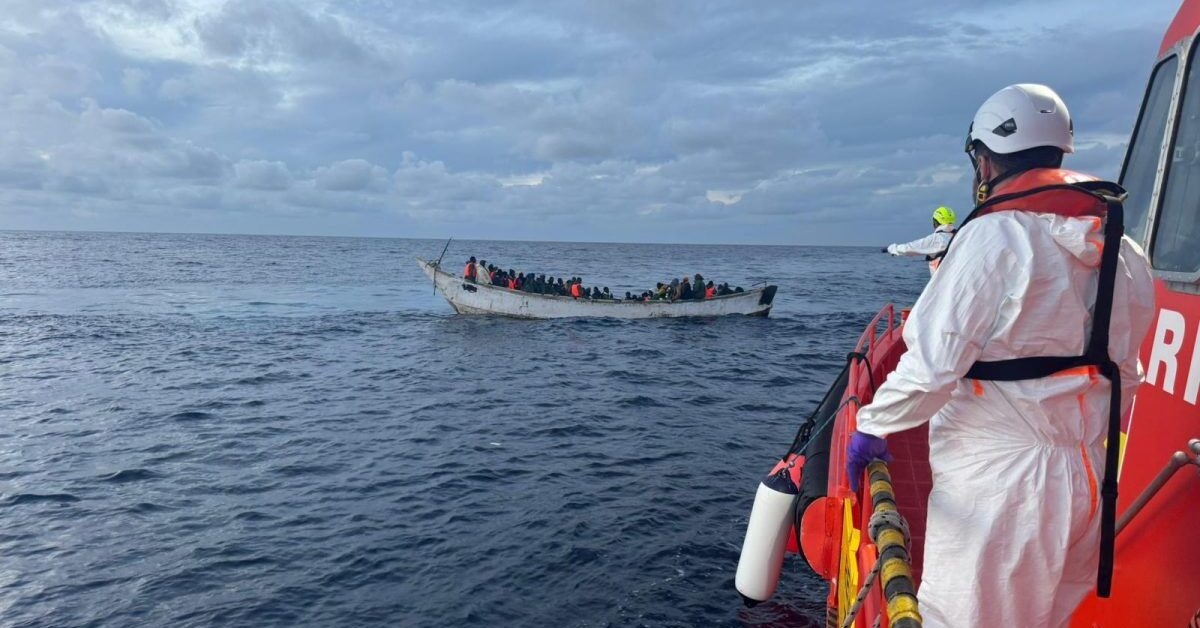
When a cayuco reaches the Canary Islands coast — or is picked up at sea by Salvamento Marítimo — a standardised process begins:
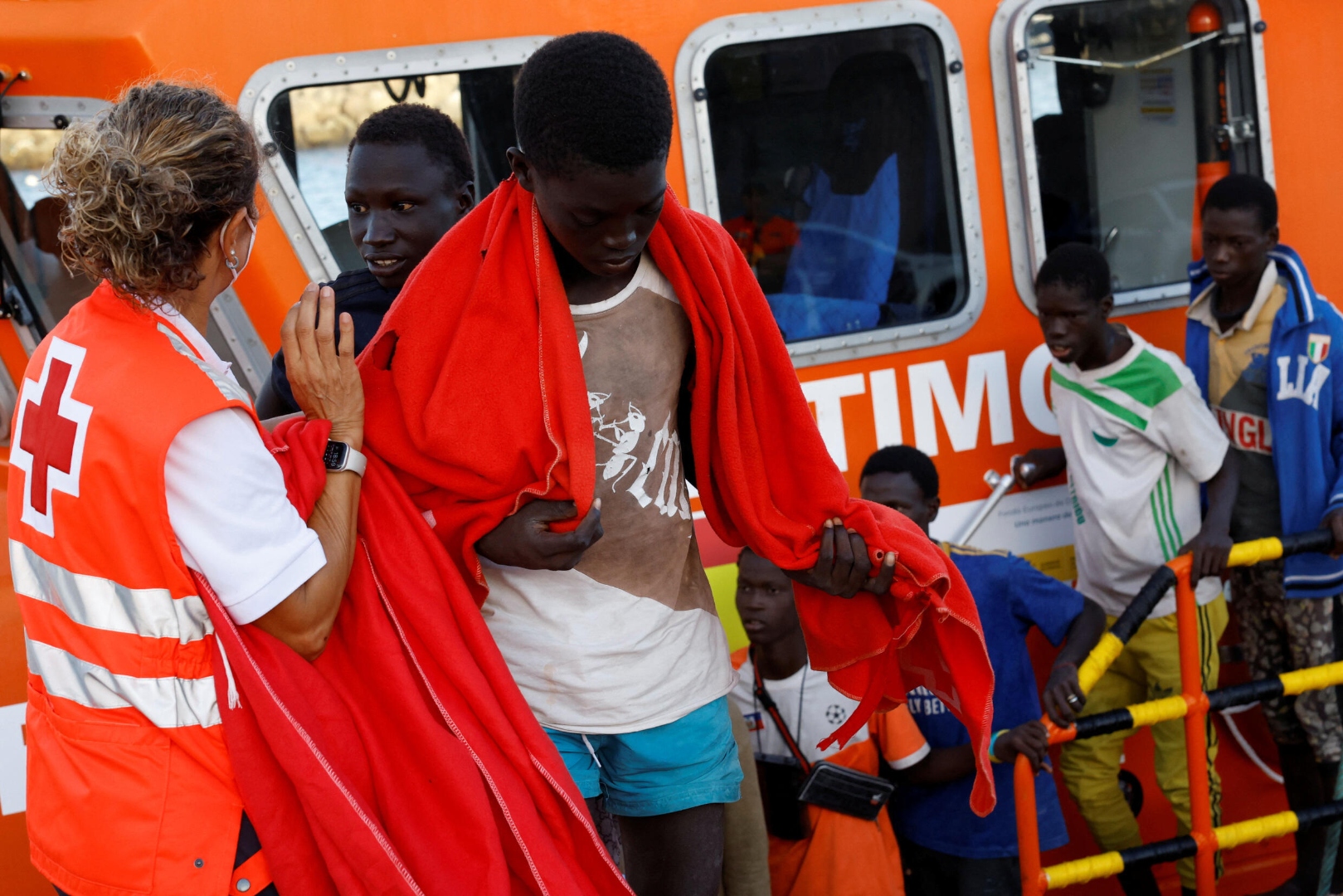
Emergency care. The Red Cross provides initial medical assistance at the port. Many arrivals are dehydrated, hypothermic, injured.
Identification. The Policía Nacional takes fingerprints and personal data. Minors are registered separately.
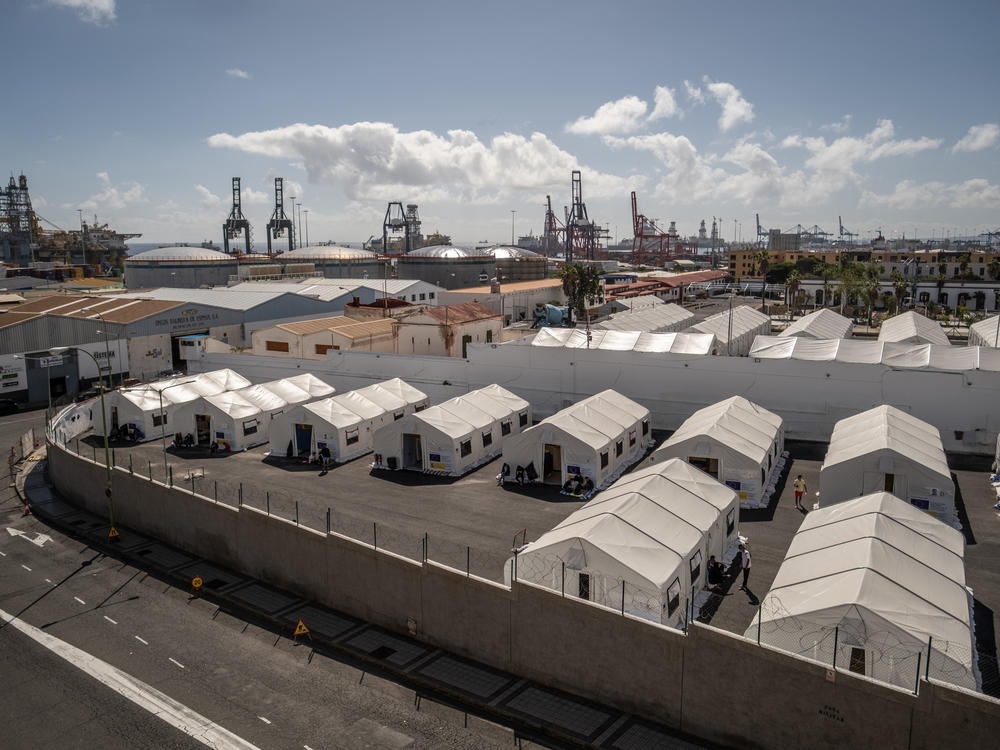
Initial reception. Migrants are taken to temporary reception centres (CATE — Centros de Atención Temporal de Extranjeros) located across several islands.
72-hour rule. Within 72 hours a decision must be made: deportation (rare, only with clear identification and a readmission agreement), release with an expulsion order (most common — the person must leave Spain but may stay for now), or an asylum application.
In practice, most people remain in the Canaries or in Spain. The deportation rate is low because many countries of origin have no readmission agreements.
The Minors — the Most Pressing Problem
Of all aspects of the migration crisis, the situation of unaccompanied migrant minors (MENA — Menores Extranjeros No Acompañados) is the most acute.
The numbers: At the start of 2025, the Canary Islands government was caring for around 5,800 unaccompanied minors. In the first quarter of 2026, 313 new arrivals were registered — 65 per cent fewer than the year before (888). But the overall number of minors already in care remains high.
The problem: Under Spanish law, the autonomous community (in this case the Canary Islands government) is responsible for protecting minors. The Canaries are overwhelmed — reception centres are full, staff are insufficient, costs are spiralling.
The legal battle: The Canary Islands government took the central government to the Tribunal Supremo (Spain's Supreme Court). The accusation: Madrid was refusing to take minor asylum seekers into the national reception system, despite being legally obliged to do so. The court ruled in the Canaries' favour and gave Madrid a 10-day deadline. Madrid did not comply. The court issued a second deadline of 15 days. It spoke of "clear non-compliance." It threatened sanctions.
Current status: By February 2026, 1,019 minors from Ceuta, the Canaries and Melilla had been relocated to other regions. Of the 671 completed cases in the Canaries, 30 per cent were actually transferred. The Community of Madrid challenged the transfers in court — the Supreme Court upheld the transfers and rejected Madrid's arguments.
Canary Islands Minister for Social Welfare, Candelaria Delgado: "Migration is not measured only in places or case files, but in the protection of childhood and in the responsible management of social fear."
Moroccan Police on Canary Islands Soil
Since 2024, officers of Morocco's Royal Gendarmerie have been patrolling alongside Spain's Guardia Civil along the Canary Islands coast. On 14 April 2026 — yesterday — two gendarmes from El Aaiún (Western Sahara) were on duty in Lanzarote.
The mixed patrols consist of one officer, two Guardia Civil agents and two Moroccan gendarmes. They operate monthly, alternating between the Canaries and Morocco. Their mission: coastal surveillance, intelligence sharing on people-smuggling networks, identification of embarkation and landing points.
This is remarkable: a foreign security force patrolling on Spanish soil. The gendarmes from El Aaiún come from the part of Western Sahara controlled by Morocco — a territory whose international legal status has been disputed for decades.
The 40,000 With a Right to Regularisation
An estimated 800,000 people live in Spain without regular residence status. In the Canary Islands, around 40,000 of them would theoretically be entitled to a residence permit — based on the length of their stay, family ties or humanitarian grounds.
The problem: the procedures are slow, the authorities are overwhelmed, and nobody can say when regularisation will actually begin. For those affected, it means: they work off the books, have no access to the health system (except in emergencies), cannot sign a lease, cannot open a bank account. They exist, but they do not exist officially.
What the Canary Islands Government Says
President Fernando Clavijo has repeatedly stressed that the situation in the Canaries remains "quite stuck." The Canary Islands government's core argument:
"We are a border region, not a transit region." The Canaries are the arrival point — but most migrants want to continue to mainland Europe. The islands bear the entire burden of initial reception alone.
"The EU Migration Pact is not enough." The Canaries argue that the new pact is designed for the Mediterranean, not the Atlantic. The Canary route does not carry the weight it deserves. They demand more funding, more solidarity, and special protection for minors.
"This exceeds the capacity of an autonomous region." Spain's Constitutional Court confirmed this in 2025 (Ruling 43/2025): managing the migration crisis exceeds the administrative capacity of a single autonomous community.

What the Parties Say
Coalición Canaria (governing party in the Canaries): demands a "state-level response" — more money, more staff, distribution of minors across all regions. No ideological polarisation; pragmatic solutions.
PSOE (central government): introduced the mandatory redistribution of minors by decree. Points to transfers already made. In conflict with the Canaries over pace and scope.
PP (People's Party): the Community of Madrid (PP-governed) challenged the transfer of minors to Madrid in court — and lost. The PP oscillates between calls for stronger border control and rejection of mandatory redistribution.
Vox: demands "immediate deportations," border closures, no regularisation. President Clavijo called Vox leader Abascal a "real fascist" after he instrumentalised Canary Islands migration.
Is Gran Canaria Becoming a Prison?
Many people ask this — residents, tourists, people who have relocated. The honest answer:
No, Gran Canaria is not becoming a prison. The vast majority of migrants who arrive are not visible in the sense of changing daily life. They are in reception centres or have moved on.
But the pressure is real. Infrastructure — healthcare, social services, police, child protection — is under strain. The costs are borne largely by the Canary Islands government, even though responsibility lies with the state.
Social tension is growing. In the Canaries — as across Europe — there is a divide between those who show solidarity and those who feel fear. The 2024 protests on Tenerife against "mass tourism and overpopulation" also had a migration dimension, even though the organisers denied it.
The question that really needs asking: Are European countries offloading the consequences of their own migration policies onto the Canary Islands? The Canaries lie 1,000 kilometres from mainland Europe, but just 100 from the African coast. They are the EU's nearest outpost. And they are paying for it — with taxes, with infrastructure, with social tension.
What You Should Know
As a resident or someone who has relocated: The migration crisis probably affects your daily life on Gran Canaria less than the headlines suggest. But it affects the society you live in. The debate is not going away. Inform yourself. Form your opinion based on facts, not fear.
As a tourist: You will probably notice nothing of migration in the Canaries unless you actively look for it. The beaches, the hotels, the restaurants all work. What you do not see: the reception centres in industrial estates, the overcrowded children's homes, the boats that never arrive.
As a human being: The Atlantic route is the deadliest migration route in the world. The people who take it do not do so for adventure. They do it because they see no other option. That does not justify any particular policy — but it demands respect for the reality.
The migration question in the Canary Islands has no easy answer. It does not even have an easy question. What it does have are facts worth knowing — and a reality that should be neither ignored nor instrumentalised.