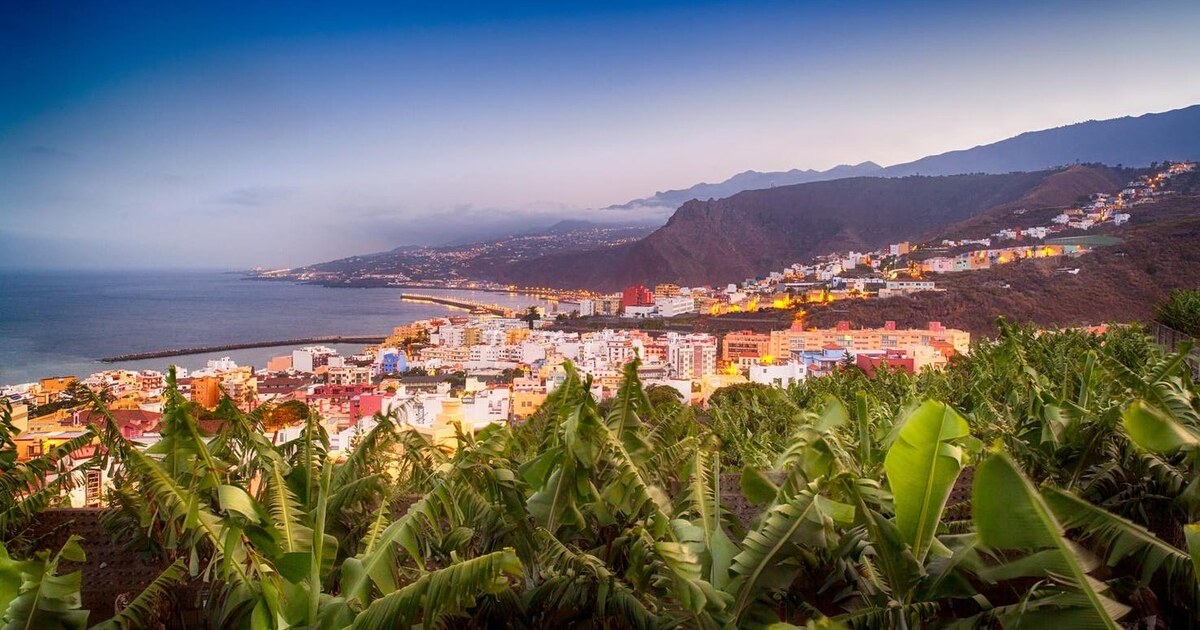
Three out of four Spanish travellers booking a «Surprise Island» trip with Waynabox exclude at least one Spanish island from their possible destination spectrum. That is the central finding of a study published on 28 April 2026 (Diario de Avisos) by the Catalan travel platform analysing customer booking behaviour. Four Canary Islands appear on the list — Gran Canaria with 10.4 percent exclusion rate, Tenerife with 9 percent, Lanzarote with 5 percent and Fuerteventura with 3.2 percent.
On the same day, the Tourism Department under Jéssica de León presented a modernised version of the Canary Islands Tourism Observatory with AI assistant — part of a 2026 Action Plan of 48.3 million euros (Gobierno de Canarias). Three movements at the same time: a market signal of weakness, a technological response from the administration, a marketing offensive for the most affected island, La Palma. Together they compose the picture of a tourism in self-correction phase.
What exactly does the Waynabox study say?
Waynabox is a Spanish travel platform based in Barcelona, specialised in surprise trips — the traveller learns the destination only 48 hours before departure. When booking a «Surprise Island», the customer can exclude one of the 16 possible island destinations from their spectrum free of charge. Waynabox has now published this dataset for the first time to study preferences.
Main result: 75 percent of Spanish travellers exclude a Spanish island. The strongest phenomenon appears with the Balearic Islands — Mallorca leads with 19.9 percent exclusion rate, Ibiza with 17.3 percent. Gran Canaria follows in 4th place with 10.4 percent. Tenerife ranks 7th with 9 percent. Lanzarote 5 percent, Fuerteventura only 3.2 percent — the latter with the lowest exclusion rate of all Spanish island destinations in the ranking.
Jordi Agustí, CEO of Waynabox, comments on the trend: there is a «tendency to undervalue what is ours», even though Spanish beaches «rank among the best in Europe». The findings are not a quantitative tourism collapse — Waynabox serves a specific market segment of spontaneous travellers — but they reflect a perception weakness against which the Canary Islands so far have few marketing answers.
What does the 2026 Action Plan with 48.3 million euros include?
The Board of Tourism of the Canary Islands approved the 2026 Action Plan in February 2026. The five axes with budget:
Climate action and regenerative model: about 5 million euros. Focus: the RegNext programme, which establishes public-private partnerships to fund regeneration. Goal: to convert climate action into a «competitive advantage of the destination».
Citizen participation: 1.5 million euros. Citizen forums, contact points with social and environmental associations, tourism products linked to Canarian identity.
Tourism Intelligence (AI/Data): 2.6 million euros. Main project: the new version of the Canary Islands Tourism Observatory with AI assistant, allowing access to data without technical knowledge. Presented on 28 April 2026 at the Tenerife Espacio de las Artes.
Air connectivity: 140,000 euros. Small but strategic — allocation through bilateral negotiations with airlines.
Management costs: 4.5 million euros.
To this are added the premium, wellness and event segments — Counsellor de León calls them «growth priorities». The strategic shift is clear: less volume tourism, more quality, more data-driven management.
How does the new AI Observatory work?
The new Canary Islands Tourism Observatory is accessible in its modernised version since 28 April 2026. Main function: a conversational AI-based assistant allowing tourism data to be queried in natural language. Hoteliers, administrative staff, tour operators and citizens can ask questions like «How many German tourists came to the Canaries in March?» and receive visualised answers without SQL knowledge.
The technological foundation is partly provided by the Canarian company AdQuiver based in Las Palmas, founded in 2016, one of Spain's 40 leading tourism technology companies in 2023 and 2024 (AtlánticoHoy). Jorge Núñez, CEO of AdQuiver, sums up the logic: «Data does not only serve to sell more; it also helps us understand tourist flows better, reduce seasonality, diversify markets and attract higher-value tourism.»
AdQuiver provides the technology for Smart Data Canarias, a joint project with the tourism employers' associations of Gran Canaria and Fuerteventura. At European level, the company participates in DEPLOYTOUR — the construction of a European Tourism Sector Data Space. The Canary Islands thus position themselves not only as consumer but as supplier of tourism technology to other European destinations.
What marketing offensive does La Palma plan in 2026?
La Palma is the Canary Island that needs the most marketing attention. Volcanic eruption September-December 2021, loss of 4,000 hotel beds in the Valle de Aridane, 50 percent loss of the German market according to CIT Tedote, slow recovery since 2023.
The 2026 indicators show movement: 63,096 air passengers in February 2026, +5.8 percent versus February 2025; 123,608 in the first two months, +2.7 percent versus 2025. Data from the report of the Cátedra de Turismo CajaCanarias-Ashotel of the University of La Laguna. Despite reduced hotel supply versus 2019, the island has optimised occupancy of active beds.
The Bono Turístico La Palma 2026 is the central marketing action: virtual cards of 250 € per person for stays on the island, funded by the Canarian Government and the State Secretariat of Tourism. The campaign was reactivated in April 2026, with extended international promotion via Turespaña — priority markets Germany, Austria, Netherlands, Belgium, Switzerland. Second priority group: UK, Scandinavia, France, Italy.
To this is added the «Air Routes Development Programme in the Canary Islands Outermost Region 2013-2026» — subsidies for airlines starting one of the 18 international routes envisaged from Austria, Czech Republic, Denmark, Finland, France, Germany, Ireland, Italy, Norway, Sweden or UK to La Palma. La Palma wants to close in 2026, with the cumulative marketing resources — several million euros combined — the perception gap that the volcanic images of 2021 in world media opened.
Frequently Asked Questions
Which Canary Islands are on the Waynabox list of most-rejected surprise destinations?
Four Canary Islands appear on the list Waynabox published on 28 April 2026: Gran Canaria with 10.4 percent exclusion rate (4th place), Tenerife with 9 percent (7th place), Lanzarote with 5 percent and Fuerteventura with 3.2 percent — the latter with the lowest exclusion rate of all Spanish island destinations. The study analyses the booking behaviour of Waynabox surprise-trip platform clients from Barcelona.
How much money does the Canarian tourism administration have in 2026?
The 2026 Action Plan of Tourism of the Canary Islands amounts to 48.3 million euros. The five axes: climate action 5 million, citizen participation 1.5 million, Tourism Intelligence (AI/data) 2.6 million, air connectivity 140,000 euros, management costs 4.5 million.
What is new about the Canary Islands Tourism Observatory?
The new version of the Canary Islands Tourism Observatory is accessible since 28 April 2026. Main function: a conversational AI-based assistant allowing tourism data to be queried in natural language. Presented at the Tenerife Espacio de las Artes by Tourism and Employment Counsellor Jéssica de León. The technological foundation is partly provided by the Canarian company AdQuiver based in Las Palmas.
What marketing actions does La Palma plan in 2026?
The Bono Turístico La Palma 2026 is the central marketing action: virtual cards of 250 € per person for stays on the island, funded by the Canarian Government and the State Secretariat of Tourism. To this are added subsidies from the Air Routes Development Programme for airlines starting international routes to La Palma — priority markets Germany, Austria, Netherlands, Belgium, Switzerland. February 2026 shows 63,096 air passengers, +5.8 percent versus February 2025.
Has La Palma recovered from the volcanic eruption?
Partially. The island lost in 2021 about 4,000 hotel beds in the Valle de Aridane and more than 50 percent of its German market according to CIT Tedote. The indicators show in 2026 a cautious recovery: 123,608 air passengers in the first two months, +2.7 percent versus 2025. Despite reduced hotel supply versus 2019, the island has optimised occupancy of active beds. The full recovery of perception in the international market is a multi-year project.
Read on
- 523.83 euros per trip: Canary residents travel less often and pay the mostCanary Islands · 25 September
- Canary tourism: new land-use rules and a July hotel recordCanary Islands · 26 August
- CaixaBank grants 969 million euros to Canary firmsCanary Islands · 24 August
- Canary Islands: strong calima to Wednesday, 30C in southCanary Islands · 26 October
- Canary Islands: Sunday power price falls just 1.82%Canary Islands · 25 October
- All events on the Canary Islands →