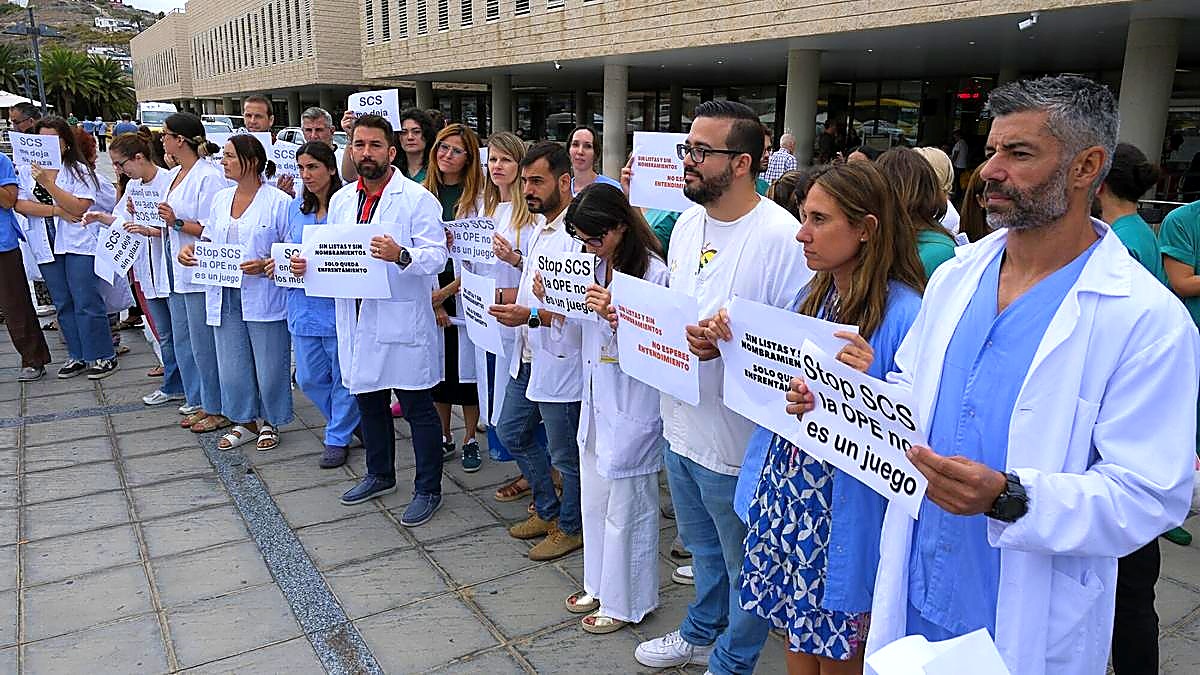
If you have a doctor's appointment in late April or early May — check whether it's still going ahead.
The Canary Islands' doctors are walking off the job. Four days in nine days. Thousands of appointments will be cancelled. Hundreds of operations dropped.
And it's getting worse, not better.
What does this look like for me?
During the last strike in March, on the Canary Islands 16,000 medical appointments were cancelled and 345 operations postponed.
That was two days. Now there are four coming.
What it means in practice:
- Visit to the GP? Only in an emergency.
- Appointment with a cardiologist, dermatologist, eye doctor? Postponed.
- Scheduled operation — knee, hip, cataract? A new date, sometime.
- Routine blood test, ultrasound, x-ray? Dropped.
- Real emergency, pain, accident? Emergency rooms stay open. On-call doctors stay on duty.
So: nobody dies because the doctors are striking. But whoever was waiting for their appointment — sometimes for months — has to wait longer still.
Why are they striking, actually?
Here it gets interesting. Because the doctors aren't striking for more money. Not primarily.
What they're asking for sounds dry — but it's solid. Three examples:
1. They want to finally talk to someone who can decide.
Right now, Canary Islands doctors are negotiating with officials who have to call Madrid about everything. The doctors are saying: give us a table where someone sits who can say yes. That costs zero euros. No excuse holds up. And still it doesn't happen.
2. They want the same conditions as their colleagues on the mainland.
A doctor in Madrid or Seville, with the same qualifications, often earns more than the colleague in Las Palmas or Tenerife. The Canary Islands doctor does the same work, carries the same responsibility — but gets less. They want to even that out.
3. They don't want to do 24-hour shifts for peanuts anymore.
Night and weekend duty — "Guardias" — pays so badly that many young doctors are looking elsewhere. Who wants to stand in a hospital all night for a few euros an hour? Result: staff shortages in emergency rooms. Hours of waiting. Doctors burnt out.
That's not greed. That's common sense.
Is it justified?
Readers can decide for themselves. Here are the facts on the table.
The Canary Islands' Health Minister has — zero times — met with the doctors since the strikes began.
Not a single conversation. Her name is Esther Monzón. She governs in coalition (Coalición Canaria and PP). She is formally in charge of this. And she hasn't been at the negotiating table once.
Instead she's passed the matter off to Madrid. As if the problem were in Madrid. It isn't in Madrid. It's in her office.
The head of the Canary Islands health service earns 38,000 euros more than his predecessor.
This isn't rumour. It's a matter of record. Madrid's Constitutional Court has suspended that raise — because it's legally questionable.
His name is Adasat Goya. While he collects that extra 38,000 euros, he tells the doctors there's no money for their demands.
The Canary Islands health administration pays out 574 million euros without valid contracts.
Also documented. 574 million. 125 million of it going to private clinics.
You read that right: while doctors in the public service are told there's no money, hundreds of millions flow to private clinics — without the contracts being properly in place.
A doctor who knows this is angry. And the anger isn't unwarranted.
What does the government say?
Little. And that's the problem.
Minister Monzón received a seven-day ultimatum from the doctors on 6 April: talk to us, or there'll be a strike.
Her response? Silence. Seven days. Then came the strike.
One of the doctors' representatives, Eric Álvarez, puts it this way: "A strike is the last resort we turn to when we have no alternatives left."
Doctors don't strike happily. Every strike day costs them wages too — strike days aren't paid. They do it because they can't think of anything else to make themselves heard.
What does this mean for our health system?
An uncomfortable truth: the Canary Islands health system is under pressure. Even without the strike.
Waiting lists are growing. Specialists are missing. GPs retire and no replacements come. Young doctors emigrate — to Madrid, to Germany, to England.
Why? Because working conditions on the Canary Islands can't match other regions. Exactly what the doctors are now putting on the agenda.
In short: if nothing changes, it gets worse for everyone. Not just those needing an appointment today. Also those needing one in five years.
So the striking doctors are doing what politics should actually be doing — they're saying: this can't go on.
What happens next?
27 and 28 April: Strike by the first doctors' union (SEMCA). Two days in a row.
30 April: Parallel to the national strike, the second union CESM also walks off on the Canary Islands.
4 May: Another strike day. Canary Islands only.
Four strike days in nine days. Thousands of people will be affected. And if the Minister still doesn't talk, next month comes, and the month after that.
CESM head Eric Álvarez hopes 4 May will be the last strike day. But he doesn't know. Because he's been negotiating for months with an empty chair on the other side of the table.
What you should do now
Before any medical appointment between 27 April and 4 May: Call your clinic or health centre and ask whether the appointment is going ahead.
In an emergency: Call 112 or go to Urgencias as normal. Emergency care is running.
For chronic medication: Pick up enough prescriptions in advance, in case your GP appointment gets dropped.
For scheduled surgery: The clinic will call if it's postponed. If not — still better to check beforehand.
The strike isn't hitting you because the doctors are evil. It's hitting you because politics refuses to talk.
That, in short, is the whole scandal.