Sunshine hours: Over 3,000 per year — more than any other region in the EU
Daylight hours: Up to 4,800 daylight hours per year in tourist resort areas
UV Index (summer): Up to 11 (EXTREME) from June to September
UV Index (winter): 4–6 (Moderate to High) — protection needed year-round
Source: AEMET — Spanish State Meteorological Agency
The Record
The Canary Islands are not merely the sunniest corner of the European Union — they also receive the most intense ultraviolet radiation of any EU territory. According to AEMET, Spain's national meteorological service, the archipelago records the highest year-round UV radiation levels in the country — and therefore in the entire EU. This is not a tourism slogan but a measured, documented fact.
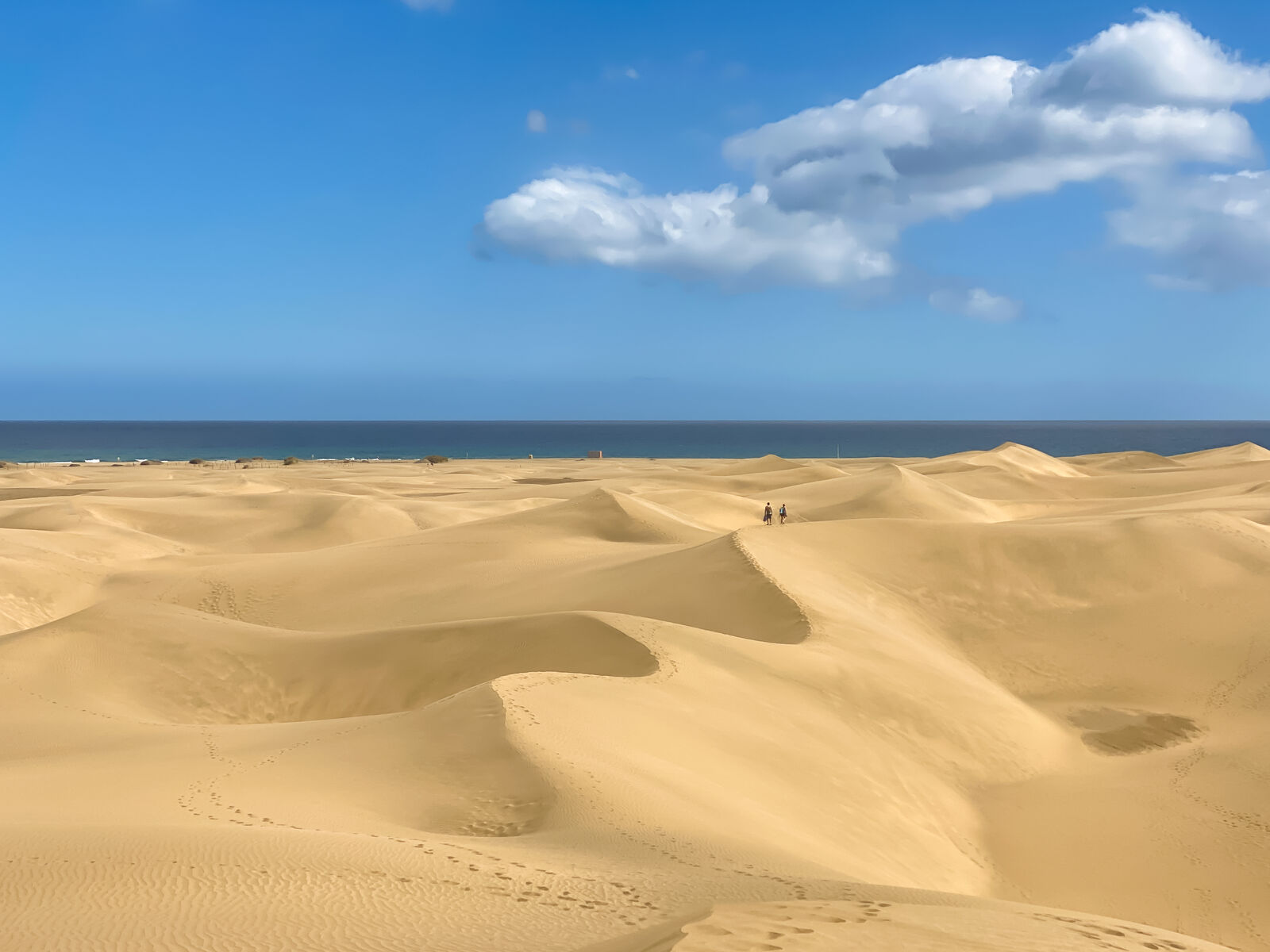
The resort areas of the islands — including Maspalomas, Playa del Inglés and Las Palmas on Gran Canaria — receive up to 4,800 daylight hours per year. Actual sunshine hours exceed 3,000 annually. Gran Canaria alone averages around 316 sunny days per year. For comparison: London averages roughly 1,500 sunshine hours, Madrid about 2,700.
These numbers have real implications — not only for beach holidays, but for the daily lives of expats, digital nomads and year-round residents across the islands.
The Numbers: UV Index by Month
The UV index is an international scale measuring the intensity of ultraviolet radiation reaching the earth's surface. Protection is recommended from level 3 upwards; level 8 is classified as "very high", level 11 as "extreme".
| Month | UV Index (Canaries) | Category | UV Index (London, comparison) |
|---|---|---|---|
| January | 4 | Moderate | 1 |
| February | 5 | Moderate | 1 |
| March | 7 | High | 2 |
| April | 8 | Very High | 4 |
| May | 9 | Very High | 5 |
| June | 11 | Extreme | 6 |
| July | 11 | Extreme | 6 |
| August | 10 | Extreme | 5 |
| September | 9 | Very High | 4 |
| October | 7 | High | 2 |
| November | 5 | Moderate | 1 |
| December | 4 | Moderate | 1 |
Even in December and January — when tourists from northern Europe arrive to escape the winter — the UV index stands at 4. That is equivalent to a spring afternoon in central Europe. Visitors unaccustomed to these conditions tend to underestimate the exposure. AEMET publishes weekly UV risk maps for the entire archipelago.
Why So Much Sun?
The answer lies in geography. The Canary Islands sit at approximately 28 degrees north latitude — a subtropical position comparable to the Sahara or Florida, and considerably closer to the equator than any other part of the EU mainland.
This subtropical position is reinforced by the Azores High, a persistent area of high pressure over the North Atlantic that blocks rain-bearing weather fronts from reaching the islands through most of the year. The trade winds (Alisios) occasionally carry flat cloud banks across the Atlantic, but these typically stall on the northern flanks of the islands. The south — precisely where the major resort areas are concentrated: Maspalomas, Playa del Inglés on Gran Canaria, Jandia on Fuerteventura — enjoys almost daily sunshine.
The result: minimal cloud cover, high solar irradiance, low humidity and a subtropical latitude combine to produce the most intense UV exposure in the entire EU.
Health: What AEMET and the Health Department Warn
In February 2026, the Canary Islands Health Department (Gobierno de Canarias — Sanidad (Gobierno de Canarias)) took an unusual step: it issued a public alert about elevated UV levels — in the middle of winter. Not in August, not in June — in February. The message was unambiguous: on the Canary Islands, sun protection is not a seasonal concern.
Skin cancer is the most common type of cancer worldwide, and excessive UV exposure is its primary risk factor. The Canarian health authority emphasises that UV rays reach the earth's surface even on overcast days — up to 80 percent of UV radiation passes through thin cloud cover. This means that the assumption of safety under grey skies is simply wrong.
Newly arrived residents and tourists from higher latitudes are particularly at risk: their skin carries less natural adaptation to intense solar radiation. But long-term residents also underestimate the cumulative effect. Years of daily UV exposure significantly increase the risk of skin cancer, regardless of whether individual sunburns have occurred.
Winter UV alert, February 2026: The Canary Islands Health Department warned of unusually high UV levels in winter.
Clouds are not protection: Up to 80% of UV radiation penetrates thin cloud cover.
Cancer risk: UV radiation is the leading preventable risk factor for skin cancer.
Sources: Gobierno de Canarias — Sanidad (Gobierno de Canarias) · AEMET
Protection: What Residents and Visitors Should Do
AEMET and the Canary Islands Health Department are clear on the recommended measures:
Sunscreen: SPF 30 minimum, SPF 50+ preferred. Apply approximately 20 minutes before going outside and reapply every two hours — immediately after swimming. This applies year-round, not only in summer.
Avoid midday sun: UV radiation is most intense between 12:00 and 16:00. Direct sun exposure during these hours should be minimised or replaced with shade wherever possible.
Sunglasses: UV-400 certified sunglasses are not optional on the Canary Islands. Prolonged UV exposure can damage the lens of the eye and significantly raise the risk of cataracts.
Clothing: Light, long-sleeved garments and a wide-brimmed hat provide additional protection for extended outdoor activities.
For residents who work or exercise outdoors — surfers in Las Palmas, cyclists on Gran Canaria, construction workers in Maspalomas — consistent protection is not a suggestion but a necessity. Track today's UV exposure levels on our UV Index and beach quality Gran Canaria page.
Climate Change: The Trend is Intensifying
The already intense solar exposure on the Canary Islands is being amplified by climate change. The year 2024 was the driest year on record for the archipelago since meteorological records began in 1961 — and the second warmest. Fewer clouds, less rainfall, more sun: this is the trajectory that climate scientists project for the region.
More sunshine means more UV exposure. Combined with an ageing expat population that may spend decades on the islands, the cumulative skin cancer risk is rising. Dermatologists on Gran Canaria and Tenerife report a growing proportion of patients presenting with actinic keratoses — precancerous lesions caused by years of accumulated UV damage.
For year-round residents the message is clear: sun protection on the Canary Islands is not a summer issue. It is a 365-day reality — one that is only growing more significant as the climate continues to shift.
Find the current weather and live UV index for Gran Canaria on our Current weather Gran Canaria page.