What happens at the festival «La Isla de mi Vida» on 22 and 29 May?
Antonio Morales, president of the Cabildo de Gran Canaria, presented the festival at a press conference on 23 April 2026 with the Councillor for Economic Development Minerva Alonso and the artists Víctor Batista and Belén Álvarez Lajalada. The logic of the new format is different from that of the predecessor: not a competition with jury, but an open ceremony involving the whole folk and pop scene of the island.
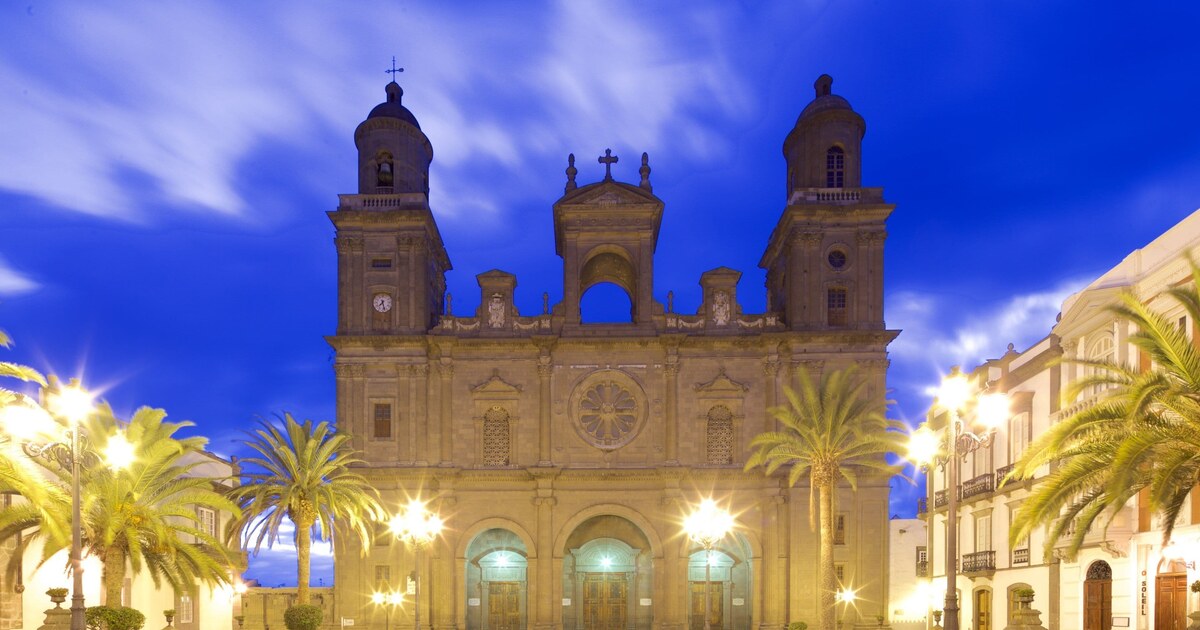
The main evening is 29 May at the Plaza de Santa Ana in Las Palmas, in the shadow of the cathedral. Free entry. At 19:30 the pasacalles begins at the Parque de San Telmo, with the Banda de Firgas and the Papahuevos — the traditional giant figures with disproportionately large heads. At 20:30 the central production begins: Attindamana. Over 500 artists on stage, including the Gran Canaria Philharmonic Orchestra, the Parranda Araguaney, Umiaya, Mujeres D, Raíces Atlántikas, Los Serenquenquenes and over 40 voices and instrumentalists in solo roles. The collegiate direction is signed by Mario Vega, Belén Álvarez Lajalada, Víctor Batista, Ner Suárez, Manuel Abrante, Ruth Sánchez and Javier Cerpa. The closing is taken on by DJ Saot ST with the new edition of «After Hours: The Mixtape» — the bridge from traditional folklore to the urban scene.
The second date is one week earlier, 22 May. The Plaza de San Rafael in Vecindario, in the municipality of Santa Lucía in the south of the island. There runs «La Isla de mi Vida Escolar y Familiar» — over 650 students from 15 municipalities perform together. In the morning preschool, secondary and special education. In the afternoon the municipal music schools. Free entry. Antonio Morales noted in his presentation that the school festival is «the natural extension of the celebration of our identity, with the firm purpose of placing traditional music at the centre of daily learning». This is more than folklore care — it is a political programme against the cultural flattening that mass tourism brings.
What does the word Attindamana mean and why is it the title?
Attindamana is a word that comes from the Amazigh language of the Guanches — the prehispanic population of the islands. It refers to an old story: Attindamana was a Guanche queen, a so-called Faycana, priestess and political leader at once, of the kingdom of Tirajana in the south of the island. She appears in the chronicles of the conquest of the 15th century, as a symbol of resistance. When the Cabildo titles the piece this way, it consciously chooses a memory that does not serve a folk cliché, but has political depth.
The collegiate direction of the piece has a double task. The story must be told without falling into heroic mythologisation. And the piece must produce a new song repertoire that endures — Antonio Morales confirmed this in his presentation as a goal: «An ambitious and decided bet on fulfilling a fundamental objective: to work on a new and lasting repertoire for Canarian popular music.» That is the second function of the festival: not just to be a showcase of folklore, but to produce folklore — songs that will be sung in the romerías and in the bars in the next twenty years.
Where do the islanders eat between the festival days?
The Michelin Guide 2026, presented on 25 November 2025 in a solemn gala in Málaga (at the SOHRLIN Andalucía venue), has listed 204 Bib Gourmand restaurants in Spain, of which 29 are new. In the Canaries, the addresses of recent years remain solidly fixed — restaurants that do not aim at the star category, but deliver the most honest version of their cuisine at a fair price. In Gran Canaria the Michelin Guide listing holds three Bib Gourmand houses in the capital: Deliciosamarta, Qué Leche and El Equilibrista 33.
Deliciosamarta and Qué Leche are located on the Triana-Vegueta axis, five minutes' walk from the Plaza de Santa Ana — ideal for visitors coming to the festival on 29 May who want to eat beforehand. Deliciosamarta works with the «Contemporary cuisine» label and prices between 30 and 40 euros, with Canarian products from the Mercado de Vegueta. Qué Leche has been a reference in national gastronomy lists for years for a direct, unpretentious creative cuisine.
The third Bib Gourmand address is El Equilibrista 33 in Calle Ingeniero Salinas 23, in the Alcaravaneras district — about a twenty-minute walk or short taxi ride from the Plaza de Santa Ana. Carmelo Florido as owner-chef cooks a creative-traditional Canarian cuisine with gofio — the toasted-cereal flour typical of the islands — as a thread through almost every course. The Michelin Guide highlights the huevos moles, the ceviche canario and the carajacas (sautéed veal liver with caramelised onion). If the pasacalles on 29 May begins at 19:30, a reservation at any of these three houses for the previous Thursday or Saturday evening would be the best strategy.
The Michelin Guide itself describes the Bib Gourmand as a distinction awarded since 1997, with the logic of «an exceptional meal at an excellent price». In the Canaries, these addresses often concern chefs who have previously worked in star restaurants and have started their own projects — a kind of generational culinary handover that brings to the island new restaurants with their own identity, rather than more of the same.
What does this May mean for the cultural self-understanding of the island?
It is no coincidence that the Cabildo has reinvented the Canariona festival. The old format was a competition of folk groups with jury and prizes — a model from the seventies that celebrated the division between «authentic» and «inauthentic». The new festival drops this logic. The urban scene with DJ Saot ST stands the same evening on the same stage as the Parranda Araguaney and the Philharmonic Orchestra. This is a cultural-political statement: Canarian identity is not a protected past, but a living negotiation space.
The school festival on 22 May in Vecindario underlines this line. When 650 children from 15 municipalities perform together, it is not just a spectacle — it is an investment in tradition. At a time when the demographic structure of the island is changing rapidly through migration, cultural transmission to the next generation is a political issue of the first order. The island cannot decide who comes to it. But it can decide what it transmits to the children.
The Bib Gourmand addresses fit into the same picture at the table level. They are the opposite of the interchangeable tourist restaurants in Maspalomas and Meloneras. They cook for islanders first and for visitors second — which paradoxically results in offering visitors a more honest experience than restaurants exclusively oriented to tourism. Whoever participates in the festival in May 2026 and eats at one of these houses has a view of the island that the hotel brochure does not deliver.
Frequently Asked Questions
When does the festival «La Isla de mi Vida» take place?
The new festival of the Cabildo of Gran Canaria takes place on two dates. On 22 May 2026 in Vecindario at the Plaza de San Rafael with the school festival «La Isla de mi Vida Escolar y Familiar» — over 650 students from 15 municipalities, free entry. On 29 May 2026 in Las Palmas at the Plaza de Santa Ana with the centerpiece Attindamana — over 500 artists from 20:30, preceded by pasacalles from 19:30 starting from San Telmo, free entry. Both dates are the new edition of the Día de Canarias 2026.
Who is behind the spectacle Attindamana?
Attindamana is a major production with over 500 artists, supported by the collegiate direction of Mario Vega, Belén Álvarez Lajalada, Víctor Batista, Ner Suárez, Manuel Abrante, Ruth Sánchez and Javier Cerpa. On stage are the Gran Canaria Philharmonic Orchestra, the Parranda Araguaney, Umiaya, Mujeres D, Raíces Atlántikas and Los Serenquenquenes. Over 40 voices and instrumentalists have solo parts. The staging combines traditional folklore with contemporary composition. The closing is taken on by DJ Saot ST with «After Hours: The Mixtape».
What is the difference from the old Canariona festival?
The old Canariona was a competition of folk groups with jury and prizes, a format from the seventies. The new festival «La Isla de mi Vida» drops the competition logic and is an open production involving all 21 municipalities of the island. The urban scene stands the same evening on the same stage as the traditional Parranda. The format should also produce new song repertoires durably — not just show folklore, but produce folklore.
Which Bib Gourmand restaurants has the Michelin Guide 2026 listed for Gran Canaria?
The Michelin Guide 2026 has listed in Las Palmas three Bib Gourmand restaurants: Deliciosamarta and Qué Leche on the Triana-Vegueta axis (five minutes' walk from the Plaza de Santa Ana — ideal for festival visitors), and El Equilibrista 33 in Calle Ingeniero Salinas 23, in the Alcaravaneras district. The Michelin Guide lists 204 Bib Gourmand restaurants in Spain in total, of which 29 are new in the 2026 edition.
What cuisine does El Equilibrista 33 offer?
El Equilibrista 33, under Carmelo Florido as owner-chef, presents a creative-traditional Canarian cuisine with gofio — the toasted-cereal flour typical of the islands — as a thread through almost every course. The Michelin Guide highlights the huevos moles, the ceviche canario and the carajacas (sautéed veal liver with caramelised onion). The restaurant is close to Las Alcaravaneras beach and forms part of the addresses that maintain understanding of island cuisine beyond the tourist restaurants.
Read on
- The Best of Leisure & Culture in Lanzarote: 23–29 July 2026Lanzarote · 23 July
- Gáldar: Frontón King 2026 and comedy from 20 eurosGran Canaria · 27 October
- Gran Canaria: Vueling bomb threat proved falseGran Canaria · 27 October
- Gran Canaria: María Peláe plays Vecindario on 31 OctoberGran Canaria · 26 October
- Gran Canaria this weekend, 30 Oct–1 Nov: Halloween, FinaosGran Canaria · 26 October
- All events on Gran Canaria →