
What the Residencia actually means
The Canary Islands are Spain, Spain is the EU. Anyone moving from Germany, Ireland or anywhere else in the EU needs no visa, no work permit — that's free movement. Full stop.
What many people confuse: the Residencia (officially: Certificado de Registro de Ciudadano de la Unión Europea) is not a permission, it's a registration. Spain is not granting your right to be there — you already have it. The Residencia simply proves it. But without it, almost nothing works in practice: no bank account, no health card, no clean tenancy agreement.
After three months you are legally required to register. Nobody actively checks — but the longer you leave it, the harder the bureaucratic catch-up becomes.
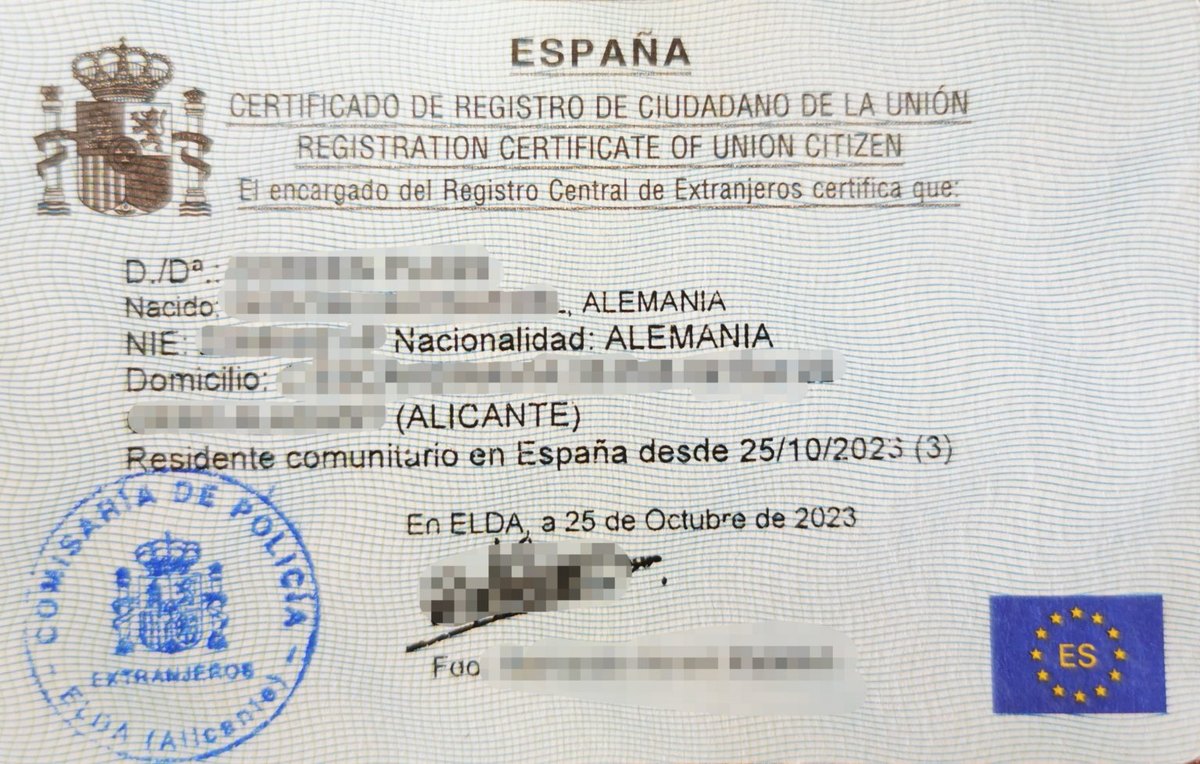
Alongside the Residencia comes the Empadronamiento — registration at your local town hall (Ayuntamiento). A separate process, done in person. Both together unlock access to the public health system. Having only one of them leaves you halfway.
⚠️ Note for non-EU nationals: If you hold a passport from outside the EU — including British citizens post-Brexit — different rules apply. Free movement no longer applies to UK nationals. A separate residency permit is required.
Healthcare: who gets what
The public health system in the Canary Islands is called the Servicio Canario de Salud (SCS) — and it's genuinely good. GPs, specialists, A&E, hospitals: free for registered residents.
Anyone working in the Canaries and paying social security contributions is automatically in the system. Your employer registers you with the Seguridad Social, you receive a social security number, and you then apply at your local health centre (Centro de Salud) for your health card (tarjeta sanitaria).
The self-employed — autónomos — register themselves and pay monthly contributions. SCS access is then identical.
It gets more complicated for non-working residents: retirees, early retirees, people living on savings. Here EU Regulation 883/2004 applies. The principle: whoever has pension entitlements in their home country brings their insurance rights with them.
In practice: the home country issues the S1 form — in Germany that's your statutory health insurer (gesetzliche Krankenkasse), in Ireland the HSE. The S1 transfers the entitlement to Spain. Take it to your local Seguridad Social office and you'll receive the tarjeta sanitaria. Without an S1, there's no SCS access — private health insurance is the only option (roughly €80–200 per month depending on age).
The European Health Insurance Card (EHIC) is valid in the Canaries — but only for temporary stays. Once you move there, you lose EHIC entitlement for that address.
Pensions and social security across borders
Pension years from different EU countries are added together. Someone who worked 20 years in Ireland and then 10 years in Gran Canaria as an autónomo ends up with entitlements from both systems. EU Regulation 883/2004 covers this.
The addition doesn't happen automatically. You need to apply in your home country and specifically declare that you've worked in other EU countries. In the UK (for those with pre-Brexit contributions): contact the International Pension Centre.
Working as an autónomo in the Canaries means paying into the Spanish Seguridad Social. Minimum contributions in 2026 were around €300 per month. These years feed into a Spanish pension.
Bilateral social security agreements between Spain and most EU countries prevent double contributions: if you're paying in Spain, you're exempt from contributions in your home country.
Schools and childcare
Children of EU citizens have the same right to schooling as Spanish children — free, no entrance test, no language requirement. EU Directive 2004/38/EC applies directly.
Your child enters the year group matching their age and last school year in their home country, even without Spanish. Schools are required to provide free language support. Some have dedicated Aulas de Acogida (welcome classes) for children arriving with no Spanish at all.
For enrolment you need: proof of Empadronamiento, birth certificate, vaccination record. School reports are helpful but not a requirement.
Public childcare (0–3 years) is scarce. Escuelas Infantiles (state nurseries) have long waiting lists. EU citizens are subject to the same conditions as Spanish families — no priority, but no exclusions either. Private nurseries cost €300–600 per month.
Voting rights in the Canary Islands
As a registered EU citizen you can vote in two types of election — which surprises many people.
Local elections (Elecciones Municipales): EU citizens with Residencia and Empadronamiento can vote and stand as candidates — exactly like Spanish nationals. You need to register on the electoral roll (censo electoral). It doesn't happen automatically; you have to request it at the Ayuntamiento.
European Parliament elections: EU citizens can vote in Spain instead of their home country — or at home instead of Spain. Both at once is prohibited. If you vote in Spain, you vote for Spanish party lists — not Irish, German or French ones.
What is not possible: voting in Spanish national elections (Congreso de los Diputados, Senado) or regional parliament elections. The Canarian Parliament is closed to EU citizens without a Spanish passport.
⚠️ Double voting in European elections is a criminal offence. Systems are reconciled across all EU member states.
Working and professional recognition
For most professions, all you need is the Residencia and registration with the Seguridad Social — same rights, same dismissal protections, same minimum wage as Spanish workers.
It gets more complex for regulated professions: doctors, nurses, lawyers, architects, pharmacists. These are organised through Colegios Profesionales (professional bodies) — without membership you cannot practise. EU qualifications are recognised under EU Directive 2005/36/EC, but the recognition process must be actively applied for: certify documents, get a sworn translation, submit to the relevant Colegio. Timeline: 3–6 months. Apply before you move if you want to start quickly.
The European Professional Card (EPC) simplifies this for certain professions — including nurses, physiotherapists and pharmacists. The card is applied for online and significantly speeds up the recognition process.
Benefits — the uncomfortable truth
EU citizens do not automatically have full access to Spanish benefits from day one.
Those who work or have worked have access to what the Spanish social security system offers: unemployment benefit (prestación por desempleo), sick pay, maternity pay. This applies to both employees and autónomos, once the required contribution years are met.
Those who haven't worked — new arrivals, early retirees, people living on private assets — have very limited access to welfare support in the early years. The Ingreso Mínimo Vital (Spain's basic income guarantee) is tied to conditions that are difficult for recent arrivals to meet.
After five years of continuous residence you gain the right to permanent residence — and with it, substantially better access to social support.
The practical upshot: anyone moving to the Canaries without working should have 12–24 months of living costs in reserve before counting on state support.
Q&A
Do I need a work permit as an EU citizen in the Canary Islands?
No. EU free movement applies without restriction. You simply register with the Seguridad Social as an employee or autónomo.
Can I vote in Spain and in my home country?
For local elections: only at your place of residence. For European elections: only one country — double voting is prohibited.
Do I pay pension contributions in two countries at once?
No. Bilateral agreements prevent double contributions. Years worked in both countries are combined when your pension is calculated.
My child doesn't speak Spanish — can they still attend a state school?
Yes, unconditionally. The school must provide language support. You need Empadronamiento proof, a birth certificate and a vaccination record.
Do I have immediate access to Spanish benefits?
Only if you work and pay contributions. Without employment or five years of permanent residence, access to welfare support is very limited.
What happens to my EHIC card when I move?
It only covers temporary stays. As a registered resident, you need the Spanish tarjeta sanitaria instead.
I'm a British citizen. Do the same rules apply to me?
No. Brexit means UK nationals are no longer covered by EU free movement. A separate Spanish residency permit is required — the rules are substantially different.