What Happened
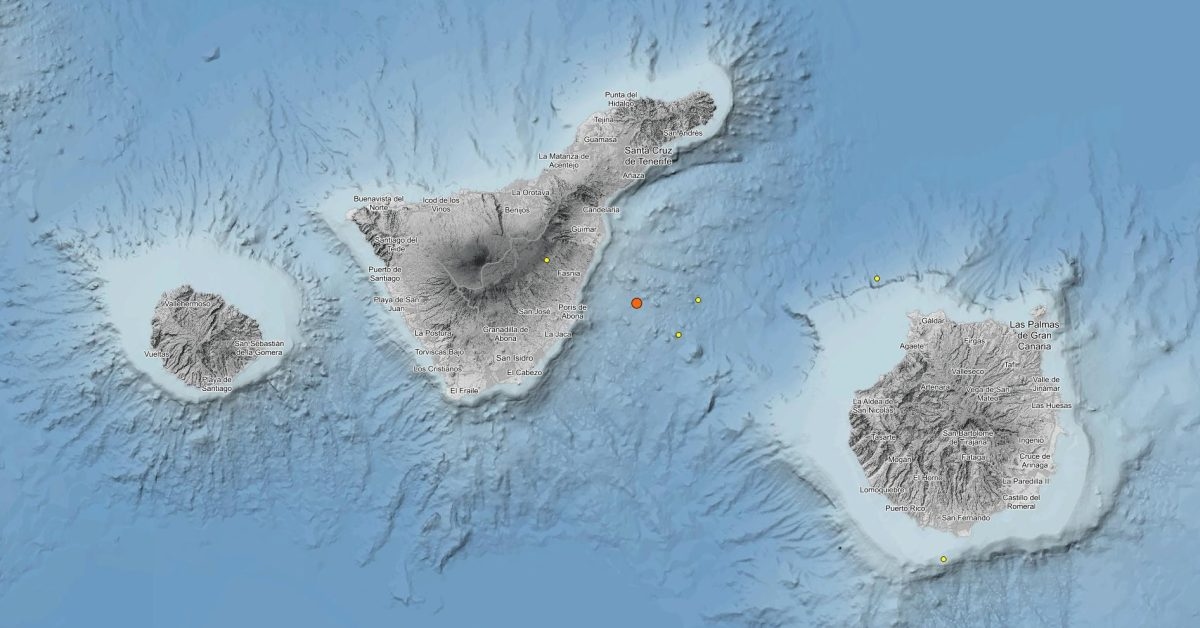
Saturday 11 April — Izaña zone. A small series of low-magnitude earthquakes. The IGN's automatic system detected 16 events, of which 11 were manually located. Magnitudes ranged from 1.0 to 1.9 mbLg — well below the threshold of human perception. Depth: 3 to 10 kilometres. These are volcano-tectonic events, the same type recorded in this zone between May and November 2025.
Monday 13 April, between 00:10 and 00:30 — zone west of Las Cañadas del Teide. Here the activity was different. The IGN registered 38 events in just twenty minutes, including two low-frequency pulses (LP events) and several hybrid seismic signals. Three were manually located at a depth of 12 to 13 kilometres. These signals resemble those from February and March 2026 — but are weaker and show no repetitive pattern.
None of the events were felt by the population.
What It Means — and What It Does Not
Two zones at once sounds alarming. But the IGN puts it in clear context: this type of activity — volcano-tectonic events at Izaña, hybrid events and LP signals at Las Cañadas — is part of the normal behaviour of an active volcanic system. The Teide is one of the most closely monitored volcanoes in Europe. The IGN operates over 100 stations, sensors and sampling points on Tenerife.
The key points:
No ground deformation. Geodetic measurements (GPS, satellite radar) show no surface changes that would suggest rising magma.
No repetitive pattern. Monday's activity shows no recurring structure — unlike the signal series in February and March, which had a clearer pattern.
No eruption risk. The IGN states without ambiguity: this activity does not increase the danger of eruption in the short or medium term (weeks or months).
Luca D'Auria, head of Volcanic Surveillance at INVOLCAN, explains the mechanism: the weight of the island itself creates stress in the rock, which from time to time fractures and produces these small earthquakes. It is geology, not a warning signal.
Why It Still Matters
The Teide is not just any mountain. At 3,715 metres it is the highest peak in Spain, sitting atop one of the most active volcanic systems in the Atlantic. Its last eruption was in 1909 — at Chinyero, on the northwest flank. Its eruptive history spans millennia.
Since late February 2026, the IGN has been recording recurring seismic episodes beneath Tenerife. None has led to an escalation. But each one is recorded, analysed and published — because transparency in volcanic monitoring is not a luxury, it is a necessity. One million people live on Tenerife. Five million tourists visit the island every year.
La Palma Also Moved
On Sunday 12 April, two earthquakes were located on La Palma — at Fuencaliente and Villa de Mazo. The island, whose Tajogaite volcano erupted for three months in 2021, remains under permanent surveillance. The quakes fall within normal post-eruption seismicity.
What You Should Know
If you live on Tenerife or are on holiday there: there is no reason for concern. The IGN monitors the Teide around the clock. Current activity is within the range that an active volcanic system regularly produces. Should the situation change, the IGN will inform the public through its website (ign.es) and the relevant authorities.
What you can do: the "IGN Sismología" app shows all registered earthquakes in Spain in real time. If you live in the Canaries, it is worth knowing about the "Preparémonos juntos" campaign by the Asociación Volcanes de Canarias — seven days of practical preparation in case a volcano does become active one day.