What the new decree changes
The decree adopted by the Canary Islands government on 4 May 2026 substantially shortens the regional phase for approving new university degree programmes. Until now, this autonomous administrative phase took roughly two years on its own. Going forward, it will be reduced to the legal minimum of nine months. The minister for universities, Migdalia Machín, told the press the goal was to streamline and simplify the entire administrative procedure. The procedure remains three-stage in principle: first the regional phase, then the state evaluation, and finally final approval. The state phase is outside the Canary Islands government's control. What has been accelerated is the part the Canary Islands directly manages.
Who benefits from the reform
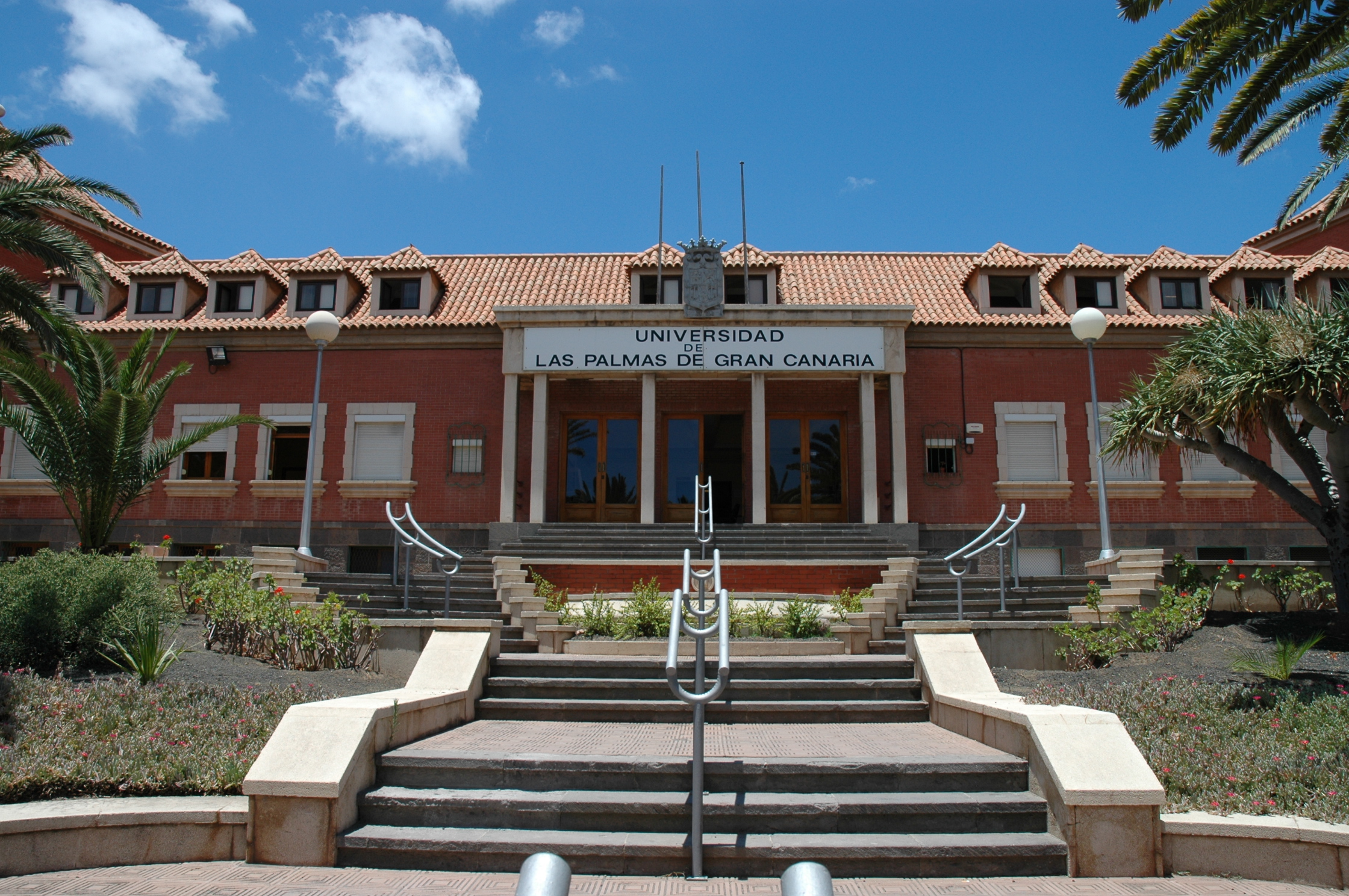
The two public universities, ULPGC (University of Las Palmas de Gran Canaria) and ULL (University of La Laguna), have pushed for acceleration for years. Private universities including the Atlantic Middle University (UNAM), the European University of the Canaries, and Universidad Hespérides also benefit from the reform. The universities themselves still propose new degrees, modifications, and closures. The government acts as guarantor of legal compliance. The substantive responsibility of universities does not change. Bureaucracy is what accelerates.
Why the reform comes now
The trigger was the bottleneck in the ACCUEE (Canary Quality Agency for University and Educational Evaluation) and the University Council of the Canaries. Both bodies have proven to be choke points in recent years — for instance, in approving ULPGC's new Psychology degree. In April 2025, ULPGC's Psychology degree was authorised. However, actual availability for students could only be ensured for academic year 2026/27 because verification was delayed. Such delays should disappear under the new decree. ULPGC currently offers 39 bachelor's degrees, 6 double degrees, and 27 master's programmes. In academic year 2025/26, a new bachelor's in Biotechnology and five new master's were added.
Political assessment
The reform is politically prominent. The Canary Islands government — a CC-PP coalition led by Fernando Clavijo — presents it as bureaucratic relief. Universities see it as the long-awaited response to their concerns. Critical voices warn that acceleration must not come at the cost of quality standards. Accelerating the regional phase does not change state-level requirements, which are still assessed by ANECA (National Agency for Quality Evaluation and Accreditation). The Canary Islands government can only speed up what it controls.
What happens next
The decree takes effect after publication in the BOC (Official Bulletin of the Canary Islands). Universities seeking to offer new degrees can use the accelerated process immediately. The first effects are expected from academic year 2026/27. For students, this means new degrees can start sooner. Adapting to market needs — in fields like AI, tourism digitalisation, and sustainability — should also become more dynamic.
Frequently Asked Questions
- What changes specifically for university degrees?
- The regional approval phase for new degree programmes in the Canary Islands shortens from two years to nine months. New programmes can start faster as a result.
- Which universities benefit?
- Both public universities (ULPGC and ULL) and the private universities of the Canary Islands (UNAM, Europea de Canarias, Hespérides) benefit equally from the accelerated procedure.
- When does the new decree take effect?
- The decree was adopted by the Government Council on 4 May 2026 and takes effect after publication in the BOC (Official Bulletin of the Canary Islands).
- Will quality of programmes drop as a result?
- No. The state evaluation phase by ANECA remains unchanged. The Canary Islands government accelerates only its own administrative portion.
- Which new degrees are in preparation?
- ULPGC is preparing the new Psychology degree for 2026/27, among others. Other areas like AI, tourism digitalisation, and sustainability are also being expanded.