“The office computers were taken from here. They removed our access to the accounts. In short, it was complete chaos.”
These are the words of William Enrique — not a critic, not a political opponent. The president himself. The man who, one month earlier, had been elected on a promise to finally bring order.
One Month Later — and Nothing Has Been Handed Over
On 7 March 2026, the owners' assembly of Centro Comercial Cita in Maspalomas, Gran Canaria, voted for a historic break: the old governing board, which had controlled the shopping and commercial centre for nearly thirty years, was voted out entirely. William Enrique won the election with a clear majority.
Teamwork. Transparency. Accountability. Those were his promises.
One month later, no formal handover process has been completed. Bank accounts were, as of the last available information, inaccessible. Locks not changed. Over one million euros unaccounted for.
The old administrator retained effective control. And the only governing board member who had actively pushed for documentation — the acting Secretary — the provisional role responsible for minutes and documentation until the next General Assembly — resigned on 6 April because the work was simply not possible.
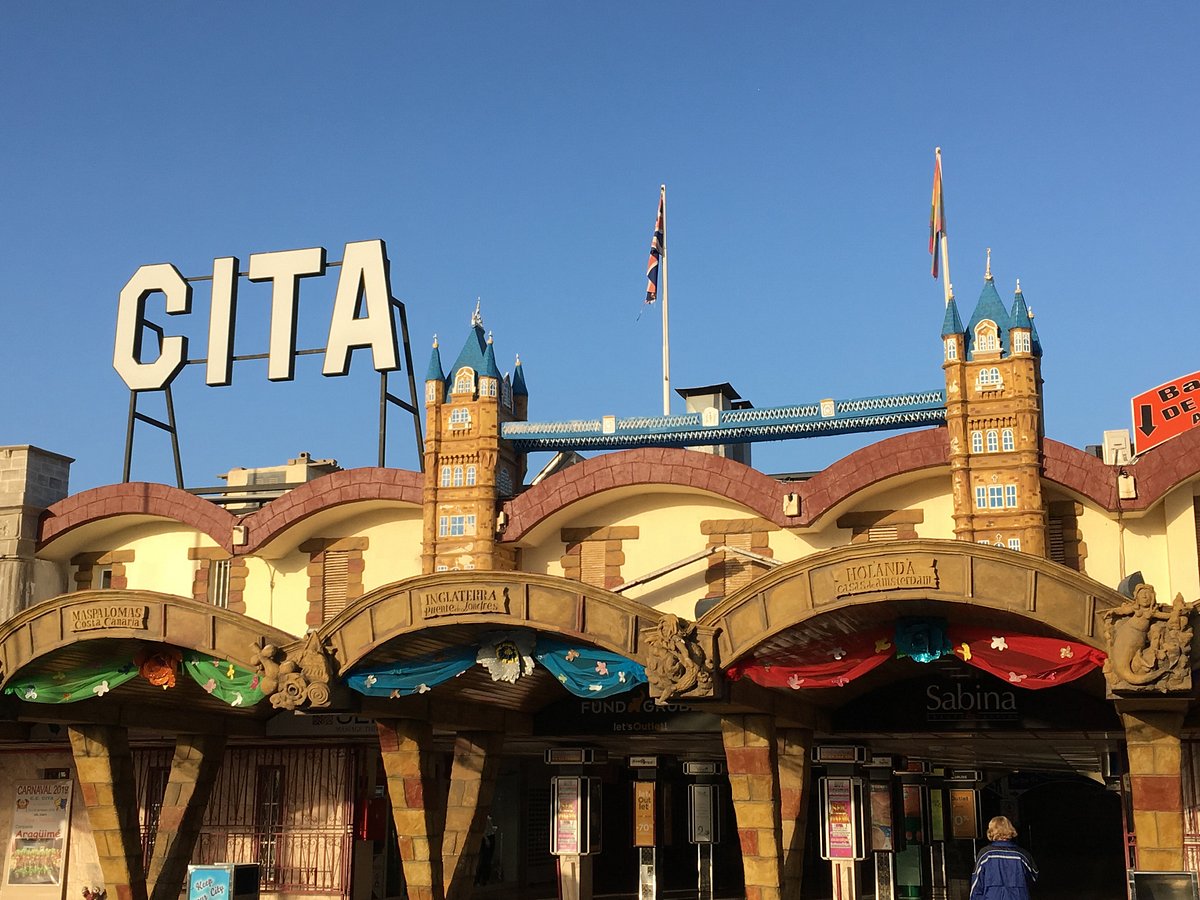
Centro Comercial Cita sits in the heart of Playa del Inglés, at the centre of the Maspalomas tourism zone. Over one hundred owners — many of them international investors and expats who do not live permanently on Gran Canaria — depend on a functioning community administration. What they received instead is a chronicle of failure.
The Theft — Computer Gone, No Police Report
On 31 March 2026, President William Enrique informed the new governing board. The message was brief and alarming: the community's computers had been stolen from the office.
This is no ordinary data loss. The old governing board was voted out after nearly thirty years in power — with the explicit aim of demanding accountability and examining whether irregularities had taken place.
Precisely for that purpose, this data would have been essential: accounting records, contract documents, internal correspondence, payment receipts. With the disappearance of the devices, that possibility has been seriously compromised — potentially irreversibly. This is not a technical problem. This is — legally and journalistically — a grave finding.
What was missing: a police report. Nearly four weeks after the change of power, no criminal complaint had been filed with the Policía Local or the Cuerpo Nacional de Policía. Nor had a formal registered letter (burofax) been sent to the old administrator, who had access to the office at the time of the alleged theft.
The Accounts — Frozen, One Million Unaccounted For
The same message of 31 March contained a second item of information: access to the community's bank accounts was blocked. The new governing board could not access the community's finances.
Invoices continued to be paid by the outgoing figures, service providers continued to be managed by them — without any oversight or authorisation from the new leadership.
Worse still: over one million euros were unaccounted for. William Enrique described the situation in a written message of 31 March as follows:
“There is a figure of one million and something euros that Enrique says he knows nothing about. But in cash, it certainly isn’t there. Nobody can explain it.”
Nobody. Not even the president himself.
Nearly four weeks after the transfer of power, the new leadership had no access to the finances, and the old administration had provided no accounting.
The community of C.C. Cita is subject to the Horizontal Property Law (LPH) — which obliges the outgoing administrator to hand over all documents, accounts, and access credentials fully and without delay. As of the last available information, none of this had occurred.
What the Colegio de Administradores Requires — and What Didn't Happen at C.C. Cita
The Colegio de Administradores de Fincas sets clear deadlines for the handover process: within 10 days, the documents necessary for day-to-day operations must be transferred — the owners' register, account details, current contracts, minutes books. Further documents such as the annual accounts follow within 45 days. Bank access must be transferred immediately through a formal change of authorised signatories at the credit institution.
A formal registered letter (burofax) to the outgoing administrator is considered the minimum standard.
None of this had happened by 31 March — nearly four weeks after the change of power. The Colegio was not contacted — yet that is precisely what it exists to facilitate.
Still in Control — the Old Administrator
José Hernández Pérez, known under the company name Adhover, had been administrator of Centro Comercial Cita for many years. At the assembly of 7 March 2026, the 2025 annual accounts were rejected by a majority of owners.
By the end of March, Adhover was still effectively in post. He controlled the login credentials for the bank accounts. The locks to the office had not been changed at that point.
Neither a formal letter of dismissal nor a formal registered letter (burofax) had been sent to him.
For the more than one hundred owners — including many international property investors and expats who do not permanently reside in Maspalomas or Playa del Inglés — this is not an abstract legal question. Their ongoing costs, their contracts, their security in the development: all of this remained in the hands of an administration that the owners' assembly had rejected one month earlier.
The Flawed Minutes — Rejection Recorded as Approval
On 25 March 2026, the Secretary received the draft of the official minutes of the assembly of 7 March — prepared by Adhover himself, the man who had been voted out. The draft contained serious errors:
1. Voting result misrepresented. According to the draft minutes, the 2025 annual accounts were “approved by majority”. This is incorrect. According to information held by CITA News, the annual accounts were clearly rejected.
2. Former president's costs omitted. Not mentioned in the minutes: representation costs of the former president amounting to 14,400 euros, and a double payment to the administrator — 10,200 euros for auditing his own annual accounts and an additional 11,466 euros for administrative services.
3. Resolution with no recollection. The minutes contain a “unanimous resolution” to grant an electronic power of attorney. The Secretary has no recollection of any corresponding discussion or vote. The later explanation: “a precautionary security measure.”
4. Missing ownership coefficients. Voting results with ownership coefficients were listed only for the presidential election, not for the remaining agenda items — despite this being a legal requirement.
Minutes that record a rejection as approval are not a formal error. Flawed minutes — whether by accident or design — undermine the basis of all further legal steps: contracts, complaints, questions of liability. They cannot withstand later scrutiny.
Notably: the lawyer Eugenia Talavera Plata, appointed by the president, herself acknowledged the errors in a written response. The minutes were produced by the old administration, she said, and could not be “directly amended” — but she conceded: “Coincidimos en que es un punto clave” — they agreed that the vote on the annual accounts must be correctly reflected.
She added that they wished to “issue the document quickly” in order to be able to convene the next assembly. Using minutes that, by their own admission, are flawed as the basis for further resolutions — that is a deliberate decision, documented in writing.
The Role of Eugenia Talavera Plata — and the Conflict of Interest
From 7 March onwards, Eugenia Talavera Plata effectively took control of the handover process, without this having been decided by any body of the community. Talavera Plata is an external lawyer, appointed by the president, with no elected formal role in the governing board.
On 13 March, she told the Secretary in a personal conversation that she intended to stand as administrator at the next General Assembly — that is, to take on, in a paid capacity, the duties she was already performing. This intention was not denied by Talavera Plata before editorial close.
Property law and the community's statutes set out clearly how a handover process must proceed and which bodies are responsible. Concentrating all handover responsibilities in a single external person, with no accountability to the elected bodies, does not conform to this framework.
54 Questions, No Answer
Shortly thereafter, a formal accountability request was submitted to Eugenia Talavera Plata. 54 questions. 13 categories. Stolen computers, frozen bank accounts, the missing million, contacts with the old administration, current contracts, staffing obligations, insurance, tax liabilities, the electronic power of attorney, the minutes — and whether the Extraordinary General Assembly convened for 18 April 2026 rests on a formally sound basis.
Deadline: 3 April 2026. 3 April came. And passed. No written response. 54 questions. Not one answered.
The Resignation
On 6 April 2026, the Secretary resigned. The reasoning was measured — and unambiguous:
After one month in post, there was no owners' register, no minutes book, no inclusion in internal communications, and no response to written requests under Article 38 of the Horizontal Property Law (LPH). Performing the role was factually impossible.
The resignation is an acknowledgement of a failed handover process. It is not the end of the story — it is a data point in a longer documentation.
The Convocation — and What It Enables
On 6 April 2026 — the same day the Secretary resigned — William Enrique Reyes signed the official notice convening the Extraordinary General Assembly for 18 April. Twelve days' notice.
The law permits it. The Horizontal Property Law (LPH) prescribes no minimum notice period for extraordinary assemblies — only that notice must be given early enough for all parties to be informed. Whether twelve days is sufficient is a question the notice does not address. Whether and how it actually reached international owners — many of whom live permanently outside Spain — is not documented. The LPH requires delivery to the address registered in Spain; where none exists, posting at the property is legally valid notification.
There is also the structure of the convocation itself: first call at 9:30, second call at 10:00 — thirty minutes later, same place, same day. The second call requires no quorum. It is valid with however many owners are present, regardless of how many the community has.
Item 3 on the agenda: election of a new administrator/secretary.
What Is at Stake
Centro Comercial Cita is not a small shopping and commercial centre. It lies in the heart of Playa del Inglés, in one of the most visited tourism regions in the Canary Islands, in immediate proximity to one of Europe's best-known beaches. Many of the over one hundred owners are international investors and expats who do not live on site permanently.
- An allegedly stolen computer — and to date no criminal complaint filed
- Bank accounts that were, as of the last available information, frozen — without handover
- Over one million euros whose whereabouts nobody can explain — not even the president himself
- Minutes with documented errors — which are nonetheless to serve as the basis for the next assembly
- An external lawyer who — appointed by the president without consulting the rest of the governing board — concentrated a handover process of extraordinary complexity in a single pair of hands
- The resignation of the governing board body responsible for documentation — due to the factual impossibility of performing the role under the prevailing conditions
- And an Extraordinary General Assembly on 18 April 2026 — with far-reaching decisions on the future administration.
The Cabildo Gran Canaria and the competent authorities have so far played no public role in these proceedings. The Colegio de Administradores de Fincas de Las Palmas has not been contacted.
For anyone who owns property on Gran Canaria or is considering doing so, this case is an instructive example: the quality of community administration determines more than comfort — it determines legal security, financial transparency, and the protection of property.
DOCUMENTS RELATED TO THIS REPORT
→ Transition Plan — C.C. Cita, March 2026 (PDF) (CITA)
→ Analysis: Professional Management Company vs. Individual Administrator (PDF) (CITA)
→ Formal Accountability Request — 54 Questions (PDF) (CITA)
Note: In the original documents, Eugenia Talavera Plata is erroneously referred to as Eugenia Pedro.
Chronology
| 6 March 2026 | Meeting between William Enrique and Matthias Camenzind at Meloneras Golf Club. |
| 7 March 2026 | General Assembly: William Enrique elected president with a clear majority. |
| 8 March 2026 | The new governing board sends Eugenia Talavera Plata the transition plan and the administrator analysis. Response: “Ok perfecto.” — no further reaction. |
| 9 March 2026 | William Enrique travels to Cuba; delegates all tasks to Pedro. |
| From 9 March | The acting Secretary is excluded from internal communications; written requests go unanswered. |
| 13 March 2026 | Pedro tells the acting Secretary in a personal conversation that she intends to stand as administrator (not documented in writing; not denied by Pedro before editorial close). |
| 25 March 2026 | Draft minutes received from Adhover; four serious errors documented. |
| 31 March 2026 | William Enrique: computer stolen, accounts frozen, over one million euros unaccounted for. |
| 31 March 2026 | Formal accountability request (54 questions) submitted to Pedro; deadline: 3 April. |
| 3 April 2026 | Deadline passes without written response. |
| 6 April 2026 | Resignation of the acting Secretary. |
| 6 April 2026 | William Enrique Reyes signs the official notice convening the Extraordinary General Assembly. |
| 18 April 2026 | Extraordinary General Assembly. Agenda includes, among other items: election of a new administrator/secretary (item 3). |
Correction (11 April 2026): A previous version of this article erroneously referred to Eugenia Talavera Plata as «Eugenia Pedro». The name has been corrected. The linked original documents still contain the erroneous name. We apologise for the error.
Editorial note: Matthias Camenzind is publisher and editor-in-chief of CITA News. He is not himself an owner at Centro Comercial Cita; he represents an owner in the Comunidad de Propietarios. In that capacity he was appointed acting secretary (Secretario en funciones) of the newly elected junta de gobierno on 7 March 2026 and held that role until 6 April 2026, making him a direct witness to the events described in this article. CITA News openly declares this conflict of interest. All factual claims in this article are based on written documents held by the editorial team and available upon request. CITA News offered William Enrique and Eugenia Talavera Plata the opportunity to comment in writing and with a set deadline before publication. No written response was received before editorial close.
Legal notice: This article is protected by freedom of expression and freedom of the press under Article 20 of the Spanish Constitution. All factual claims are based on written documented sources held by the editorial team. For factual corrections or additions, please contact: [email protected]. CITA News publishes corrections transparently and promptly.