Key facts
Operation: Embarcadero, Phase 2 — Guardia Civil Sevilla and Tenerife
New arrests: 4 people, 3 immediately remanded without bail
Phase 1 (Nov. 2025): 7 arrests, 5 remanded
Cover: courier services, luxury vehicles, stolen identity documents
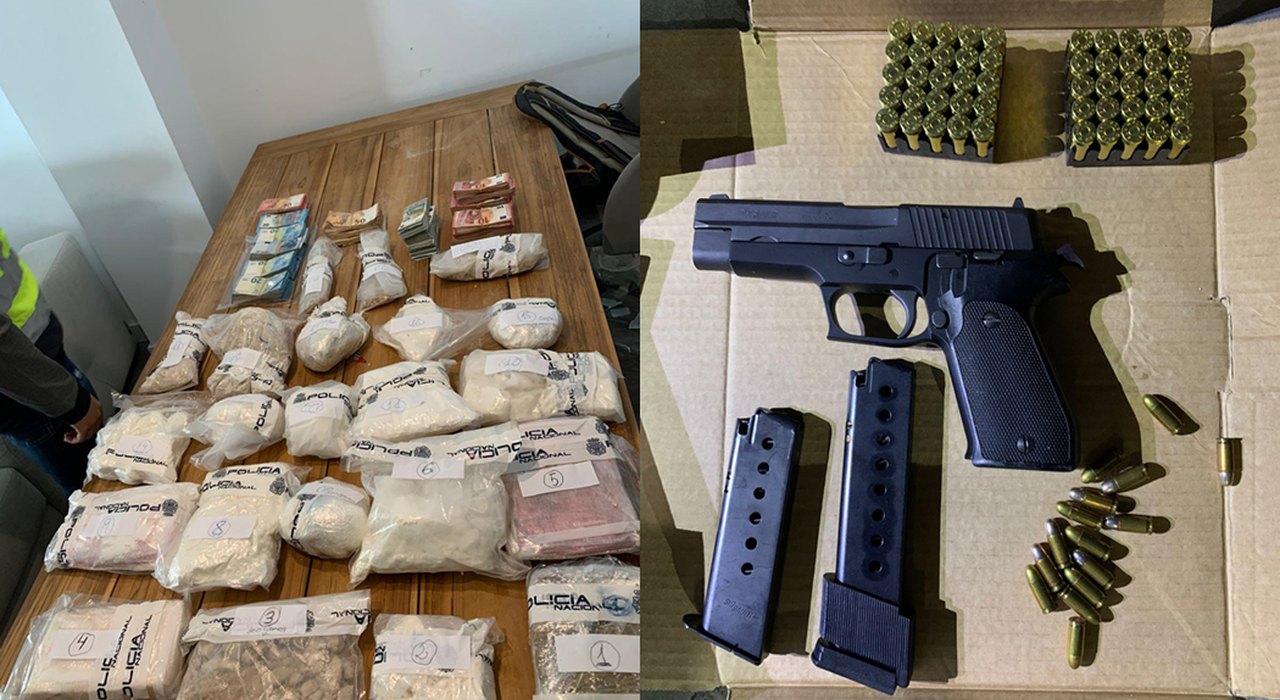
Seized: >30 converted firearms, >1,300 rounds of ammunition, luxury goods, cash, police-detection devices
Weekly deliveries: ~50 kg cocaine from Madrid/Seville to Tenerife
Sources: Diario de Avisos, elDiario.es Canarias, Spanish Interior Ministry
Contents
Two phases, one complete takedown
Phase one of Operation Embarcadero took place in November 2025: seven people arrested, five immediately jailed. Investigators also uncovered an automated weapons workshop — a clandestine laboratory where standard short-barrel firearms and detonators were converted into fully functional live-fire weapons. The finished arms went to the black market; the money fed back into the drug logistics operation.
Phase two, concluded on 27 May 2026, dismantled what remained of the command structure. Four simultaneous property searches — three in Tenerife, one in Seville — yielded the rest: luxury watches, jewellery, cash, money-counting machines and specialist devices for detecting police surveillance. The organisation was professionally structured, with a clear hierarchy, two command centres — one in Seville, one in Tenerife — and a strict separation of roles.
The cover: parcels, cars, stolen identities
What made the network particularly difficult to crack was its three-layer cover. First, legitimate courier businesses through which cocaine shipments were sent as ordinary packages. Second, high-end vehicles — luxury cars used both as status symbols and as transport; in a previous operation, investigators found 66 kilograms of processed cocaine in one of the cars. Third, stolen identity documents: deliveries were processed under other people's names to obstruct tracing.
Tenerife as a hub
This operation does not stand alone. Since major European ports such as Antwerp and Rotterdam massively tightened their controls, international drug cartels have been shifting to transatlantic shipping routes — and the Canary Islands sit directly in the path. In early May 2026, the Guardia Civil boarded the freighter Arconian on the high seas and seized around 45 tonnes of cocaine — the largest drug seizure in EU history. The nearest port it was escorted to: Las Palmas de Gran Canaria.
For tourists and residents on the islands, the raid changes nothing in everyday life. Tenerife is safe. What the operation demonstrates is that authorities are active, networks are being systematically dismantled — and the Canary Islands are acutely aware of their strategic role in the fight against Atlantic drug trafficking.
Frequently asked questions
- What is Operation Embarcadero?
- A joint operation by the Guardia Civil in Seville and Tenerife targeting the Canary Islands' largest drug and weapons network. Phase 1 in November 2025, Phase 2 on 27 May 2026.
- How many people were arrested in total?
- 11 people across both phases — 7 in Phase 1, 4 in Phase 2. A fifth suspect from Phase 2 was already serving a prison sentence.
- What was seized?
- Over 30 converted firearms, more than 1,300 rounds of ammunition, cocaine, luxury goods, cash and police-detection equipment. Phase 1 also uncovered a fully automated weapons conversion workshop.
- How did the cocaine reach Tenerife?
- Around 50 kilograms per week, shipped as ordinary parcels via courier services from Madrid and Seville. Stolen identity documents were used to process deliveries.
- Is Tenerife safer now?
- Authorities describe the organisation as completely dismantled. Visitors and residents were never at direct risk — the network operated as a closed structure within organised crime.