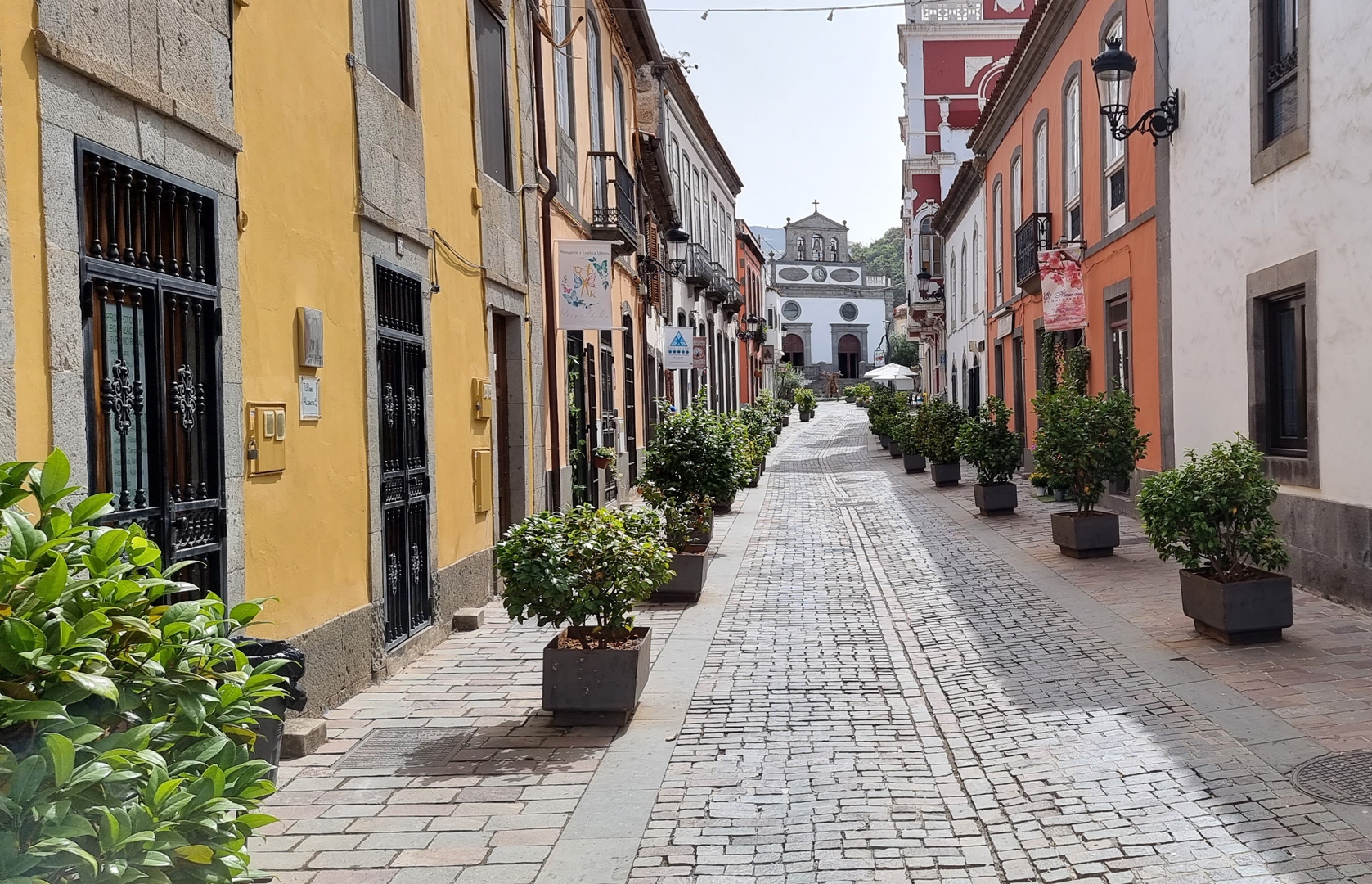
When people think of Gran Canaria, they think of beaches, dunes and resorts. The food in the tourist hubs — Playa del Inglés, Puerto Rico, Mogán — is often exactly what you'd expect: international mediocrity at holiday prices. But thirty minutes inland, a different island begins. Here, in the Medianías and Cumbres between 400 and 1,500 metres altitude, you find the real gastronomy of Gran Canaria.
The restaurants up here are not tourist secrets — they are the places where Canarios queue with their entire families on weekends. Some have no website. Many don't take cards. The menus are short, the portions enormous, and the meat comes from a grill crackling in the corner of the dining room. This is food that tastes of wood fire and honesty.
This guide follows a simple logic: five regions, ten restaurants, south to north, with everything you need to know.
1. Valsequillo — Casa Brito
Casa Brito
Casa Brito is the restaurant Canarios mean when they say "vamos a comer carne". Founded as a family business, now an institution. Two rustic dining rooms with wooden ceilings, an open grill in the main room, a private bar. The speciality is grilled beef — cuts from Germany, Uruguay, Castile, Galicia and Asturias, cooked to perfection. The Baifo (young goat of the native breed) from the grill is legendary, as is the chorizo a la brasa.
Order: Chuletas de Baifo, Chuletón, Chorizo a la brasa. Budget: €30–50 per person. Tip: Book ahead, especially on weekends. Walk-ins often end up at the bar — which is no bad thing.
2. Vega de San Mateo — The Sunday market and its kitchens
San Mateo is the gastronomic heart of the Medianías. Every Saturday and Sunday, one of the island's best farmers' markets takes place here: cheese, wine, fruit, honey, gofio — all from the surrounding area. A restaurant scene has grown up around the market that thrives on exactly this: fresh produce, short supply chains, honest prices.
Bodega La Montaña
A bochinche — the Canarian version of a pop-up wine tavern. Bodega La Montaña opens seasonally when its own wine is ready. There's a short menu of Canarian classics: potaje, ropa vieja, grilled cheese, gofio escaldado. The house wine comes from their own vines. This isn't a restaurant in the conventional sense — it's an experience that exists only in the Canaries.
Order: Whatever's on. The menu changes. Budget: €12–20. Tip: Call ahead to check if they're open.
El Manicomio
A modern guachinche in the town centre. Carne fiesta, grilled meat, Canarian home cooking at prices that make you blink. Nothing fancy — but everything honest and generous.
Order: Carne fiesta, papas arrugadas. Budget: €10–18. Tip: Come on Saturday after the market.
Restaurante Perera
An old-school restaurant, family-run, specialising in traditional Canarian cooking. This is where the locals of San Mateo eat — potaje de berros, queso asado, grilled meat, bienmesabe for dessert. The portions are notorious.
Order: Potaje de berros, Queso asado con mojo. Budget: €15–25. Tip: No frills. The food speaks for itself.
3. Santa Brígida — Wine, craters and charcoal
Santa Brígida sits between Las Palmas and San Mateo, on the edge of the Caldera de Bandama — an extinct volcanic crater where wine is still grown today. The municipality has one of the highest restaurant densities on the island: from traditional Canarian cuisine to creative newcomers to the classic parrillada.
Ca' Manolo
A stalwart. Ca' Manolo has been the go-to address for Canarian home cooking in La Montaña for decades. Family business, wood grill, local meat. The place is always packed, the atmosphere loud and cheerful, and the plates arrive so large you have to share.
Order: Costillas, Carne de cerdo a la brasa, Papas arrugadas. Budget: €18–30. Tip: Book at weekends.
Bodegón Vandama
A former bodega on the rim of the Bandama crater, surrounded by vines. Grilled meat and house wine in a historic building that is worth the visit on its own. The terrace overlooks the crater.
Order: Parrillada, house wine. Budget: €25–40. Tip: Come in the morning and walk to the crater rim first.
Savia
The modern exception on this list. Savia works with seasonal, local produce and gives Canarian cuisine a contemporary twist: sweet potato salad with octopus and prawns, a cachopo with smoked cheese and truffled mushrooms, torrija in croissant form. The wine list features local bottles you won't find anywhere else.
Order: Ensalada de batata, Savicachopo. Budget: €25–40. Tip: For when you've had enough grilled meat.
4. Tejeda — Eating above the clouds
Tejeda sits at over 1,000 metres, on the edge of the great caldera, with views of Roque Nublo and Roque Bentayga. The village is officially one of Spain's most beautiful. It is also one of its most depopulated. But in culinary terms, it has two places that justify the drive on their own.
Restaurante & Brewery Texeda
Chef Borja Marrero does something special here: Mediterranean cuisine with radically local produce — eggs from his own hens (jabada and canarian blue breeds), craft beer brewed at over 1,000 metres, cured ham from sheep and goat. The menu is creative, the portions meant for sharing. The terrace has views of Roque Nublo. Listed in the Michelin Guide and recommended by Guía Repsol.
Order: Croquetas, Ropa Vieja, house craft beer. Budget: €25–45. Tip: Book ahead. The place is small and always full.
Restaurante Roque Nublo
Not a design restaurant, but a kitchen that does what it has done for years: spoon dishes, grilled cheese, gofio escaldado, and in summer a mackerel salad with avocado that ranks among the best the island has to offer. The dining room has a fireplace — not a minor detail at 1,000 metres in winter. The terrace has the finest view of Roque Nublo you can get over lunch.
Order: Potaje, Queso asado, Ensalada de caballa (summer). Budget: €15–25. Tip: Combine lunch with a hike to Cruz de Timagada.
5. Firgas and Guayadeque — Ravines, caves, wood fire
Two final stops that could not be more different: Firgas in the green north, and the Barranco de Guayadeque in the dry southeast — where you eat in cave restaurants carved into the rock.
Asadero La Caldera
The name says it all: an asadero, a grill house. A few minutes from Firgas, in a small hamlet. The speciality is costillas con piña — boiled ribs with pineapple, a Canarian classic that few do as well. Plus ropa vieja and croquettes with mushrooms or spinach.
Order: Costillas con piña, Croquetas de setas. Budget: €15–25. Tip: Simple, generous, satisfying.
Restaurante El Centro
In a cave. Literally. Restaurante El Centro sits in the middle of the Barranco de Guayadeque, a valley where people have lived and cooked in caves since the time of the island's original inhabitants. The cooking is Canarian to the bone: cochino asado (roast pork), parrillada, local cheese, honey from the barranco, bienmesabe from Tejeda. The wines are from the island. The setting is unique — rock overhead, candlelight, the feeling of having slipped into another era.
Order: Cochino asado, Queso local, Bienmesabe. Budget: €20–35. Tip: The drive through the barranco is spectacular. Allow extra time.
Practical notes
Getting there: A hire car is essential. Buses serve some of these towns, but frequencies are low and evening return services unreliable. The roads are winding but well-maintained. Playa del Inglés to San Mateo takes about 35 minutes, to Tejeda around 50.
Opening hours: Many of these restaurants have rest days (often Monday and Tuesday) and close in the evening or only open at weekends. Bochinches and guachinches open seasonally. Always call ahead.
Booking: At weekends, reservations at Casa Brito, Texeda and Ca' Manolo are almost obligatory. Midweek usually works without.
Payment: Some smaller places take cash only. Bring a card, but also cash.
Language: Staff in most of these restaurants speak Spanish. English is possible but not guaranteed. German almost never. A few words of Spanish help — and are appreciated.
Portions: Canarian portions are not tapas. A starter and a main course is almost always enough. If you're a couple, order three dishes and share.
The interior of Gran Canaria is not a culinary desert — it's the opposite. This is where the island eats when it invites itself. Miss it, and you haven't really visited Gran Canaria.