What has changed since our last report
Case count today: 12 confirmed or probable infections (WHO, 21 May). On 6 May there were 6 suspected cases. The doubling was expected — hantavirus has an incubation period of up to six weeks.
Three deaths, none new for 20 days. A Dutch couple and a German passenger. WHO Director-General Tedros yesterday: "No new deaths in 20 days."
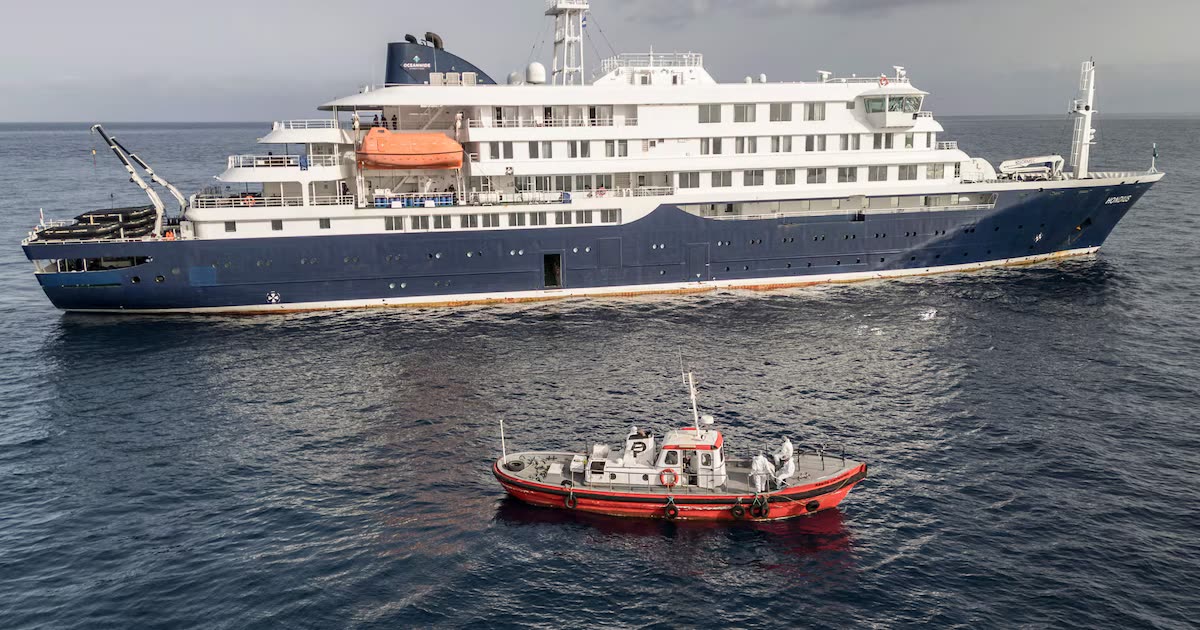
The ship is gone. The Hondius left Tenerife on 12 May and arrived in Rotterdam on 18 May.
The new case is not a Tenerife case. The twelfth case is a crew member who disembarked in Tenerife — but only tested positive after being repatriated to the Netherlands.
Sources: WHO, Spanish Health Ministry (Mónica García), Euronews, Deutsches Ärzteblatt, AP.
Contents
What's actually changing in Spain
Today the Comisión de Salud Pública signed off on a new protocol for the Hondius contacts. It covers 15 people — 14 Spanish passengers isolated since 6 May at the Gómez Ulla military hospital in Madrid, plus two women from Alicante and Barcelona who shared a flight with one of the people who died.
What's changing: Anyone asymptomatic who has tested negative on PCR can spend the last 14 days of the mandatory 42-day quarantine at home — on two conditions: home isolation must be guaranteed, and public health staff must carry out daily checks.
What stays: The first 28 days remain in the clinic. The 42 days match the maximum incubation period of the Andes virus.
Who is currently ill: One of the Spanish passengers at Gómez Ulla has tested positive and has since developed a low-grade fever and mild respiratory symptoms — stable, under observation. The other 13 remain symptom-free.
Where the outbreak stands across Europe
As of 22 May, Hondius passengers or contacts are hospitalised or quarantined in twelve countries: Australia, Canada, France, Germany, the Netherlands, Saint Helena, Singapore, South Africa, Spain, Switzerland, Turkey and the United States.
Severe cases: A French woman admitted to Hospital Bichat in Paris on 10 May had to be put on an artificial lung. Intensive-care specialist Xavier Lescure called it «the last stage of supportive therapy».
Aargau, Switzerland: On 19 May, Rega flew a crew member from the Netherlands to the canton of Aargau. He is in the cantonal hospital, in 42-day quarantine, and has tested negative so far.
The Netherlands: The twelve staff at Radboud University Hospital in Nijmegen who are themselves in quarantine after hygiene lapses while treating the ship's doctor have all tested negative. They remain under observation for the full six weeks as a precaution.
What this means for the Canaries
For tourists and locals: nothing new. The ship has not been in port for ten days. There has been no confirmed transmission to medical staff or port workers in Tenerife. The WHO and Spanish authorities continue to rate the risk to the Canarian population as low.
What remains is the logistics: three passengers from the Canary evacuations were transferred to Madrid, and two patients from the mainland (Alicante, Barcelona) were added through the flight-contact chain. Treatment is taking place at Gómez Ulla, not on the islands.
Concretely: if you passed through Granadilla port or Tenerife Norte airport between 10 and 12 May and are worried — the incubation period is 1 to 8 weeks. If you develop a fever, muscle aches or breathing difficulties in that window, tell your doctor you were in Tenerife. Without direct contact with ship passengers, infection is practically impossible.
What you should do
Nothing, if you had no direct contact with Hondius passengers or crew. The risk is epidemiologically very low.
Watch for symptoms until the end of June if you were in Tenerife in that window and feel uncertain — the incubation period cannot be shortened.
If in doubt: call 112 or go straight to A&E. Canarian hospitals have been briefed on the Hondius protocol.
No reason to panic about rodent contact on the islands. This is Andes virus from Patagonia — not a variant endemic to the Canaries.
Frequently asked questions
- How many hantavirus cases are there in the Hondius outbreak?
- As of 21 May 2026 the WHO confirms 12 confirmed or probable infections. There have been three deaths — a Dutch couple and a German passenger — but none new for 20 days. In early May there were 6 suspected cases; the doubling was expected because of the long incubation period.
- Is the MV Hondius still in the Canary Islands?
- No. The ship left Tenerife on 12 May 2026 and arrived in Rotterdam on 18 May. It has not been in the port of Granadilla for more than ten days.
- How high is the risk for tourists and residents of the Canaries?
- Very low. There was no confirmed transmission to medical staff or port workers in Tenerife. The WHO and Spanish authorities continue to rate the risk to the Canarian population as low. With Andes hantavirus, infection is practically impossible without direct contact with ship passengers.
- What has Spain changed about the quarantine rules?
- The Comisión de Salud Pública approved a new protocol: asymptomatic contacts who have tested negative on PCR may spend the last 14 days of the 42-day quarantine at home — provided home isolation is guaranteed and daily checks are carried out. The first 28 days remain in the clinic.
- What should I do if I was in Tenerife in early May?
- If you had no direct contact with Hondius passengers or crew, nothing is needed. Anyone who passed through Granadilla port or Tenerife Norte airport between 10 and 12 May should watch for symptoms until the end of June and, in case of fever, muscle aches or breathing difficulties, tell their doctor about the stay in Tenerife.