Key facts
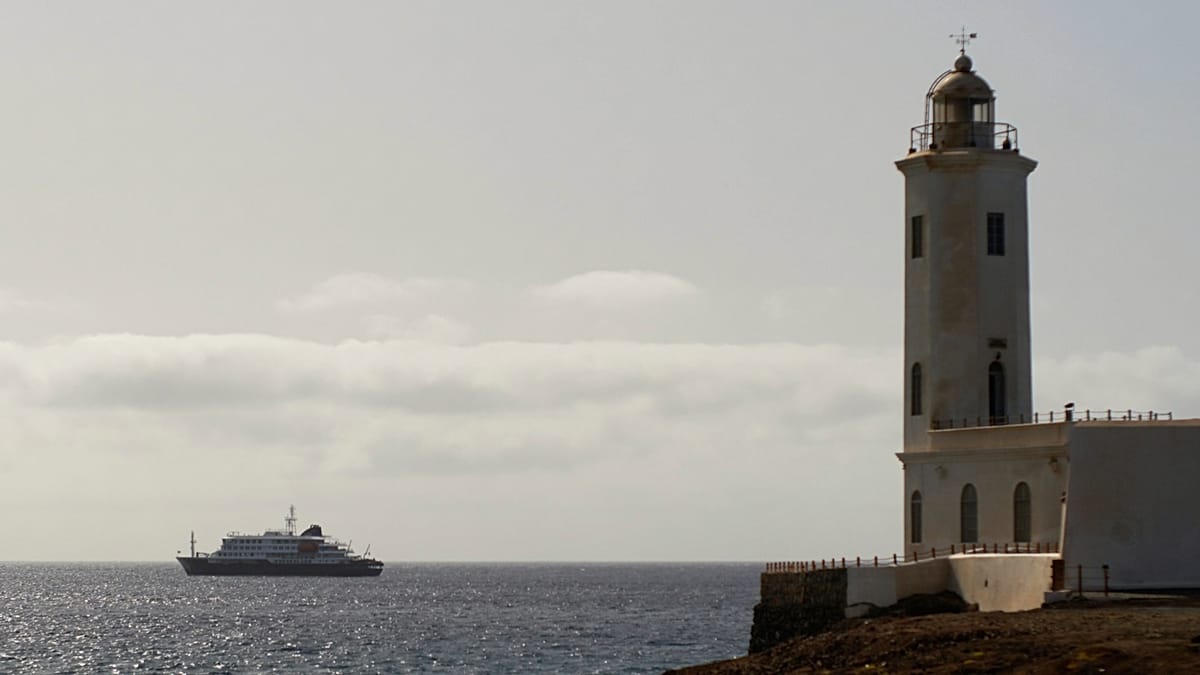
Ship: MV Hondius, Oceanwide Expeditions, 149 passengers, 76 crew
Outbreak: 6 confirmed hantavirus infections (Andean variant), 3 deaths
Arrival: Sunday, 10 May 2026, 6.05 a.m., port of Granadilla, Tenerife
Political conflict: Anchor ban by Clavijo on Saturday, lifted by Marina Mercante resolution on Sunday
Main sources: elDiario.es Canarias Ahora, El Plural, Diario de Avisos, Euronews, Infobae
Contents
What is it about
A hantavirus outbreak on a Dutch expedition cruise ship triggered an institutional clash between Madrid and Las Palmas over the weekend. Spain's central government overruled Canary Islands President Fernando Clavijo on Saturday evening with an emergency resolution. The MV Hondius has been moored at Tenerife South since 6.05 a.m. on Sunday.
On site, WHO Director-General Tedros Adhanom Ghebreyesus, Health Minister Mónica García and Interior Minister Fernando Grande-Marlaska are coordinating the evacuation. The European Centre for Disease Prevention and Control (ECDC) classifies the risk of further spread as «very low». Behind the scenes, however, a political dispute has produced remarkable details.
5.13 p.m.: The ChatGPT extract
On Saturday at 5.13 p.m., the President of the Gobierno de Canarias sent the Health Minister a text. Content: «Sí, las ratas son excelentes nadadoras y pueden sobrevivir en el agua durante largos periodos, incluso hasta tres días seguidos.» Translation: «Yes, rats are excellent swimmers and can survive in water for long periods, up to three consecutive days.»
The text appeared to be an extract from an AI language model such as ChatGPT, complete with YouTube links and detailed information on rodent behaviour in water. The argument: an infected rat could jump off the ship, swim 200 metres to the dock and contaminate Tenerife. The story was broken by elDiario.es Canarias Ahora and picked up by El Plural and El Nacional.
What the Sanidad report says
Spain's Health Ministry responded with a technical counter-report that dismantles every point of the Clavijo hypothesis. The reservoir species of the Andean hantavirus is not the common harbour rat but the Patagonian long-tailed colilargo (Oligoryzomys longicaudatus), which «lives mainly in Chile and southern Argentina, in wooded areas, not ports» and «is not present in Europe». No rodents were found on board the MV Hondius during inspections. If an infected rat had been on board, new cases would have appeared — which has not happened since control measures were activated.
Health Secretary of State Javier Padilla put it bluntly on laSexta: «That idea he had, of an infected mouse jumping off a ship, swimming 200 metres and climbing the dock to colonise Tenerife, is not a risk.» Padilla accused Clavijo of «doing politics to boycott an operation of global importance». The ministry's working hypothesis: the infection occurred before boarding in Ushuaia, during the couple's stay in an ANDV-endemic area in Argentina.
Marina Mercante prevails
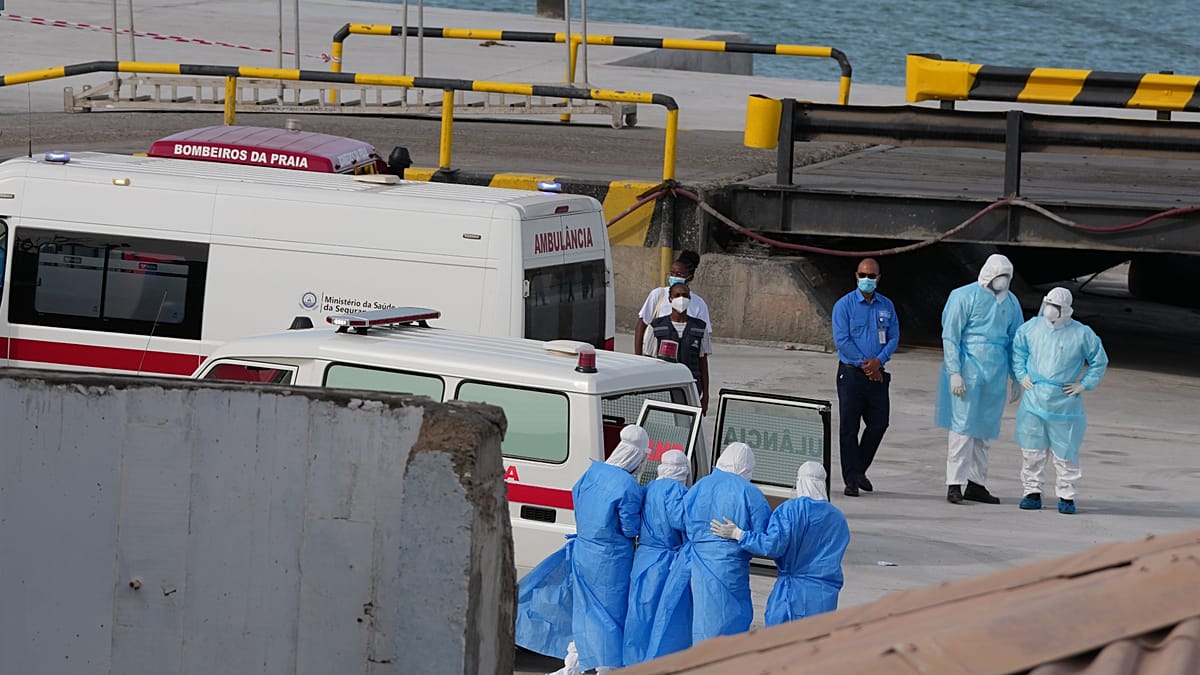
The stalemate was broken in the early hours of Sunday. The Director-General of the Merchant Navy, Ana Núñez Velasco, signed a resolution ordering acceptance of the MV Hondius at the port of Granadilla — «whether by anchoring, mooring or, if necessary, by towing», as the wording cited by elDiario.es states.
The Marina Mercante controls port authorities — in this matter it has precedence over the autonomous regional level. The reasoning: «Health control is more efficient in a prepared port than on the high seas, and Granadilla, as a relatively isolated industrial port with low civilian interaction and ample operational space, has the appropriate qualities.» At 6.05 a.m. the MV Hondius entered escorted by the Guardia Civil.
The evacuation is under way, the ship sets sail
The first 14 Spanish passengers boarded the bus to Tenerife South Airport on Sunday morning. Next come the Netherlands with travellers from Germany, Belgium, Greece and parts of the crew, then Canada, Turkey, France, the United Kingdom, Ireland and the United States. The final flight on Monday afternoon: six Australian passengers.
The travellers board the waiting aircraft directly, escorted by the Guardia Civil. None of those disembarking showed signs of infection. No luggage leaves the ship.
Once the disembarkation of civilian passengers is complete, the Hondius refuels at the port of Granadilla. Monday before 7 p.m. local time, the ship sets course for Rotterdam. The crossing to the Dutch home port takes about five days. The crew — predominantly Filipino — and the body of a deceased passenger remain on board. Full disinfection follows in Rotterdam. The hurry has a practical reason: an incoming bad-weather window off the Canaries.
The reputational risk
While the evacuation continues, a second front has opened: the reputational debate. The Madrid-based Instituto Coordenadas de Gobernanza y Economía Aplicada, which consulted more than 25 experts in public health, tourism, biosecurity and reputation management, has warned of a «collapsing reputational damage» for the Canary Islands should the crisis drag on.
The argument has its own edge: «Modern health crises are simultaneously epidemiological, economic, reputational and algorithmic.» The constant repetition of the terms «Canary Islands», «virus», «quarantine» and «cruise» in international media, social networks and AI language models could consolidate a «negative narrative with broad reach in search engines, social networks and generative AI systems». Spain should have explored international alternatives together with the WHO and Cape Verde authorities, the institute argues, to avoid making the Canary Islands the «reputational epicentre» of an international health alert.
Three levels, three risks
First, the operation in Granadilla is sanitary routine on an exceptional scale. WHO chief on site, ECDC risk assessment «very low», valid maritime health declaration, no new cases since the activation of measures, isolated industrial port. Anyone speaking of «pandemic risk» here has misread the situation — or deliberately overstated it.
Second, the conflict between Las Palmas and Madrid is politically real but technically overplayed. The argumentative weakness of the Canarian position — AI-generated text instead of expert opinion — will not only harm Clavijo. It harms the model of federal competence distribution in times of crisis.
Third, the reputational risk is real. If searches for «Canary Islands» are dominated by hantavirus headlines in the coming weeks, that has consequences for a region that depends on tourism for 35 per cent of its economy. When the Hondius leaves on Monday evening, the epidemiological phase on Tenerife will be over. The reputational one is just beginning.
Frequently asked questions
- What is the Andean virus?
- A South American hantavirus variant transmitted mainly by the Patagonian long-tailed colilargo. Incubation period two to four weeks. Not endemic in Europe to date.
- Is there a risk of infection for residents of Tenerife?
- According to the WHO and the ECDC, the risk is «very low». The ship lies in the industrial port of Granadilla, isolated, with a wide-ranging security corridor.
- Why did Clavijo want to ban the docking?
- He cited a lack of technical information and safety concerns. In his argumentation to the Health Minister he used an AI-generated text on the swimming behaviour of rats — which the Sanidad report rejected as unfounded.
- Who ultimately decided?
- The Director-General of the Merchant Navy, Ana Núñez Velasco, signed the resolution ordering the docking of the Hondius at Granadilla. The Canarian position was thereby legally overruled.