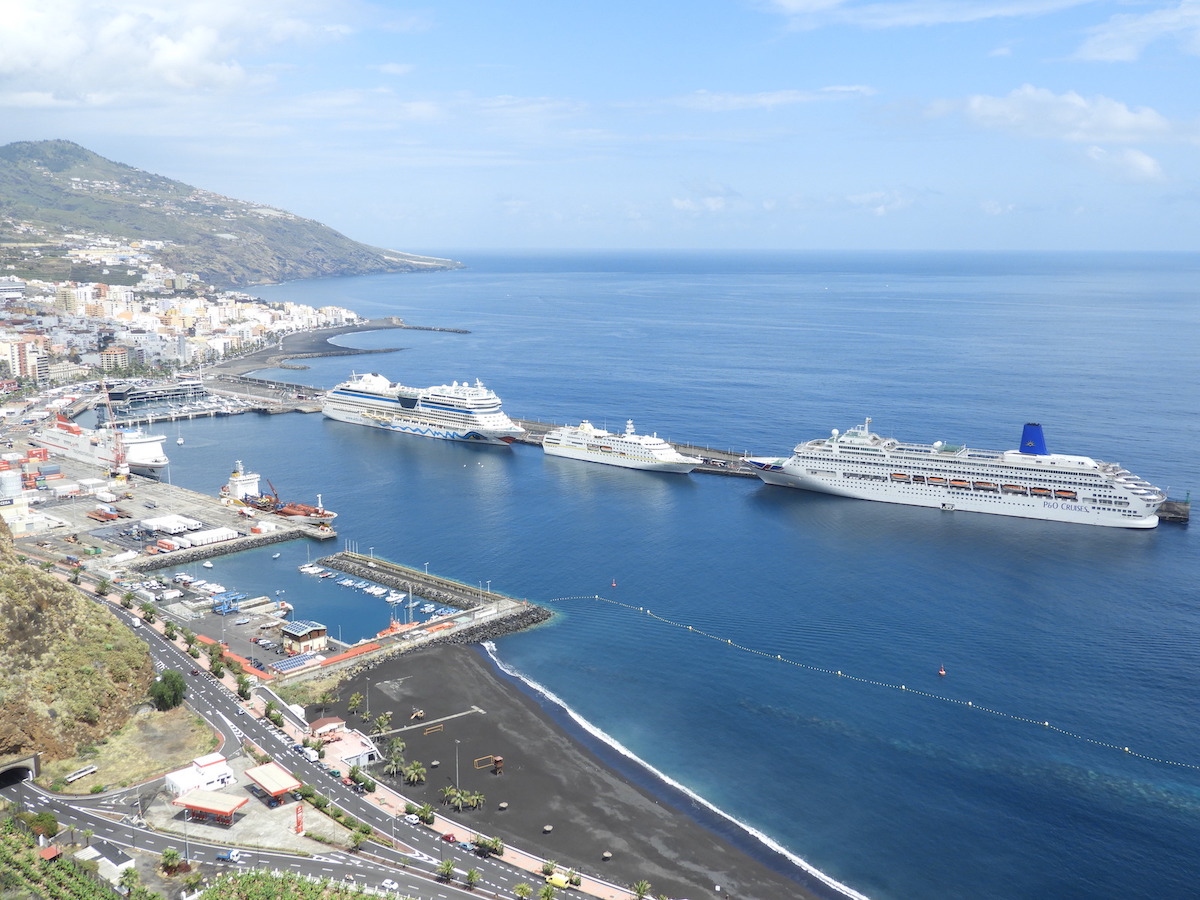
What does La Palma's economy look like in 2025?
La Palma's economy continues to grow in 2025, but more slowly. The Cámara indicators in detail: new car registrations down 4.2 percent year-on-year. Freight transport slightly down. Investment readiness 65.9 percent of companies expect a linear evolution of investment in 2026. Employment intention 76.4 percent plan to keep their workforce.
On prices, 64.8 percent are optimistic. 23.1 percent fear new pressure due to the Middle East conflict and double insularity — the additional logistical costs that La Palma carries as an island behind Tenerife or Gran Canaria.
Sergio Rodríguez, president of the Cabildo de La Palma, frames the situation as the consequence of the end of the post-volcano reconstruction phase that started in 2021. Santiago Sesé, president of the Cámara de Comercio Santa Cruz de Tenerife, said at the unveiling: "Geothermal energy is a strategic opportunity for the island."
What are La Palma's three diversification bets?
La Palma is playing three strategic cards, all starting in 2025 or 2026.
Direct flights from the United Kingdom. Jet2 has been flying twice a week from Manchester since April 2026 (El Time) directly to La Palma. Added to this is a new Condor route to Munich, a direct connection to Wrocław and more seats from Düsseldorf. Air capacity for summer 2026 grows by 28.34 percent — more than 30,000 additional seats. In the British market, which accounts for 40 percent of Canarian tourism, Jet2 is the most relevant operator with 2.5 million passengers.
Blue Innovation Centre in Tazacorte. The Cabildo de La Palma and the research centre PLOCAN are developing at the port of Tazacorte a hub for marine research, ocean technology and entrepreneurship in the blue economy — economic activity around marine use, energy, aquaculture and shipbuilding. Sergio Rodríguez, president of the Cabildo de La Palma, describes the idea: turn the island's scientific strengths — astrophysics at the Roque de los Muchachos, oceanography at the university station — into an economic ecosystem with qualified jobs.
Thirty Meter Telescope at the Roque de los Muchachos. The Thirty Meter Telescope has been seeking a site for years. Hawaii has been ruled out due to indigenous protests; La Palma is the second option. Estimated investment: more than 1.4 billion euros, supported by an international consortium of the United States, Canada, Japan, India and China. Construction phase: hundreds of direct and indirect jobs. The final decision is pending.
What role does geothermal energy play for La Palma?
Santiago Sesé, president of the Cámara de Comercio Santa Cruz de Tenerife, has put geothermal energy as a strategic energy vector (El Time) into the foreground at the unveiling of the economic report. The island sits geologically on an active volcanic zone — the Cumbre Vieja eruption of 2021 is proof of this. The same geothermal activity that carries the risk is also the potential for the island's own electricity and heat production.
In concrete terms, nothing is yet developing. There are no granted exploration licences, no pilot plant in operation, no investor with a signed contract. What there is are studies and political statements. Geothermal energy on La Palma in 2026 is an announced bet, not an active business.
The Cabildo strategy connects geothermal energy with the Blue Innovation Centre and the scientific infrastructure at the Roque de los Muchachos into a planned innovation ecosystem. If the concept works out, the island will create qualified jobs in a future-oriented sector — precondition: people willing to fill them.
Who is supposed to fill the jobs created on La Palma?
The three initiatives create jobs but do not solve the demographic problem. La Palma has been losing population in recent years, mostly young, mostly to Tenerife or to the Spanish mainland. The 2021 eruption accelerated the trend in the short term. Many families who lost their homes have not returned.
The Cámara figure of 57 percent unfilled vacancies describes this gap. If the island's three bets pay off — Jet2 tourism, Blue Innovation, TMT — and the island has no one to fill the jobs created, then either mainland workers on temporary contracts will fill them or the positions will remain vacant. Both scenarios mean less local value-added, more commuter economy, thinner social fabric.
A policy that explicitly targets the return of former palmeros is currently not part of the Cabildo strategy.
57 percent of unfilled vacancies is the yardstick by which the island's strategy 2026–2030 will be measured.