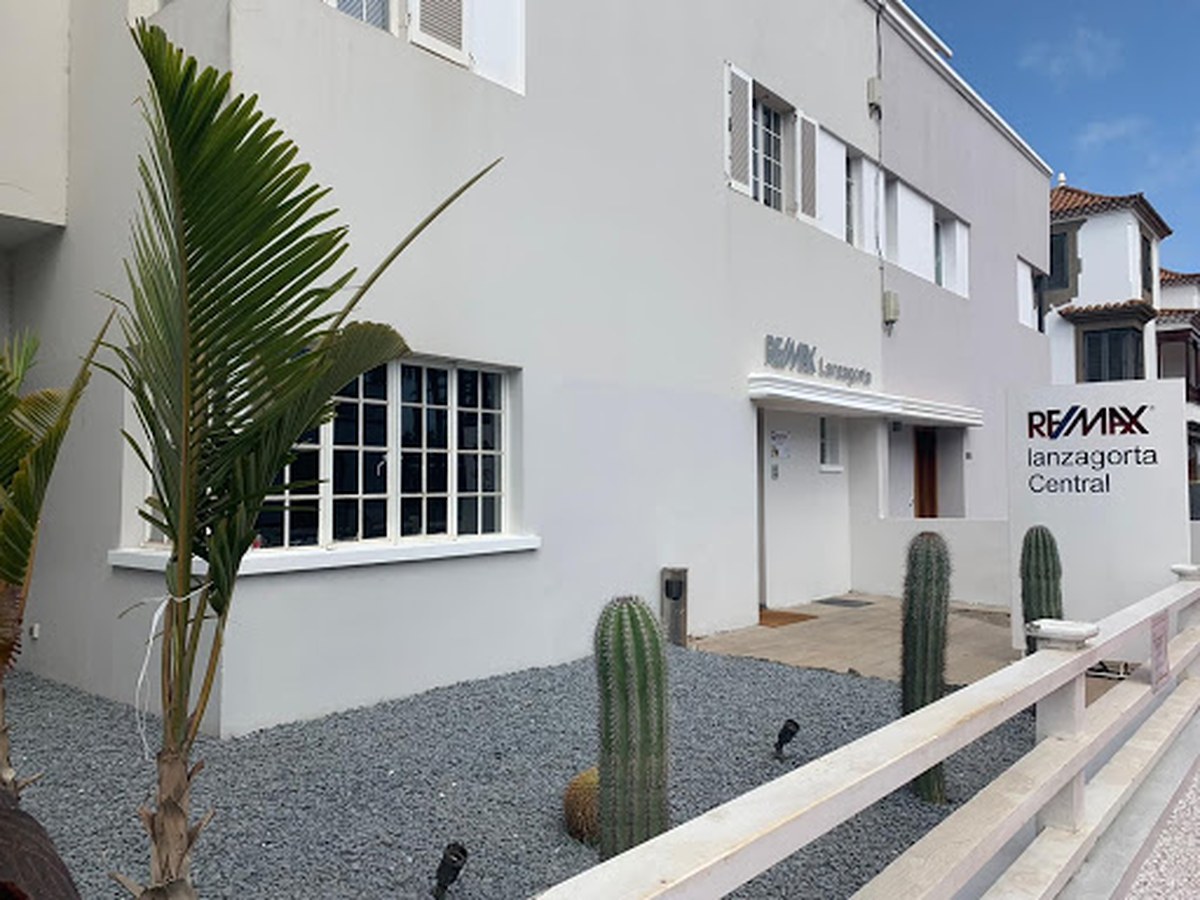
Key facts
RE/MAX in the Canaries: 27 years' presence, leading brand, several offices in Las Palmas, MLS network with hundreds of agents; over 140,000 agents in 110+ countries worldwide
Commission: 5% + IGIC (Canarian sales tax) — due at the deposit stage, not at completion
Penalty clause: 100% of the commission if you sell without RE/MAX — even if they never introduced a single buyer
Post-contract liability: open-ended in the standard contract
Jurisdiction: Las Palmas — wherever you live
Legal position: The Las Palmas provincial court (Audiencia Provincial) declared a 100% penalty clause of this kind null and void in 2023. It is still in the contract.
If you are selling on Gran Canaria, RE/MAX is hard to avoid. Present for 27 years, describing itself as the «best-known property brand in the market». RE/MAX advertises the «largest property stock on Gran Canaria» and its MLS network, which pools the listings of most property professionals on the island. Globally, with over 140,000 agents in more than 110 countries, RE/MAX is the largest estate agency company in the world.
Which means: anyone selling will, sooner or later, have a RE/MAX agent across the table. With a contract. Four pages, pre-printed, «applies to everyone». Here is what is in it.
Contents
- What «exclusivity» really means
- Clause 6: €10,750 for nothing
- Clause 4: You pay before you have your money
- Clause 8: The bill that arrives years later
- Clauses 9 and 11/12: No liability, fixed jurisdiction
- «Can't be changed» is a claim, not a law
- The sequence that gives it all away
- What to do before you sign
- Frequently asked questions
What «exclusivity» really means
Agents like to explain it this way: «I'm your single point of contact, but through the MLS we market your property with hundreds of agents.» True — the MLS is genuine added value. But it is still exclusivity. During the term (usually 4–6 months) you cannot instruct another agent, advertise the property yourself, or sell directly without paying the full commission.
Clause 6: €10,750 for nothing
On a €215,000 sale price, 5% commission is €10,750 plus tax. Clause 6 says: if you sell during the term without RE/MAX — through another agent or directly — you owe that sum anyway. Even if RE/MAX brought no buyer, ran no advertisement, and hasn't been in touch for weeks.
The Las Palmas provincial court declared exactly this kind of clause null and void on 1 March 2023: demanding the full commission when the owner breaks exclusivity, regardless of whether the agent contributed anything to the sale, is unfairly prejudicial. It nonetheless remains in the standard contract — and hardly any seller knows that a Canarian court has already struck it down.
Clause 4: You pay before you have your money
Selling property in Spain happens in two steps: first a preliminary contract at which the buyer pays a deposit (in Spanish «arras») — and weeks or months later the completion before a notary, at which the full purchase price is paid and ownership transfers.
Under the standard contract, the commission falls due at the preliminary contract — at the deposit stage — not at completion, when you receive your money. If the sale collapses afterwards (the buyer can't get financing, the bank refuses, they withdraw), you have paid the commission and sold nothing. In a market where financing for buyers from outside the EU regularly falls through, that is not a theoretical risk.
Clause 8: The bill that arrives years later
Even after the contract ends, you owe the commission if a buyer purchases who was shown the property during the term — plus 10% in late-payment interest. There is no time limit. Courts require the agent to prove who they actually showed the property to. Without a written list of those prospects — which the contract does not provide for — the claim is contestable. But only if you are prepared to fight it.
Clauses 9 and 11/12: No liability, fixed jurisdiction
Clause 9 excludes any RE/MAX liability for administrative work — for instance if a mistake is made checking documents or dealing with authorities. Clause 11/12 fixes Las Palmas as the place of jurisdiction: if you live in Tenerife, the UK or Germany, that means travel, a Spanish lawyer and Spanish proceedings in the event of a dispute. Spain's consumer protection law (Art. 82 TRLGDCU) classes as unfair any clause that is imposed unilaterally and significantly disadvantages the consumer — a pre-set jurisdiction in a standard form is exactly that.
«Can't be changed» is a claim, not a law
The Spanish Civil Code (Art. 1255 Código Civil) guarantees freedom of contract for both sides. Unfairly prejudicial clauses are void under consumer protection law (Art. 83) — even once signed. But it also means: you would have to go to court to rely on that. Which costs time, money and nerves — something a global corporation withstands more easily than an individual owner.
The sequence that gives it all away
Before you ever see the contract, something else usually comes first: a document checklist. Title deed, land registry extracts, the latest property tax receipt, a certificate from the owners' association, an energy certificate — and if you sell through a company, also the incorporation deed, the director's appointment and their ID. A long list, and not unreasonable — you do need all of it eventually.
But note the order: you supply first. You lay open your complete legal, tax and corporate position — who you are, what you own, whether there are debts on the property. Only once the agent has fully x-rayed you does the contract appear. «Can't be changed.»
Turn it around. Ask for the standard contract first, read it, have the clauses explained. Only once it is acceptable to you do you hand over documents. Anyone who has already submitted everything feels committed — and that feeling is the best ally an unbalanced contract has. This applies not only to RE/MAX, but to every agent and every pre-printed contract. The contract first. Always.
What to do before you sign
- Commission only at completion — not at the deposit stage.
- Limit post-contract liability — six months maximum, and only for buyers named in writing.
- Demand the buyer list — on the final day of the contract, in writing.
- Jurisdiction — your home or the location of the property, not Las Palmas by default.
- Get a second quote — not every agent works on an exclusive basis.
RE/MAX is a professional agency with a real network and 27 years of experience. A good network and a fair contract are not mutually exclusive. Those who sign informed negotiate better — and those who know a Canarian court has already struck down Clause 6 are less easily fobbed off at the next agent meeting.
Frequently asked questions
- Can I negotiate the RE/MAX contract?
- Legally, yes. In practice you often hear «company standard». Individual offices have some room. If you hear «no», you can keep asking — or walk.
- Is 5% commission normal?
- Yes, market standard in the Canaries. On the Spanish mainland it's more like 3–4%. Non-exclusive mandates sometimes leave room to go lower.
- Found a buyer yourself — what then?
- Clause 6 demands 100% commission. The Las Palmas provincial court declared it void in 2023 — but you'd have to be willing to fight it.
- Should I send the agent my documents first?
- No. Ask for the contract first and review it. Only once the terms are right do you hand over the title deed, land registry extracts and the rest. Whoever discloses everything first negotiates from the weaker position.
- Are there alternatives to RE/MAX?
- Yes — independent agents and smaller offices that work non-exclusively. Smaller network, but a more negotiable contract.
This article is general information and not legal advice. For an individual case, consult a lawyer specialising in Spanish property law.