What does the Anjoca Elba Corralejo resort bring to Fuerteventura?
Anjoca is a 60-year-old construction company based in central A Coruña, which has diversified over three generations from construction into hospitality. The hotel brand Elba Hotels & Resorts currently operates 16 hotels in Spain — in the Canaries, Balearics, Madrid and Andalusia. In Fuerteventura, Anjoca is the largest private accommodation player, with six existing properties in Caleta de Fuste and Antigua, including the Elba Palace Golf Boutique Hotel and the Sheraton Fuerteventura Beach under Marriott licence. The Elba Corralejo will be the group's seventh property on the island and the tenth across the archipelago.
The project is notable in its dimensions. 100 million euros of investment. 478 rooms, of which 52 with swim-up direct access to the pool zone and 15 junior suites. 24 pools, of which six of the «river» type and 15 for private use integrated into suites. 50,000 square metres of facilities plus 16,000 square metres of gardens on a total plot of 60,000 square metres. Seven restaurants and bars. A 4,000-square-metre family area with the children's water park «Pepe Aqua Land». Spa centre, separate adults-only zone under the Elba Corralejo Premium Level label. The opening is scheduled by the company for December 2026 — straight into the high winter season phase.
The employment balance is significant. Anjoca expects 400 direct jobs once the hotel is operational. To this are added some 600 indirect jobs from the construction phase, from logistics through subcontractors to local suppliers. This is a relevant magnitude for an island with around 130,977 inhabitants in total (INE data 1 January 2026), of whom a considerable share already works directly in tourism. The Cátedra Sanjuán at the Universidad de La Laguna has described in its January study exactly this constellation: the Canarian working-age population cannot cover its own demand — Anjoca will therefore have to rely intensively on foreign workers.
The public subsidy is also notable. The Ministry of Finance granted in January 2025 to the Anjoca subsidiary Herculina Las Dunas a non-refundable regional grant of 28.1 million euros — equivalent to 40 percent of the 70.25-million-euro investment sum reported to the ministry. Anjoca's press releases speak of 100 million, the municipal building licence from the Ayuntamiento de La Oliva indicates 32.1 million in pure construction execution. The discrepancy has provoked local criticism, but is not a procedural fault — the different figures refer to different investment components.
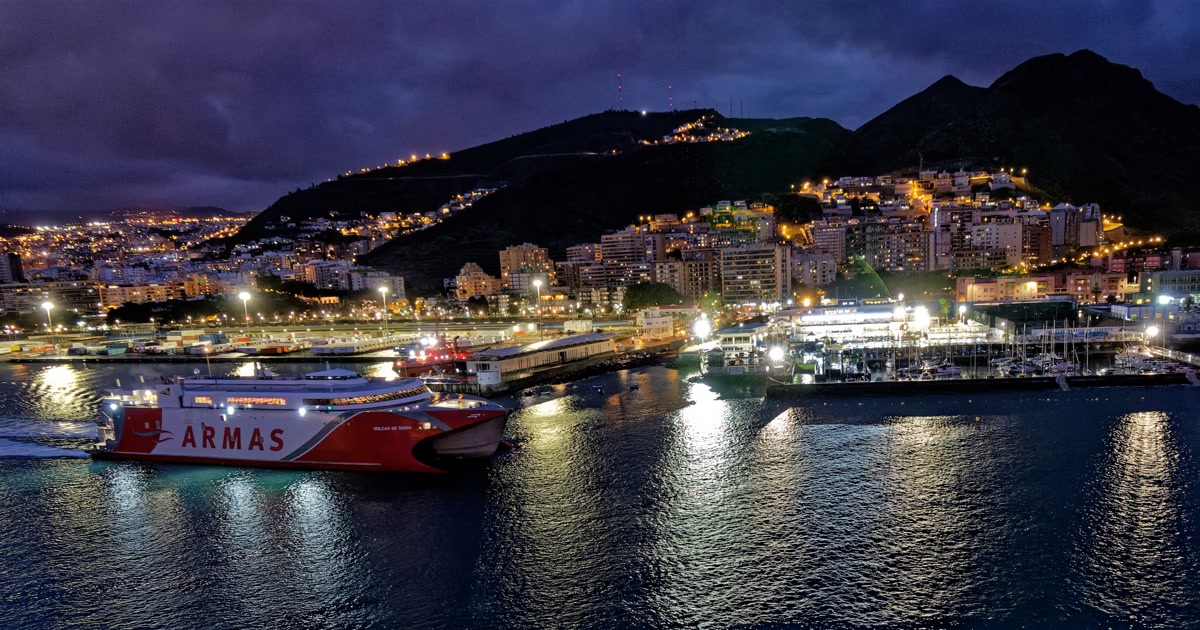
How is the Port of Santa Cruz de Tenerife growing in the first quarter of 2026?
The Q1 balance of the Port Authority of Santa Cruz de Tenerife under Pedro Suárez is impressive. 937,295 passengers in total between January and March 2026 — an increase of 4.45 percent over the previous year, almost 40,000 passengers more. The growth is not evenly distributed: the increase concentrates on cruise tourism.
559,493 cruise passengers were registered by the port in three months — an increase of 11.89 percent over Q1 2025, almost 60,000 more visitors. The number of cruise calls rose by 6.83 percent to 172 calls in three months. This gives an average of around 3,250 passengers per call — a value reflecting the trend towards larger ships. Mein Schiff-class vessels, AIDA Cosma, MSC and Princess Sapphire-class ships regularly use Tenerife as base port or as call.
On the cargo side another value is striking. Bunkering — that is, the supply of fuel to ships — grew by 49.55 percent to 226,979 tonnes, supplied to 922 ships (134 more than in 2025). This sector has been a strategic focus of port policy for years. Tenerife competes here with Las Palmas, Algeciras and Gibraltar as Atlantic fuel hub. The strong growth is also linked to the worldwide shift in shipping routes — ships have been avoiding the Suez Canal since the Red Sea crisis and are coming via the Atlantic route, increasing the number of stops in Canary ports.
The total turnover stands at over 3.1 million tonnes for the first quarter. Pedro Suárez spoke of a «consolidated strategic role of the port in the Atlantic». The figures back him up — Q1 2026 is the best first quarter in port history.
What do the two updates show about the economic development of the Canary Islands?
Both pieces of news point to the same trend: the economic dynamism of the Canaries continues to concentrate on a few islands and hubs. In Fuerteventura, Corralejo attracts the largest private hotel investment of recent years. In Santa Cruz de Tenerife, the port grows by double digits in the cruise area. Both developments reinforce the tension that becomes visible in the parallel housing and labour market debate — the Cátedra Juan Miguel Sanjuán at the Universidad de La Laguna has documented that these growth sectors are pushing the Canaries into a structural dependence on foreign workers and into a sharper housing crisis.
In Fuerteventura, the island's population has grown by around 22 percent over the last ten years, driven almost exclusively by migration. Housing scarcity is the dominant topic of local politics. The State Housing Plan 2026-2030, which the Canarian government presented at the end of April 2026, foresees 10,000 dwellings per year — a value that does not cover today's gap. When the Elba Corralejo opens 400 direct positions in December, the hotel will have to fill many of those positions with commuters from Lanzarote and seasonal workers from the mainland, because affordable housing on the island is lacking. Crisis and growth go hand in hand.
In Tenerife the situation is structurally similar but more economically differentiated. Santa Cruz as capital benefits only partially from port growth — cruise passengers leave the ship, shop for a few hours, often travel by bus to the Anaga or to La Laguna and return in the evening. The direct economic value creation per visitor is low. Bunkering growth, by contrast, creates high-quality industrial jobs and substantially increases the port authority's revenues. Pedro Suárez has emphasised in recent months that the port will prioritise its investments in fuel and logistics infrastructure — an industrial modernisation aimed at reinforcing Tenerife's position as an Atlantic hub.
The two updates together provide the sober diagnosis. These islands continue to grow, faster than the archipelago average. The investors do not come from the islands themselves, but from Galicia (Anjoca), Norway (Equinor) and Madrid (Iberdrola, Naturgy). Employment grows, but the housing question remains unresolved. And the port economy benefits from geopolitical shifts that nobody in the islands controls.
Frequently Asked Questions
When will the Anjoca Elba Corralejo resort open?
Anjoca confirmed at the end of April 2026 that the Elba Corralejo will be completed as scheduled in the fourth quarter of 2026, with opening in December 2026 for the high winter season phase. The hotel comprises 478 rooms, 1,000 places, 24 pools and seven restaurants. The investment amounts to 100 million euros. It is Anjoca's seventh property in Fuerteventura and the tenth in the archipelago.
How many jobs does the new hotel create?
The Elba Corralejo will create 400 direct jobs once operational, according to Anjoca data. To this are added some 600 indirect jobs from the construction phase, from logistics to local suppliers. The company also received in January 2025 a non-refundable regional grant of 28.1 million euros from the Ministry of Finance — 40 percent of the declared investment sum.
How many cruise passengers has the Port of Santa Cruz de Tenerife received in the first quarter of 2026?
The Port of Santa Cruz de Tenerife registered in the first quarter of 2026 a total of 559,493 cruise passengers, an increase of 11.89 percent over the previous year and almost 60,000 more visitors. The number of cruise calls rose by 6.83 percent to 172. Total passenger traffic in the port reached 937,295 people, a growth of 4.45 percent.
What does the strong increase in bunkering mean?
Bunkering — the supply of fuel to ships at the Port of Santa Cruz de Tenerife — grew by 49.55 percent in the first quarter of 2026, to 226,979 tonnes, supplied to 922 ships. The growth is also linked to the worldwide shift in shipping routes — ships have been avoiding the Suez Canal since the Red Sea crisis and are coming via the Atlantic route.
Who is Pedro Suárez and what role does he play?
Pedro Suárez is the president of the Port Authority of Santa Cruz de Tenerife. Under his leadership, the port has registered the best first quarter in its history. Suárez has spoken in his Q1 balance of a consolidated strategic role of the port in the Atlantic and has designated as priority the investment in fuel and logistics infrastructure. Canary economy 2026 · Atlantic hub · Anjoca Elba Corralejo · Fuerteventura hotel · Port Santa Cruz Tenerife · Pedro Suárez · Cruise tourism · Bunkering · Tourism investment · Canaries housing crisis
Read on
- Canaries: Plenilunio ends with over three million effectCanary Islands · 5 October
- Santa Cruz Bus Record: 8.8 Million Passengers in First Half of 2026Tenerife · 20 July
- Tenerife: Halloween cabaret with drag queens in Santa CruzTenerife · 27 October
- Costa Calma: free astronomy day with planetarium, 27 OctFuerteventura · 27 October
- Fuerteventura: Pablo López plays Puerto del Rosario 30 OctFuerteventura · 27 October
- All events on Fuerteventura →