Note: This article is a journalistic overview. Prices are averages from Idealista, Numbeo, Kelisto and official data from the Government of the Canary Islands, as of April 2026. Real prices on the ground vary significantly by neighbourhood, season and landlord. Anyone planning the move should research locally and never sign a contract unseen.
The question of where it is cheapest to live in the Canaries has no quick answer — it depends on who is asking.
A single pensioner on £1,000 a month, a couple from Manchester with £3,000, a family with kids and self-employment income all reach different numbers. But there are clear trends that apply to each of these groups.
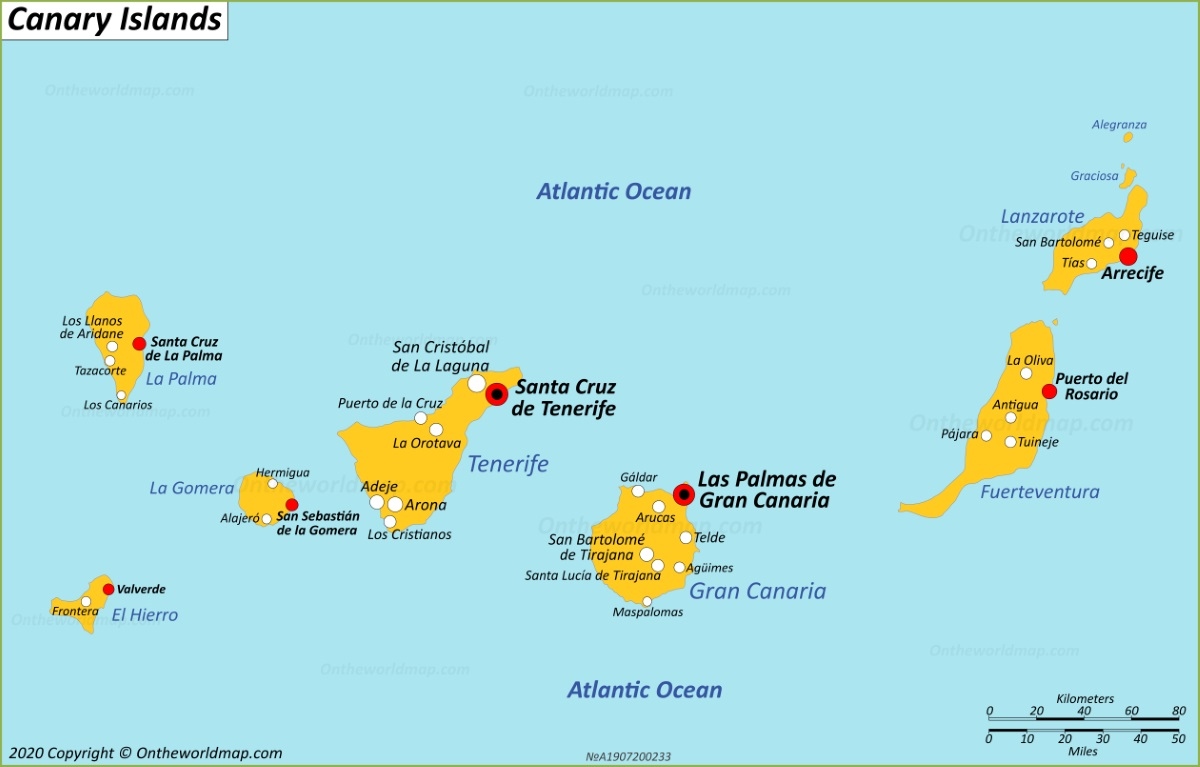
The two capital islands, Tenerife and Gran Canaria, score lowest on the cost-of-living index. An analysis by Kelisto (CECAPYME) shows that Las Palmas de Gran Canaria sits 2.4 per cent below the Spanish average, Santa Cruz de Tenerife 2.8 per cent.
The smaller islands, on the other hand, pay a "double-insularity" premium. Lanzarote, Fuerteventura, La Palma, La Gomera and El Hierro carry roughly six per cent higher cost of living than the capital islands, mainly through more expensive groceries and fuel — Diario de Lanzarote has documented this on the basis of a Canary Government study (Diario de Lanzarote).
The grocery basket is more expensive everywhere on the islands than on the Spanish mainland — on average 5-7 per cent above the national mean, due to import dependence and the AIEM protective tariff for local products. Rent, however, is markedly cheaper.
With that backdrop, here is the island-by-island comparison.
Tenerife — cheapest basket, densest infrastructure
Tenerife is the largest island and, with around 950,000 inhabitants, the most populous. Santa Cruz de Tenerife sits 2.8 per cent below the Spanish cost-of-living index and, according to several comparison portals, has the lowest grocery basket of the Canaries — plus the cheapest fuel.
Rent as of April 2026: A 1-bed flat in central Santa Cruz de Tenerife or Costa Adeje runs €900-1,200; in outer districts or inland, €750-950. Tourist hotspots like Costa Adeje and Los Cristianos can cost €1,500-1,600 for an annual let, even for studio apartments.
Strengths: Best hospitals in the archipelago (HUC, La Candelaria, Hospitén Sur), largest international airport, densest bus network, the only tram on the Canaries (Tranvía La Laguna–Santa Cruz), the largest British resident community in the south (Los Cristianos, Playa de las Américas, Costa Adeje), British school in Puerto de la Cruz (Yeoward School), lowest grocery prices.
Weaknesses: Tourist strongholds in the south are crowded, rental tension with locals is particularly acute, anti-tourism demonstrations in 2024/2025, traffic jams on the TF-1, the north is often cloudier than the south.
Gran Canaria — Las Palmas as main hub, cheaper than Madrid
Gran Canaria is the second-largest island with around 850,000 inhabitants. Las Palmas de Gran Canaria sits 2.4 per cent below the Spanish average and is rated by Kelisto as one of the cheapest cities in Spain — and Western Europe.
Rent: 1-bed flat in central Las Palmas €900-1,200, outer districts €600-800. San Bartolomé de Tirajana / Maspalomas has the highest rents on the Canaries with €21.6 per square metre according to Idealista — meaning a 60 m² flat lands at around €1,300.
Strengths: Fully built-out city infrastructure (three universities, several hospitals, international airport, container port), best fibre coverage, established British resident community (Las Palmas, Maspalomas, Playa del Inglés), British School of Gran Canaria, largest selection of coworking spaces, ranked 8th worldwide in the Holafly Digital Nomad Report 2026 (Canarias7), affordable grocery basket.
Weaknesses: Las Palmas is properly urban and not quiet enough for everyone, rental tension in San Bartolomé is extreme, mass tourism in the south, anti-tourism sentiment palpable in some neighbourhoods.
Lanzarote — César Manrique architecture, volcanic landscape, higher prices
Lanzarote has around 160,000 inhabitants and is the fourth-largest island. Famous for the volcanic landscape of Timanfaya National Park, the architecture of César Manrique and year-round sunshine.
Rent: 1-bed flat in Arrecife or Puerto del Carmen €800-1,100 in tourist zones, slightly less in pueblos and outer districts. Idealista data show Arrecife's price per square metre rose 29.3 per cent over the last five years (Idealista-Daten) — from €1,447 in 2019 to €1,871 in 2024.
Strengths: Striking natural backdrop, good international links via Arrecife airport, well-established British resident community in Costa Teguise and Puerto del Carmen, British School of Lanzarote (Tahíche), quieter atmosphere than the capital islands, climatic stability.
Weaknesses: Higher cost of living than the capital islands due to double-insularity, fewer hospital options (main hospital José Molina Orosa in Arrecife), fuel about €0.16 per litre more expensive than on Tenerife, fewer job options outside tourism, water scarcity in some seasons.
Fuerteventura — endless beaches, affordable housing, but wind
Fuerteventura is the second-largest island but, with only 122,000 inhabitants, one of the most thinly populated. Known for 150 kilometres of beach, constant wind and watersports.
Rent: 1-bed flat in Corralejo (north) or Puerto del Rosario (capital) €700-900 on average, some cheaper zones below €700. According to Destinyhome data, the average buy price per square metre in Puerto del Rosario is €1,381, in Corralejo around €3,000.
Strengths: Best beach selection on the Canaries (Sotavento, Cofete), lower rents than Tenerife or Gran Canaria on average, calm atmosphere, strong watersports infrastructure (surf, kitesurf), small but stable British resident community in Corralejo and Caleta de Fuste.
Weaknesses: Frequent strong wind (calima from Saharan dust and Atlantic breeze), water scarcity, thin hospital coverage (Hospital General de Fuerteventura in Puerto del Rosario), minimal public transport, less dense flight links than Tenerife/Gran Canaria, double-insularity premium, fewer jobs outside tourism.
La Palma — the "Isla Bonita", greenest of the Canaries, lowest rents
La Palma has around 83,000 inhabitants and is the fifth-largest island. Known for the Caldera de Taburiente, Europe's best stargazing observatory (Roque de los Muchachos), the greenest landscape on the Canaries — and, since September 2021, for the Cumbre Vieja eruption.
Rent: 1-bed flat in Santa Cruz de La Palma or Los Llanos de Aridane €400-700 according to Idealista data. That makes La Palma's rents the lowest of all populated main islands. The average flat-buy price is around €1,585 per square metre.
Strengths: Lowest rents on the Canaries, calm atmosphere, best hiking opportunities in Spain (Caldera, GR-130, Cumbres), world-class star observatory, 60 per cent IRPF tax bonus until 2027, small but established British resident community in Tazacorte, Los Llanos and Puntagorda, very low crime rate, affordable grocery basket (according to topviajescanarias.com La Palma is among the three cheapest islands for the basket).
Weaknesses: Double-insularity premium on fuel and some groceries, thinner hospital coverage (Hospital General de La Palma in Breña Alta), only one airport with fewer direct connections, post-Cumbre-Vieja reconstruction not yet complete (around 1,000 homes still missing), limited job options, no international mass tourism = limited tourism infrastructure.
La Gomera — smallest resident community, calmest atmosphere
La Gomera has only around 22,000 inhabitants and is the second-smallest main island. Known for Garajonay National Park with its UNESCO laurel forest, the unique whistled language Silbo Gomero, and the strong link to the alternative-living community in Valle Gran Rey.
Rent: 1-bed flat €650-900 according to todacanarias data. Little systematic data is available because the market is small.
Strengths: Very low population density, intact nature, UNESCO laurel forest, established but small alternative-living community in Valle Gran Rey, very low crime, milder climate in the south, no mass tourism.
Weaknesses: Highest double-insularity on the Canaries for fuel (up to €0.27 per litre more expensive than Tenerife), no direct international flights — arrival only by ferry or small inter-island hop, thin hospital coverage (Hospital Nuestra Señora de Guadalupe), barely any coworking, almost no job options apart from tourism or self-employment, scant commercial infrastructure.
El Hierro — smallest island, most expensive basket, calmest lifestyle
El Hierro has only around 11,000 inhabitants. The UNESCO Geopark island is the southernmost and smallest of the main islands — and has the most expensive grocery basket in the archipelago.
Rent: 1-bed flat €650-900 according to toda-canarias estimates. A very limited market with few listings.
Strengths: Spectacular nature, almost 100 per cent renewable energy (Gorona del Viento), lowest population density on the Canaries, very calm atmosphere, low crime, unique diving in Mar de las Calmas.
Weaknesses: Most expensive grocery basket on the Canaries — according to topviajescanarias.com 11.9 per cent more expensive than Tenerife. Highest fuel prices.
Very small hospital (Hospital Nuestra Señora de los Reyes in Valverde), no resident community to speak of beyond a handful of residents, very limited access (ferry or small plane from Tenerife), scant commercial infrastructure, virtually no job options for foreigners.
Direct comparison of all 7 islands — item by item
The values below are averages from several sources (Idealista, Numbeo, Kelisto, regional reports) as of April 2026. Real prices vary by neighbourhood and season.
Recommendation by target group
Pensioner with small pension (£900-1,500): La Palma. Rents from €400 for a 1-bed, 60 per cent IRPF bonus, very low crime, English-speaking community present, affordable grocery basket.
Anyone drawn to a hiking lifestyle and quiet can live comfortably here on a gross pension of £900. Alternative: Tenerife south (Los Cristianos, Playa de las Américas), where British infrastructure is densest and rents are below city level.
Pensioner with mid pension (£1,500-2,800): Gran Canaria or Tenerife. The capital islands offer the best hospitals, the densest transport network and rank cheapest on the cost-of-living index. Las Palmas or Santa Cruz de Tenerife for city living, La Orotava or Telde for quieter suburbs. The best blend of comfort and affordability.
Families with children and a job/self-employment: Tenerife or Gran Canaria. This is the only realistic choice because of the school infrastructure (British School of Gran Canaria in Las Palmas, Yeoward School in Puerto de la Cruz, British School of Lanzarote in Tahíche), hospital density, job options and public transport.
Lanzarote works for families in tourism; Fuerteventura for watersports self-employment. La Palma, La Gomera and El Hierro are not practical for families with school-age children — the school choice is too thin.
Anyone seeking only quiet and nature, without a job or schooling: La Gomera or El Hierro. But be aware: high grocery basket, limited access, virtually no English-speaking infrastructure. Not for everyone.
What the table does not show
Wholesale electricity prices are the same across all Canary islands because Red Eléctrica Española publishes a unified tariff (Menosdeluz).
Thanks to IGIC exemption on residential electricity and state subsidies, Canary residents in fact pay no more than mainland Spaniards. The grocery basket is more expensive everywhere because of the AIEM tax system that protects local products — a baguette in Las Palmas can cost up to 55 per cent more than the Spanish average.
The key quality-of-life variable that appears in no statistic: how quickly you integrate. In Las Palmas or Santa Cruz de Tenerife, with a large British community, you find connection within weeks; in El Hierro or La Gomera, it can take years.
Martin Kosinski writes for CITA News on economy, tourism and service topics. More about the author