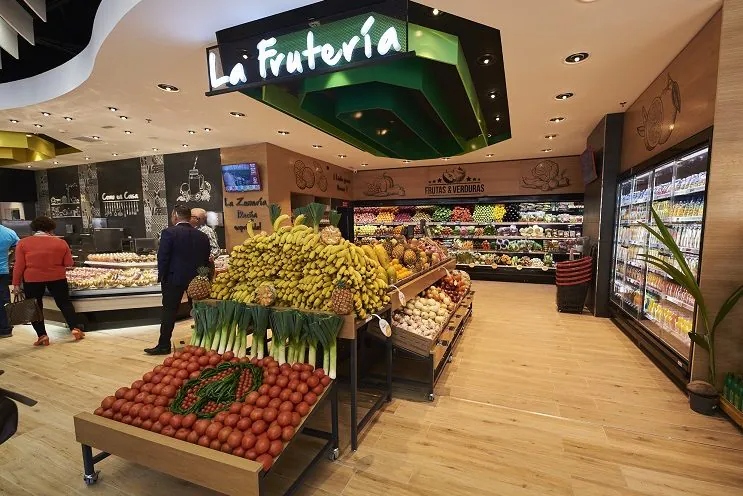
Anyone queuing at the till of the Mercadona on Avenida de Tirajana in Maspalomas on a Saturday morning sees the situation faster than any statistic. A family-sized weekly shop — own-brand oil, bread, chicken, Canarian bananas, no branded items — comes to around 87 euros today. Five years ago it was 65. That difference describes the story behind the Canarian economic figures of 2026.
The islands grew 3.5 % in 2025, above the national average. Almost 18 million tourists arrived, a record. Minimum wages and collective-bargaining wages have risen slightly. The statistics point upward. And yet workers today live with less purchasing power than before the pandemic. The pay packet is nominally fatter; the money in it covers less.
What a weekly shop really costs in 2026
The Spanish consumer organisation OCU compared the country's capitals in autumn 2025 by the cost of the standard shopping basket. Las Palmas de Gran Canaria ranks among the most expensive cities in Spain — the family basket there exceeds 6,240 euros a year, in San Bartolomé de Tirajana 6,427, in Adeje 6,126. The OCU figures are in the report "Supermercados más baratos 2025" (OCU report).
Over the last five years the basket in the Canaries has risen by around 32 %. Sharp increases: eggs (+30 %), coffee (+54 %), Canarian banana (+36 %). Fresh products alone +8 % in 2025. A family today pays around 2,000 euros more per year for the same basket as in 2021. That's more than a monthly wage for many hospitality workers.
Rents +40, wages −6.8
A widely cited InfoJobs analysis from 2025 quantified the gap: a wage loss of 6.8 % since the pandemic in the Canaries — against a rental price rise of 40.2 % over the same period. For the Mercadona checkout worker in Maspalomas, six hours a day sliding bananas across the scanner, 1,500 euros gross a month doesn't help if the studio costs 900.
For public-sector employees the CSIF trade union puts the loss of purchasing power since 2022 at 5.8 % — and since the 2010 cuts at more than 20 %. The recent wage agreements between the government, UGT and CCOO — 2.5 % for 2025, 1.5 % for 2026 — lag behind the real cost increase.
What Frahija says
The general secretary of CCOO Canarias, Vanesa Frahija, spelled it out on 21 April at a joint press conference with UGT Canarias general secretary Manuel Navarro. Both unions are calling for the 1 May demonstration under the slogan "Derechos, no trincheras. Salarios, vivienda y democracia" — Rights, not trenches. Wages, housing and democracy. Frahija quoted her national general secretary, Unai Sordo: nobody should have to spend more than 30 % of their income on a dignified home. The reality in the Canaries lies clearly above that line for many households.
In the official CCOO inflation report for March 2026 (CCOO Canarias) it reads soberly that the recent price rise "raises the prospect of a break in the recovery of workers' purchasing power". The choice of the word "break" is notable — the union was still speaking of "stable recovery" in 2024.
The second blow: slowdown ahead
José Cristóbal García, general secretary of the Canarian Employers' Confederation (CCE), points out that flight reservations for summer have fallen 4.4 % — 9 % in Nordic tourism, 8 % in German tourism. García spoke in the COPE interview of "the first change of trend since the pandemic". If tourism revenue falls, pressure comes from a second direction: fewer hours, fewer tips, more seasonal work.
What workers and newcomers can practically do
The OCU found in the same report that a family in Las Palmas can save up to 2,000 euros a year simply by choosing the right supermarket. That isn't a pay rise, but it's measurable money. Anyone considering emigrating should check concretely before accepting a job: what a studio costs in the desired location, what an average weekly shop costs, what's left after rent, electricity, internet and mobility. The tourist hotspots in the south of Gran Canaria and on Tenerife have the worst wage-to-rent ratio. In rural northern Gran Canaria or in Las Palmas city the picture is better.
The woman at the Mercadona paid her 87 euros by card. She'll come back next Saturday with the same list and will probably pay 90. That's the inflation that doesn't appear in the official statistics. But it's what people mean when they say the money no longer stretches.