What the amber light means
Worldwide, a system called the «volcanic traffic light», in four colours — green, amber, orange, red — governs how the population should behave. In the Canaries, La Palma is the only island on amber; Tenerife, El Hierro, Lanzarote and Gran Canaria are all on green. The colour is decided by the direction of the Pevolca, based on the monitoring data of two institutes: the Instituto Geográfico Nacional (IGN) and the Volcanological Institute of the Canaries (Involcan).
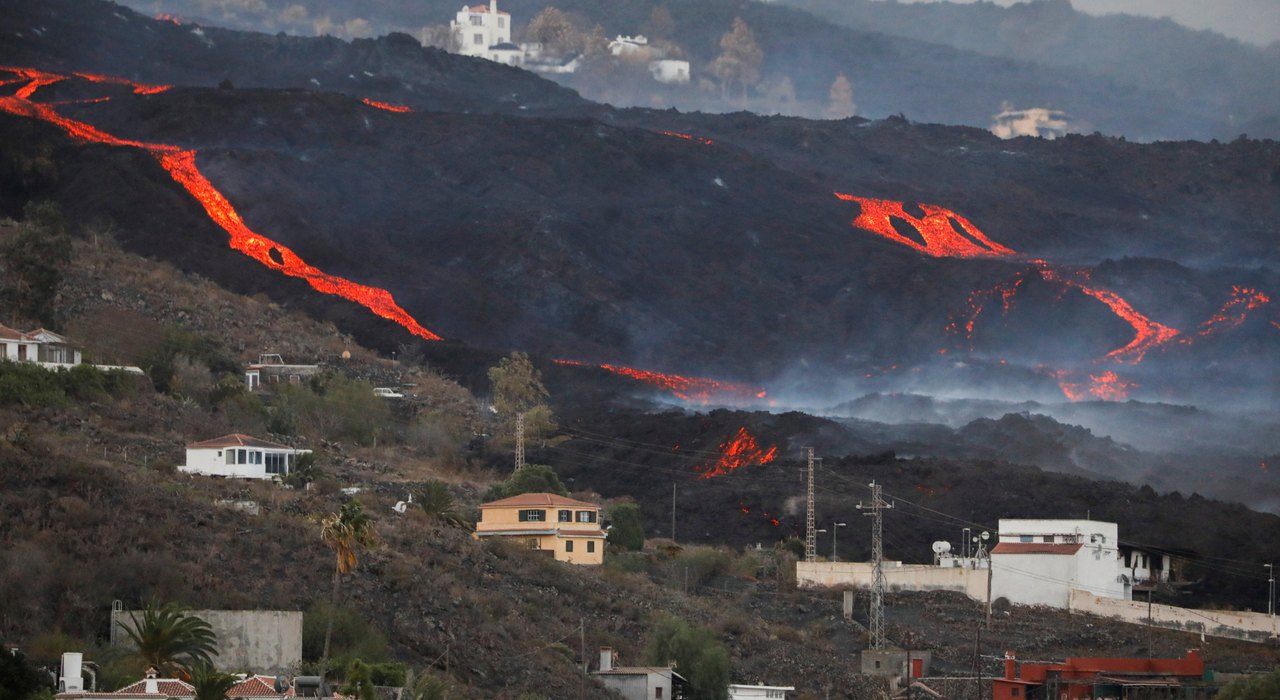
The amber does not mean a new eruption is looming. It signals that, after the eruption ended, «certain risks to the population persist», as the Canarian government puts it: carbon-dioxide emanations, the instability of some lava-field zones, and the still-high temperatures underground — all features of the post-eruptive phase. On La Palma, the direction of this alert situation lies with the Cabildo Insular, the island council.
The good news: the data point downward
Here is the encouraging side. The seismicity is weak: over the last 90 days the IGN recorded 26 tremors on the island, all of low magnitude and at very low levels across all depths. Felt earthquakes cannot be entirely ruled out, but are considered unlikely.
The trend in the gases is clearer still. The key metric — how often the CO2 emission exceeds a statistical threshold — falls year on year: three times in 2022, twice in 2023, once in 2024, and so far not once in 2025. A development that, in the assessment of Itahiza Domínguez (IGN) and Nemesio Pérez (Involcan), suggests «that the problem is easing at this point». In Puerto Naos, the coastal town worst affected by gas, the soil's pressure gradient is also being measured; there, though, there are not yet enough measurement campaigns to establish a clear trend.
The other side: those still living in containers
So much for the science. For many of those affected, however, «four years on» does not feel like easing. Some of the people who lost their homes still live in the modular and container settlements built after the disaster. Around 420 permanent homes are under construction; in October 2025 the first containers began to be dismantled and families relocated — but sufficient dignified housing remains, according to the affected residents' platform, one of the biggest open tasks. Aid for reconstruction and renovation, they say, remains insufficient despite all the regional government's efforts.
Agriculture is waiting too. The promised two annual instalments of €100 million each to restore the buried fields will, according to recent statements by minister Ángel Víctor Torres, probably not be honoured; many farmers depend on EU agricultural aid because their land lies under the lava. There is at least one bright spot: a 60 percent income-tax rebate for La Palma is pledged for 2025 to 2027.
Puerto Naos: a return in stages
One place stands as a symbol of the coexistence of progress and standstill: Puerto Naos, once a lively tourist town, was sealed off after the eruption because of escaping gas. By now the island emergency plan PEINPAL has reopened access to over 1,500 homes, with garages and individual further buildings added step by step. But the gas problem is not solved — it is managed, with measurements, conditions and safety zones.
💡 For visitors: the volcano is an attraction — with rules
For travellers the Tajogaite has become a draw, and tourism is recovering. Important: the cone itself, the ash fields around it and the lava flows may only be entered with certified guides (as of late 2025). The reason is precisely those risks for which the light is on amber — toxic gases, possible collapses at the edges of thick lava fields, and residual heat. Anyone who sets off alone puts themselves in danger and acts against the rules.
The reckoning
Four years after the eruption, La Palma tells two stories at once. The geological one points to slow calming: the earth barely trembles, the gas readings fall. The human one is about families not yet home, farmers without fields, and aid that does not flow as promised. The amber of the volcanic traffic light thus stands for more than geophysics. It is a reminder that a disaster does not end when the lava cools — but only when people can lead a normal life again.
Frequently asked questions
Is a new eruption looming on La Palma?
No, there are currently no signs of one. The amber alert does not refer to an imminent eruption but to persisting risks of the post-eruptive phase: gases, unstable lava fields and residual heat. The earthquakes are weak and rare.
So why is the light still on amber?
Because carbon dioxide is still escaping in some zones, some lava-field edges can collapse, and the ground is still hot. The colour is decided by the direction of the Pevolca emergency plan, based on data from the IGN and Involcan.
Have the readings improved?
Yes. CO2 threshold exceedances fell from three times (2022) to none (so far in 2025), and the seismicity stays at very low levels. Experts read this as a sign that the problem is easing.
Can you visit the volcano?
Yes, tourism is recovering. But the cone, the ash fields and the lava flows may only be entered with certified guides — because of toxic gases, possible collapses and residual heat.
Can people return to their homes?
Partly. In Puerto Naos over 1,500 homes are accessible again. But many of those affected still live in modular and container settlements; around 420 permanent homes are under construction. Residents' representatives still consider the aid insufficient.