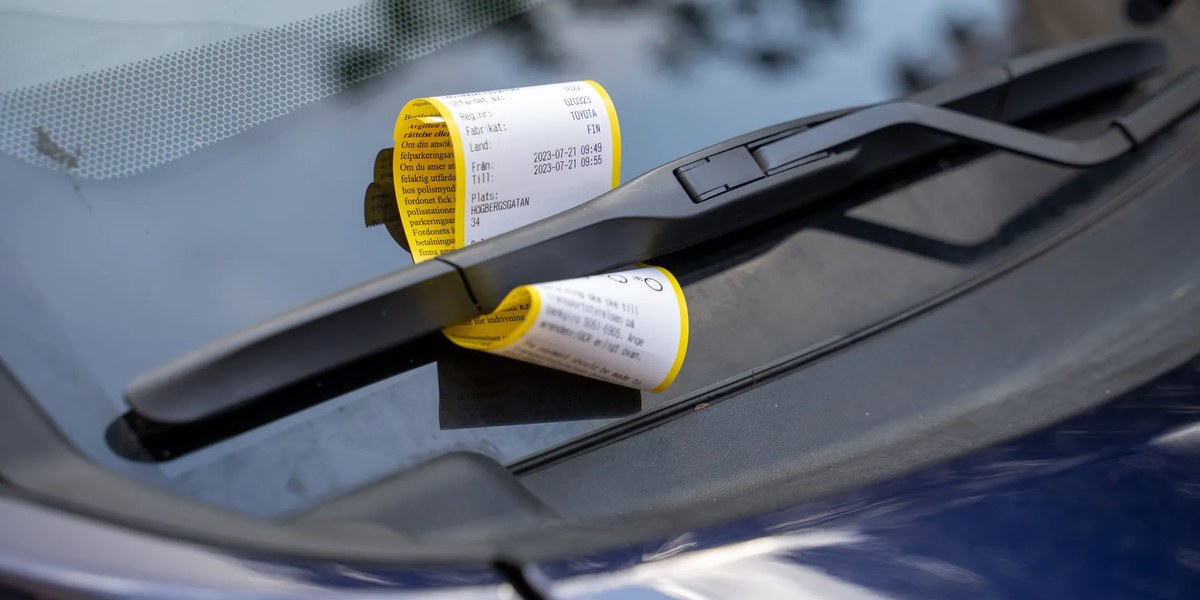
How every "€200" headline is made
First, the key to reading any "DGT 200-euro fine" headline: behind it there is almost never a penalty aimed at that one object. Behind it sits a catch-all rule — either "clear visibility" or "control of the vehicle" — and the question of whether the officer on the spot sees safety being compromised.
That discretion is exactly why the same act costs 80 euros one time and 200 another, and why it is so easy to spin into a sensational figure.
The wiper-blade myth
A penalty that explicitly punishes "worn wiper blades" does not exist. What does exist is Article 19 of the Reglamento General de Circulación: the glazed surface must give the driver a clear view of the whole road at all times.
Dirt, cracks, ice — or wipers that only smear in the rain — can mean that view is no longer there. Only then is it sanctioned, usually as a minor offence of around 80 up to 200 euros, with no points.
If the officer considers the danger acute, for instance a crack across the field of vision, the vehicle can even be immobilised.
In the Canaries there is a local factor on top: with the next calima, fine Saharan dust settles on the glass and puts the washer system under particular strain. Set off with an empty reservoir and tired blades and you turn dust plus insect remains into an opaque smear in no time — turning a maintenance detail into a real visibility problem.
Flip-flops and the rest: allowed — until they get in your way
Here too a stubborn misconception persists. The Reglamento bans neither flip-flops nor bare feet, high heels, driving without a shirt or in swimwear outright.
What counts are Articles 17 and 18: the driver must keep freedom of movement and full control of the vehicle. Only when an officer judges that the sandal slips on the pedal or catches does it become an offence — typically around 80 euros, in serious cases or where it contributes to a crash up to 200, with no points.
Driving without a shirt or in wet swimwear is less about decency than safety: the belt sits worse on bare, damp skin, and in an impact there is the dreaded "submarine effect", where you slide under the belt.
What really gets expensive
While the clothing headlines are mostly hot air, there are clearly regulated summer classics. Eating, drinking or applying make-up at the wheel counts as distraction and costs 200 euros.
A cigarette butt out of the window is even a serious offence: 200 euros plus 4 points — and, in the dry island vegetation, a real fire risk. A poorly secured load, from a cool-bag to a surfboard, can cost up to 500 euros and 4 points.
And the classic elbow out of the window falls under the same logic as the flip-flops: steer with one hand and you have less control when it counts.
Your 2-minute summer check before setting off
Top up the washer fluid and check the wiper blades — especially before and after a calima. Check tyre pressure and tread, because hot asphalt is hard on tyres.
Test the air conditioning and ventilation so the glass does not mist up inside. Keep a pair of closed shoes in the boot in case you set off from the beach.
Secure your load properly. And when there is dust in the air, keep more distance and clear your view sooner, rather than driving on with sand on the glass.
How to read the headlines
"DGT fines X with 200 euros" almost always means a general rule applies (visibility or control), not a fixed penalty for that specific object — and the amount depends on the individual case and the officer's discretion. Many of the guides doing the rounds come from repair-shop, insurance or law-firm portals, which naturally lean towards the dramatic.
In a dispute, what counts is the actual penalty notice, and you can appeal against it. The amounts given here are the usual orders of magnitude, not values guaranteed in every case.