What the announcement means
The Cabildo de Tenerife presented the upcoming season for the island's two airports on 7 May 2026. Seven airlines — six international plus one Canarian inter-island operator — are expanding their connections to Tenerife. Lope Afonso, vice-president and tourism councillor of the Cabildo, called the announcement «excellent news for the island», citing «the airline sector's confidence in Tenerife as a solid, attractive destination».
The context: the competition between the Canary Islands for international air connectivity is sharp — Gran Canaria and Lanzarote are also stepping up. For 2026 Tenerife is visibly focusing on two fronts: opening up the North American market and densifying the Spanish domestic corridor via Madrid.
North America becomes directly reachable
The headline change is Air Canada. From October 2026 the Canadian flag carrier will fly twice a week from Toronto to Tenerife South, plus once a week from Montreal. Until now, a direct flight from Canada to the Canaries had to be booked via Madrid or London. The new connection responds to real demand: Canada has a strong Spanish and Portuguese diaspora, and the Canary Islands are an emerging destination on the North American travel map.
Dimple Melwani, tourism councillor at the Cabildo, framed the strategy this way: «The commitment of airlines from different source markets reflects the strength of the destination and its capacity to deliver a value proposition based on the quality and excellence of the tourism experience.» The intent is clear: less reliance on the British and German volume markets, more diversification.
airBaltic and the Baltic bridge
The second headline belongs to airBaltic. The Latvian carrier opens a seasonal base at Tenerife South in winter 2026/27 — with aircraft and crew based locally. From there it operates twice weekly to Ljubljana and Liège, once weekly to Palanga (Lithuania) and Groningen (Netherlands). All four are secondary markets that until now had no direct connection to the Canaries.
A seasonal base is more than a few extra flights: airBaltic moves staff, maintenance capacity and commercial marketing onto the island for several months. Tenerife knows this base model already from Ryanair, Vueling and Jet2 — what is new is the focus on central and eastern Europe.
European and Spanish routes
In the classic European corridor three more carriers are expanding. Air France increases summer frequencies from Paris-Charles de Gaulle. TAP Air Portugal takes Lisbon–Tenerife to up to four weekly flights — a noticeable densification of the Iberian bridge. Air Serbia flies once a week from Belgrade between October and February — the first regular scheduled link to Serbia.
On the domestic side, Iberia Express stands out. 74 weekly flights per direction between Madrid and Tenerife in summer 2026 means up to eleven connections per day. That is commuting frequency: morning business trip, evening flight back to family. Vueling will boost capacity by 7 percent over the summer with reinforcements from Oviedo and Valencia. Binter Canarias expands its routes to Vigo, Valencia and Asturias — particularly relevant for the Spanish diaspora and commuters.
What it means for travellers
Concretely and immediately: more choice. Anyone travelling to Tenerife in 2026 has statistically a better chance of finding a direct flight from their home airport — particularly if it sits outside the classic tourism hubs. For travellers from German-speaking Switzerland, Austria or the Benelux countries, airBaltic via Liège or Groningen could offer a shorter connection than before.
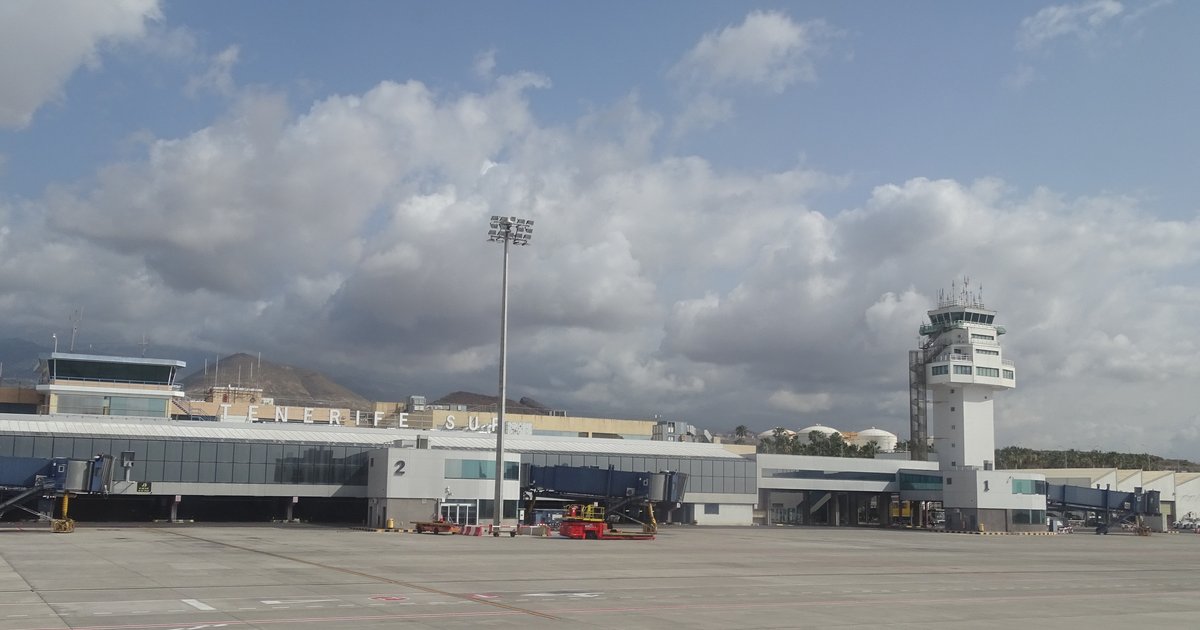
For airport choice, the pattern remains: Tenerife South (TFS) for the package and beach tourism strongholds of Costa Adeje, Los Cristianos and Playa de las Américas — almost all international flights land here. Tenerife North (TFN) is the domestic airport for Madrid, Barcelona, Seville and the inter-island Binter routes, closer to the capital Santa Cruz and the university town La Laguna.
Prices and new fleets
More competition typically pushes prices down — especially on the Madrid–Tenerife corridor, where the Iberia Express capacity boost will exert direct downward pressure on comparison fares. For the North America connections, the first seats are bookable from October; a robust price trend will only emerge after the first months.
In parallel, the major carriers are modernising their fleets. Most newcomers are Airbus A320neo and Boeing 737 MAX — new generations that, according to manufacturer data, cut fuel consumption by 15 to 25 percent. That feeds directly into emissions, but is also an economic factor: lower operating costs make secondary markets viable that would have been too small a decade ago. That is precisely why routes to Palanga or Groningen are feasible today.
Frequently asked questions
- What new direct flights to Tenerife begin in 2026?
- Air Canada launches direct flights from Toronto (twice weekly) and Montreal (once weekly) starting in October. airBaltic opens a seasonal base at Tenerife South airport with new routes to Ljubljana, Liège, Palanga and Groningen. Air Serbia operates Belgrade–Tenerife in winter.
- How many Iberia flights connect Madrid and Tenerife?
- Iberia Express expands to 74 weekly flights per direction in summer 2026 — up to 11 daily connections between Madrid and the two Tenerife airports, North and South.
- Which airport for my holiday — North or South?
- Tenerife South (TFS) handles almost all international package and scheduled tourism, close to Costa Adeje and Los Cristianos. Tenerife North (TFN) primarily serves domestic flights to Madrid, Barcelona, Seville and inter-island Binter flights — closer to the capital Santa Cruz and the university town La Laguna.
- What is airBaltic offering on Tenerife?
- A seasonal base for winter 2026/2027: twice weekly to Ljubljana and Liège, once weekly to Palanga (Lithuania) and Groningen (Netherlands). For the first time Tenerife connects to several central-eastern European and Benelux secondary markets.
- What does this mean for ticket prices?
- More competition tends to push prices down — particularly on the Madrid–Tenerife corridor due to the Iberia Express capacity boost. For the North America connections the first seats are bookable from October; a clear price trend will only emerge after the first months.