What's really happening
Picture this: you're a construction worker in Las Palmas, you make €1,300 a month after tax, you need to eat every day, and renting a room in the city runs €500. What can you afford?
Up to 2023 the answer was easy: a menú del día in one of the city's many workers' restaurants. Three courses plus a drink for around 10 euros. Home cooking, filling, quickly served. The restaurants in the industrial neighbourhoods of Las Torres, La Isleta or around Estadio Insular were always packed.
Then inflation hit. Olive oil up 107 percent in eight years. Electricity up 11 percent in 2025 alone. Labour costs up 12 percent. Suddenly the same menu cost €13 — and the worker did the math: €13 times 22 working days makes €286. Almost a quarter of a monthly salary just for lunch.
That's where the menú de ocho euros comes in.
How it works
A handful of Las Palmas restaurants have switched strategy since the start of the year: fewer options on the card, simpler dishes, smaller portions, but eight euros instead of thirteen. Regulars are construction workers, security guards, care workers, civil servants on a lunch break.
La Provincia describes the phenomenon as «a real alternative for anyone who doesn't want to give up eating out». In the unflashy neighbourhoods — not Triana, not Vegueta, not the Las Canteras promenade — the model works. In the tourist core it doesn't. There you'll still pay €13 to €18.
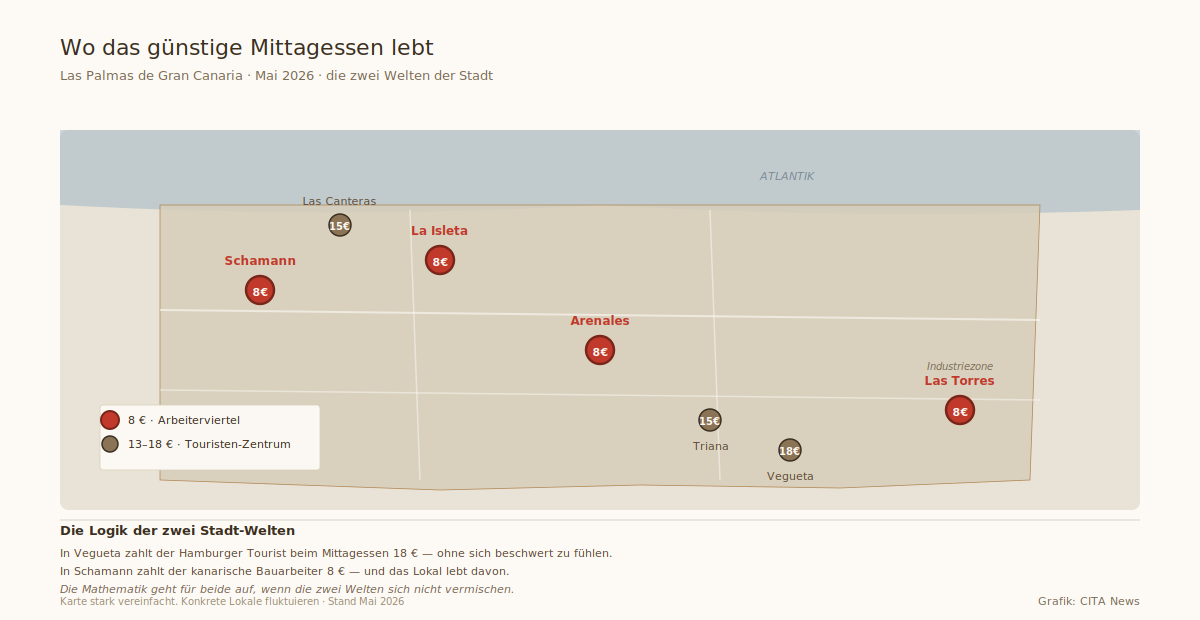
Two worlds, one city — where the 8-euro lunch lives and where tourists pay €18. Graphic: CITA News.
The maths from the owner's side: less margin per plate, but more customers per day. Where 30 lunch guests becomes 60, the books balance — as long as the kitchen keeps up. Some don't. Others have it figured out.
What you get for it
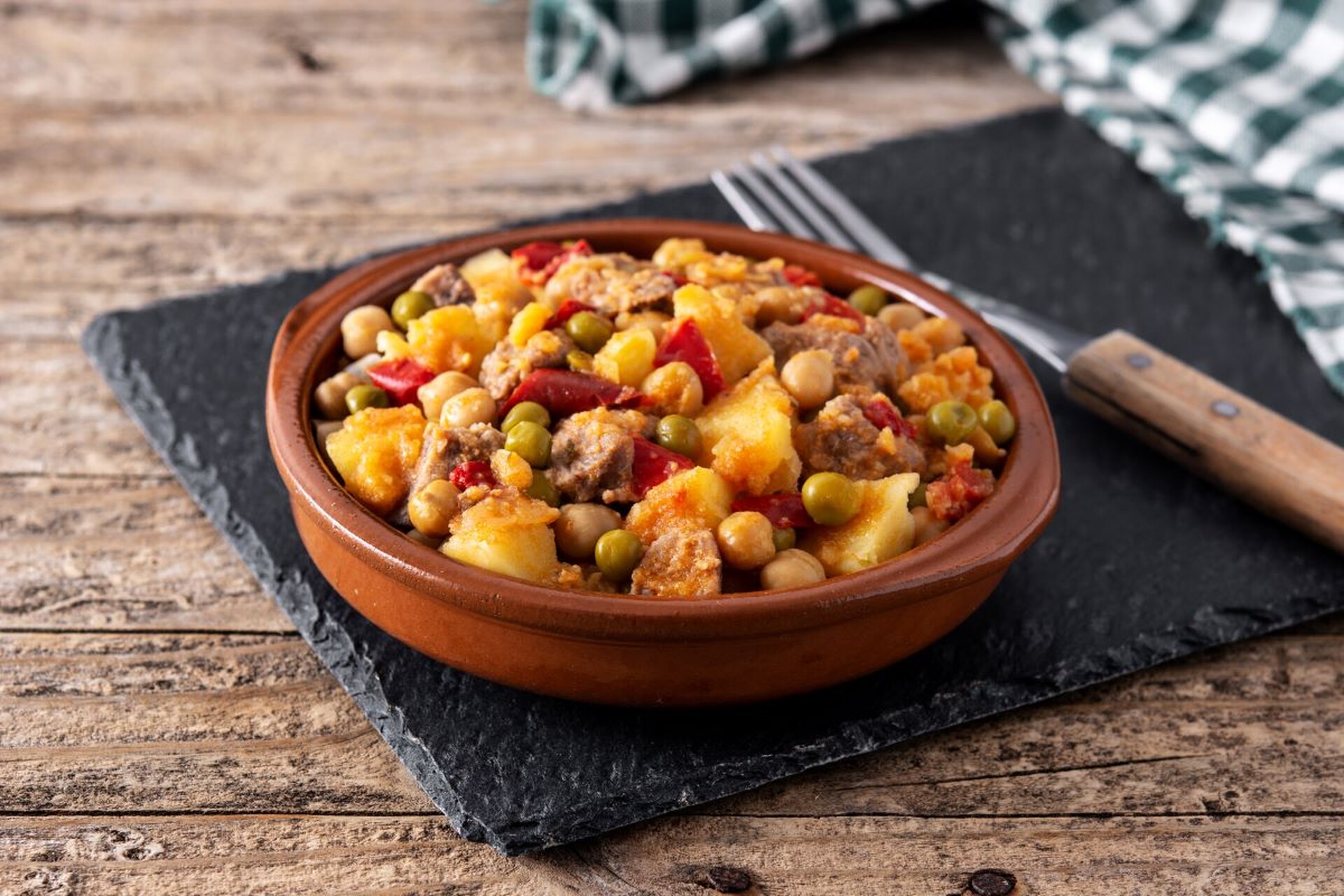
A typical May 2026 €8 menu in Las Palmas: starter — watercress stew, Canarian salad or chicken soup. Main — ropa vieja (chickpea stew with shredded beef), schnitzel with papas arrugadas, fried fish with mojo, or pollo asado. Dessert or coffee — flan, rice pudding, gofio mousse, Canarian espresso. Plus bread, a glass of wine, water, beer or soft drink.
That's home cooking, not fine dining. The tables are Formica, the napkins are paper, the TV is showing the midday news. But the food is hot, freshly cooked and unpretentious.
What it means for tourists
You probably won't find these €8 places in your guidebook. They sit off the main drags. If you want to find them: head into Schamann, southern La Isleta, the Las Torres industrial estate, or the area around the Mercado Central in northern Vegueta. Check the chalkboard at the door — if it says menú del día with a price under €10, you've found one.
The place won't look like a tourist secret. It'll be full at lunch and empty by 4 p.m. You'll hear Spanish, not English. You'll be able to order by pointing. And for nine US dollars you'll have eaten more than three hours at a hotel breakfast buffet.
Frequently asked questions
- When is menú del día?
- Usually between 1 and 4 p.m., Monday to Friday. Sometimes Saturday too, then usually a euro more. Sunday closed.
- Do I need a reservation?
- In most places no. But between 1:30 and 2:30 p.m. it gets busy — come earlier or expect a wait.
- Can I save at the bar?
- At the counter (la barra) it's sometimes one or two euros cheaper than at a table. Look for the «menú barra» sign.
- What does the same cost in Madrid or Munich?
- An average of €14 in Madrid, €15.80 in Bilbao. In Munich a comparable three-course menu with drink runs around €18–22.
- What if I don't speak Spanish?
- Point at the chalkboard on the wall. Say «menú del día, por favor». The selection is limited — primer plato (starter), segundo plato (main), postre o café (dessert or coffee). Waiters are patient.