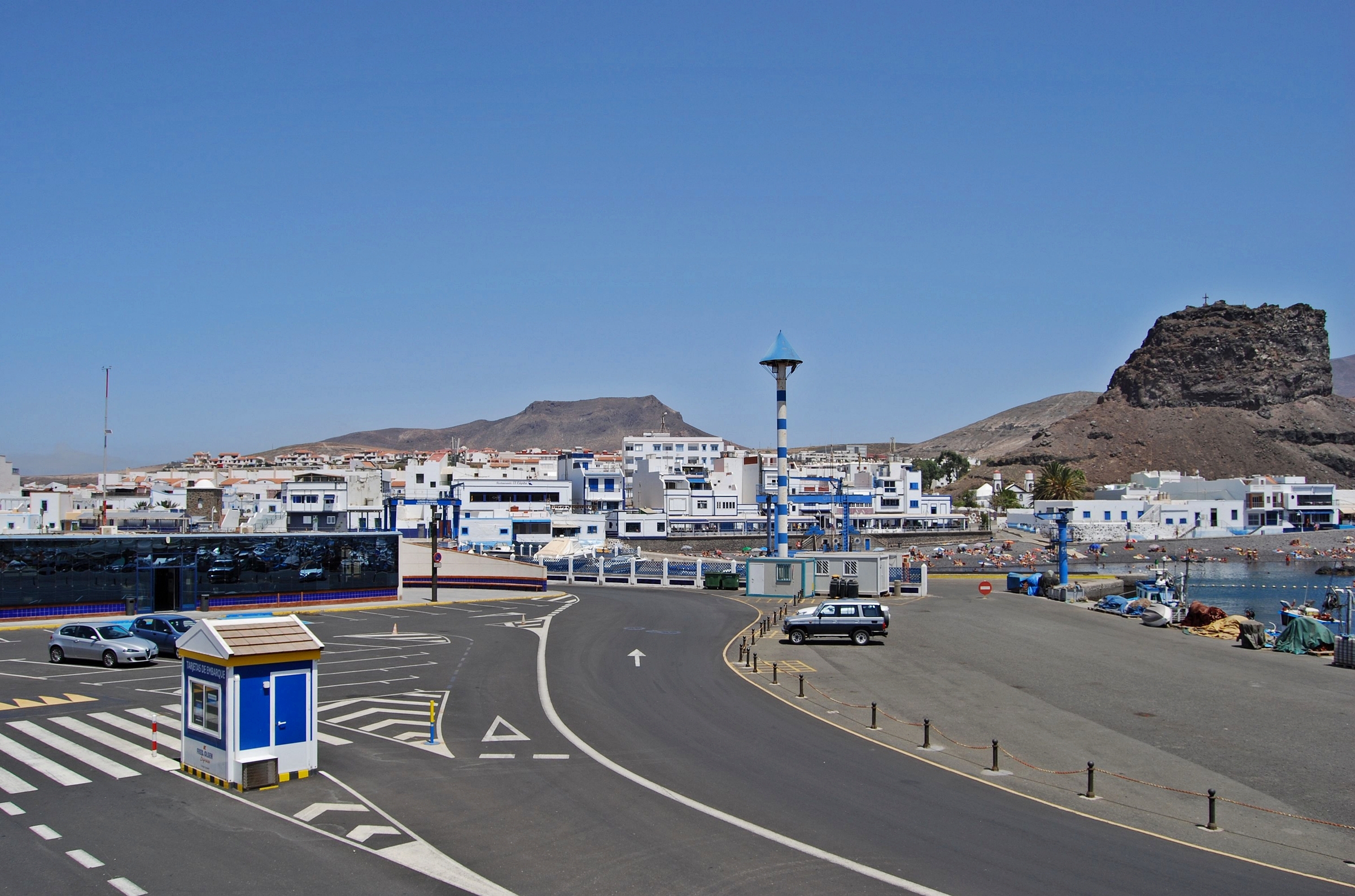
What applies now at Playa de las Nieves?
A media report says Playa de las Nieves in Agaete is closed to swimming for now. It blames faecal bacteria in the sea water.
No official notice from the Servicio Canario de la Salud (Canary Health Service) or from Agaete council could be found. According to Náyade, the health ministry's bathing-water portal, the beach had no official status on 23 November 2026.
It is not clear whether access to the sand is also restricted. Nor is it known whether the ban covers Playa Vieja or Las Salinas.
The report concerns only Playa de las Nieves, and the research found no sign that it extends to other beaches. The status of each beach is shown on the health map of the Servicio Canario de la Salud and on Náyade.
On site, follow the council's notices and the lifeguards' flags. Agaete's beach bylaw of March 2025 also bans animals at Playa de las Nieves, and camping and smoking in the bathing areas.
What is known about the readings?
According to the report, the ban rests on a water sample taken on 11 November 2026. It reportedly showed 1,100 colonies of intestinal enterococci per 100 millilitres.
The report puts the limit at 185 per 100 millilitres and credits this to another newspaper. That does not match the EU thresholds of 100 and 200 quoted in the data for Playa de las Nieves.
Which sampling point produced the figure is unclear. The authorities have not confirmed that the number is correct.
How clean was the water until now?
The last official samples, taken on 19 October 2026, rated Playa de las Nieves “excellent”, according to Náyade. At Muelle Viejo, E. coli stood at 1 and enterococci at 78 per 100 millilitres.
At Muelle Nuevo the readings were 2 E. coli and 15 enterococci per 100 millilitres, with the water at 24 degrees. The reported November figure of 1,100 is far higher.
For “excellent”, 95% of results must fall below 250 E. coli and 100 enterococci per 100 millilitres. For “good”, the limits are 500 and 200.
The beach was rated “excellent” from 2022 to 2025 and, according to the data, in every year since 2015. The sampling season runs from 1 February to 30 November 2026, and the Blue Flag flew from 1 July to 31 August.
Where could the bacteria come from?
According to the Canary register of 2025, the nearest discharge point lies a good 320 metres away. It is the overflow Aliviadero EBAR Puerto de Las Nieves, a sewage pipe that runs there without a permit.
The report gives 460 metres, while the beach data say 320. In all, the register lists two discharge points within one kilometre of the Agaete coast.
No evidence links these points to the sample of 11 November. There is no information on the Agaete sewage plant or on possible repair costs.
How often do beaches close on Gran Canaria?
Telde closed Playa de Melenara on 30 October 2026 because enterococci exceeded the permitted limit. New analyses were planned for 3 November.
In November 2025, Melenara and El Yodo closed because of a waxy residue, with fish feed as the main theory. San Agustín and Las Burras reopened on 6 November after analyses.
On Tenerife, faecal pollution closed more than twelve beaches within a year, regional media reported in May 2025. The archipelago has 434 discharge points into the sea, almost half of them on Tenerife, and 24 of them are true outfalls.
El Confital beach in Las Palmas de Gran Canaria has struggled with faecal episodes since 2017, a press report says. No single cause has ever been found there.
When will Playa de las Nieves reopen?
No source has so far named a date for new samples or for reopening. A bathing ban normally ends only when new samples meet the limits.
Salud Pública, the Canary government's health department, takes the samples, and the council orders closures and reopenings. The city of Las Palmas de Gran Canaria, for example, closed El Confital after an analysis found too many enterococci.
Before a reopening, inspectors check the values and recommend lifting the ban if they comply. In Telde, Tufia reopened on 17 December 2025 and Melenara on 18 December, each after a favourable health report.
The cause, the sampling point and the date of the next sample remain open. Whether the health service or the council formally ordered the ban is not yet confirmed.