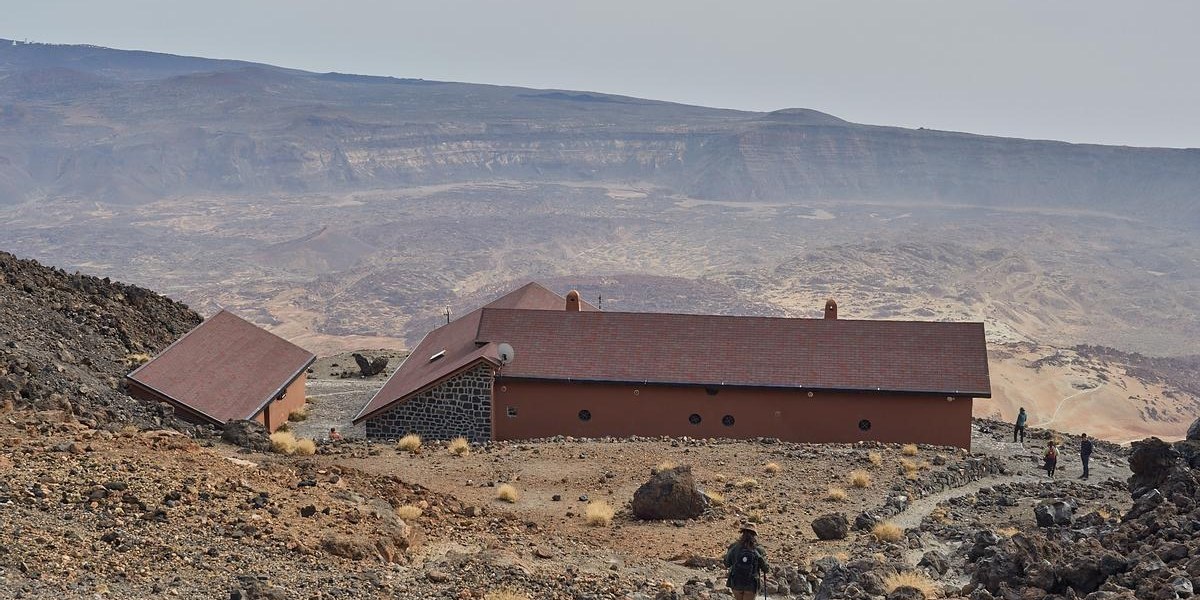
Spain's highest place to sleep returns
It is one of Spain's most singular places to sleep: in the middle of the Teide National Park, at 3,260 metres, under one of the clearest starry skies in the world. For five years the Altavista refuge was closed — now it is back. The Cabildo de Tenerife reopens Spain's highest mountain refuge on 20 July; online booking starts as early as this Thursday.
Why the refuge is so special
Altavista is no ordinary refuge. At 3,260 metres it is Spain's highest — the second highest, the Refugio Poqueira in the Sierra Nevada, sits a good 750 metres lower. Its history reaches far back: it was founded in 1856 by the Scottish astronomer Charles Piazzi Smyth, who sheltered his observation instruments here from the weather. Since 1950 it has belonged to the Cabildo de Tenerife.
Above all, it is the classic starting point for climbing Teide at sunrise. The practical bonus: anyone who stays overnight at Altavista may climb to the summit the next morning without the extra permit otherwise required — provided they set off before 9 a.m., when the regular access control begins.
The rates
The Cabildo has set graduated prices per night. Residents on Tenerife pay €29 — a deliberate concession to make access to one of the island's most emblematic places easier for locals. Federated climbers from off-island (with a FEDME or FECAMON licence) pay €56.80, and the general rate is €71 per night.
The overnight rates (per night)
Tenerife residents: €29
Federated climbers (FEDME/FECAMON) from off-island: €56.80
General rate: €71
Stay: maximum 1 night per person, only with advance booking via the official platform
The stay is limited to a maximum of one night per person — a rule to protect the fragile high-mountain environment. All bookings must be made in advance via the refuge's official platform.
From diesel helicopter to solar array
The heart of the refurbishment is sustainability. The refuge used to run on diesel, which had to be flown up by helicopter because of the difficult terrain — this not only produced CO₂ but also disturbed the wildlife. Now Altavista powers itself via a solar array and is energy self-sufficient. Added to this is a new treatment plant that purifies the wastewater and reduces the burden on nature.
Island president Rosa Dávila spoke of returning «an emblematic place of the Teide National Park» to the public, fully renewed for a safer, more sustainable experience. She called Altavista a «point of reference for sustainability in the high mountains».
Capacity and facilities
The refuge offers 49 sleeping places for visitors, plus four emergency places, quarters for the wardens and an equipped infirmary that is also open to climbers not staying overnight. It is run by the Sociedad Teleférico del Pico del Teide, the only bidder in the tender; the concession initially runs for two years.
Good to know: the way up
Altavista is reached on foot via the Montaña Blanca trail (starting at km 40.4 of the TF-21, around 7 km of steady ascent) — or you can shorten the route with the cable car and continue from there. Anyone staying overnight and setting off for the summit before 9 a.m. needs no separate summit permit.
What it means
For hikers and mountain lovers the reopening is good news: the Teide summit at sunrise, one of the Canaries' great natural experiences, becomes plannable again — safer, more orderly and more environmentally friendly than before. Anyone wishing to spend the night at 3,260 metres should secure one of the coveted places in good time; booking starts this Thursday.
Note
The ascent of Teide leads into high mountains above 3,000 metres. Appropriate equipment, good fitness and attention to the weather are essential; the altitude can make itself felt. National Park rules apply for summit access. Dates, rates and booking arrangements may change — the official information from the refuge and the Cabildo de Tenerife is decisive.