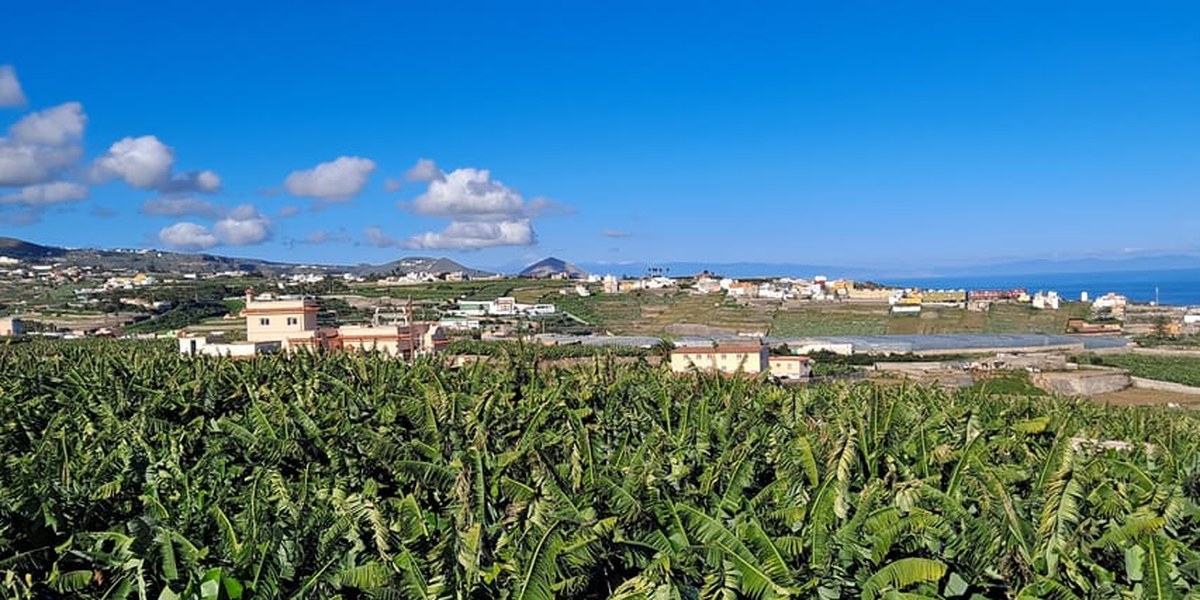
The figure at the heart of it: under €0.90/kg
Let's start with the figure at issue. The price in origen — what the grower gets for green fruit at wholesale — has fallen below 0.90 euros per kilo.
According to the agriculture ministry's official weekly data, that is the worst summer level since 2021, the year of the Tajogaite eruption. For growers this is not a footnote but existential.
Why the price falls so far
The cause is a typical summer constellation, this time especially pronounced. High temperatures boost production, so a lot of fruit floods the market.
At the same time demand falls on the Spanish mainland, where around 90 percent of the harvest goes. In summer people reach for seasonal fruit, and cheap imported bananas add further pressure.
The marketers put it soberly: supply exceeds demand, and no turnaround is in sight for now.
The real squeeze: selling below cost
This is the heart of the problem. The production cost of a Canary banana is around 0.70 to 0.80 euros per kilo.
If the farm-gate price falls below that, growers sell at a loss. That is exactly what is happening now — week after week.
It is cushioned by the EU's Posei aid, which pays 0.33 euros per kilo (up to a ceiling of 420 million kilos a year). Yet even with it, many farms barely cover their costs.
Why the shop stays dear all the same
The apparent contradiction of the story is the price gap. While the grower receives under 0.90 euros per kilo, the customer in the supermarket still pays around 1.70 to 2.40 euros — the low farm-gate price does not arrive as a cheap banana on the shelf. The reason lies in the many intermediate steps (transport, marketing, retail) and in the fact that shop prices react far more slowly than the wholesale price. For growers this is bitter: they bear the price collapse without it boosting demand in the shop.
Briefly explained: why the plátano matters
The Canary banana is more than a farm product; it is an economic backbone of many islands. On La Palma, Tenerife and La Gomera, thousands of families depend on it directly or indirectly — from the farms through packing plants to transport and marketing. The protected designation of origin "Plátano de Canarias" distinguishes it from the cheaper tropical imported banana; anyone wishing to support the island economy can recognise it by that very label in the shop. The number of farms has, however, fallen markedly over the years, which makes the price pressure on those remaining all the more acute.