What changes for holidaymakers and residents?
Jéssica de León, the Canary Islands tourism minister, expects dearer holiday packages and shorter stays. She warned a parliamentary committee on Friday 20 November 2026 of “the end of the era of cheap travel in Europe”.
De León gave no concrete ticket prices. She also announced no new tax, fee or deadline.
According to De León, airlines warn that fuel prices could rise by around 30%. She said this feeds through to holiday packages and shortens trips.
Reports from spring and summer 2026, by contrast, spoke of airfare surcharges of 10 to 15%. The 30% refers to fuel, not to the ticket price.
De León said demand stays strong all winter, but “families are staying fewer days”. German guests stayed an average of 11.1 days in 2025, according to Canarian government data, and all guests together 9.3.
Where are flights and seats already missing?
Scheduled flight seats from Britain fall by 1.1%, the first drop in four years according to the committee. Britain is the biggest source market for Canary Islands holidaymakers.
Seat capacity from Germany drops by 3.2% next winter. The minister named no source or comparison period for either figure.
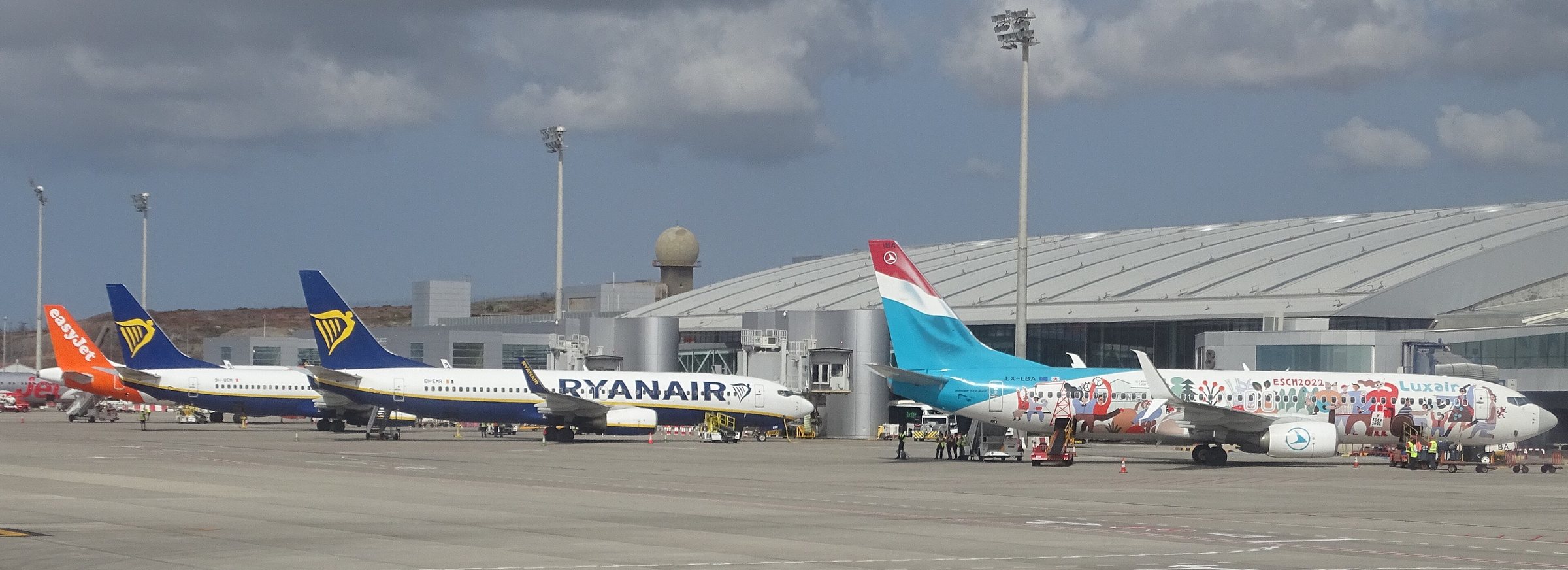
Ryanair announced on 8 October 2026 that it will cut its routes from Berlin to Gran Canaria, Fuerteventura and Lanzarote in winter 2026/27. In Germany 700,000 seats disappear, 10%, and the Berlin base was due to close on 24 October.
Eddie Wilson, head of Ryanair DAC, blames airport charges, aviation taxes and security and navigation costs. He says Berlin charges have risen by more than 50% since 2019.
In September 2026 Aena counted 4,204,223 passengers at Canary Islands airports, 0.9% fewer. Tenerife Sur lost 4.2% and Fuerteventura 2.4%, while Aena’s network across Spain grew by 4.2%.
Why is flying likely to get dearer?
De León cites rising airline costs, geopolitical uncertainty and new EU environmental rules as causes. In March 2027 contracts also expire that let airlines fix their fuel price up to two years ahead.
After that, higher energy costs from the conflict in the Strait of Hormuz could hit airlines harder. The 30% and the expiry date come only from the committee session, and other reports give no deadlines.
Tourism Economics expects, in one scenario, up to 10.9% less flight capacity in December if reserves no longer cover the fuel gap. According to market reports, Ryanair has hedged about 80% of its fuel and cut its passenger forecast to March 2027 from 216 to 214 million.
In March 2026 De León still expected about 2% more scheduled capacity for the winter. The declines now cited cover only Britain and Germany, while that forecast covered total capacity.
What do Brussels and airport charges have to do with it?
The EU is reviewing compliance with its carbon plan for aviation, and the Canary Islands want its targets suspended or postponed. De León sees this as a disadvantage against Egypt, Turkey, Tunisia and Morocco.
According to a report of 19 July 2026, the European Commission has proposed extending the Canary Islands’ exemption from EU emissions trading until 31 December 2035. Parliament and Council must still agree, and it is not confirmed whether that has happened.
By the Canarian government’s estimate, full inclusion in emissions trading would have cost 15 to 20 euros per flight leg. How this relates to De León’s demand is not clear from the reports available.
The EU tourism strategy is currently open for comment, and no closing date was given. De León criticises its focus on rail, which she says disadvantages outermost regions (RUP) such as the Canary Islands, and she says future EU funding depends on the strategy.
Aena proposed an average rise of 3.82% a year in airport charges for 2027 to 2031, while the competition authority CNMC proposed a cut of 0.59%. De León asked Aena to drop the rise announced for the end of 2026, says a government statement, but the date of the request is not confirmed.
What are the government and industry doing, and what can travellers do?
The Canary Islands tourism crisis committee meets every 15 days. It decides which proposals go to the Spanish government or straight to Brussels.
José Manuel Bermúdez, a Coalición Canaria member of parliament, called for a joint position with the Spanish government. De León announced stronger winter advertising campaigns, but gave no dates for the next sessions.
The DRV association, led by president Albin Loidl, warned in June 2026 that taxes and charges could cut capacity and direct routes. The VUSR association of independent travel agencies, led by Marija Linnhoff, expects flights to stay expensive and names train, bus and car as alternatives.
The authorities have so far published no practical advice for travellers. Anyone flying this winter can check the flight schedule and package terms with the airline or tour operator, especially on Ryanair routes from Berlin.
De León announced no new measure for residents and people who have recently moved here. The next fixed date is March 2027, when, according to her, the airlines’ fuel hedging contracts expire.