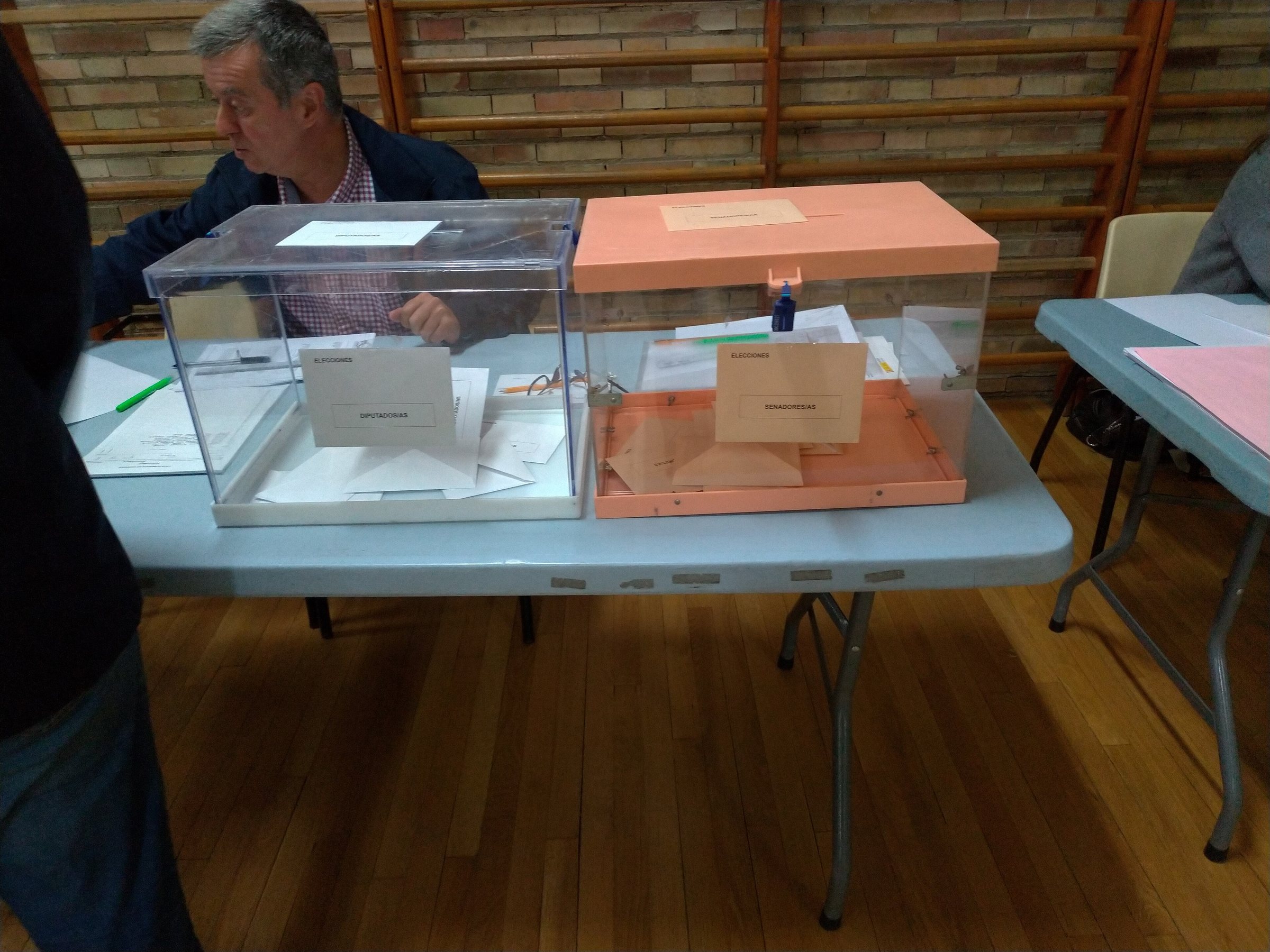
How did the Canary Islands vote?
The PSOE (Socialists) won 287,657 votes in the islands, or 29.23%. The PP (People's Party, conservative) follows with 285,270 votes, or 28.98%. Only 2,387 votes separate them.
Each party takes 5 seats and loses one. At the July 2023 election the PSOE had 33.33% and the PP 30.44%, with 6 seats each.
Vox, a nationalist right-wing party, is the winner of the night. It has 189,420 votes, or 19.24%, up from 7.55% three years ago, and now holds 3 seats instead of 1.
Coalición Canaria, the Canarian regional party, ran this time on the CCa-1CAN (Primero Canarias) list. It received 105,101 votes, or 10.68%, and 2 seats. In 2023 Coalición Canaria won one seat with 11.36%.
Sumar, the left-wing alliance, held one seat in 2023 with 10.54% and has no seat of its own this time. The joint list of NC-BC, Podemos, IU and Sumar has 62,700 votes, or 6.37%, and no seat. SALF reached 27,487 votes, or 2.79%.
What happened in the two provinces?
The Canaries vote in two constituencies. Las Palmas province, with Gran Canaria, Lanzarote and Fuerteventura, elects 8 members. With 82.27% counted, the PSOE had 3 seats there, the PP 2, Vox 2 and Coalición Canaria 1.
Santa Cruz de Tenerife province, with Tenerife, La Palma, La Gomera and El Hierro, elects 7. With 78.01% counted, the PP had 3 seats, the PSOE 2, Vox 1 and Coalición Canaria 1.
Together that makes 5 seats for the PSOE, 5 for the PP, 3 for Vox and 2 for Coalición Canaria. This is the position late on Sunday night. Because votes were still missing, the allocation of a seat can still change.
Who won the election in Spain?
Alberto Núñez Feijóo's PP is the largest party with 133 seats, four fewer than in 2023. Pedro Sánchez's PSOE has 115, six fewer. Vox, led by Santiago Abascal, rises from 33 to 52 seats.
That gives the PP and Vox 185 seats together, nine more than needed. The UPN-PP list from Navarre adds 2 seats. All other parties together are short of a majority.
The other seats: ERC (Catalan left) 11, Frente Amplio 10, EH Bildu 7, Junts 5, Adelante 4, Compromís 3, BNG 3, the Basque PNV 3 and Coalición Canaria 2.
At 97.12% counted, 27,790,453 voters had been recorded. Turnout of 79.57% is about 9 points above the 70.4% of 2023, both without votes cast abroad. The figures are based on 97.12% of the vote.
Is Sánchez gone?
Not yet. Sánchez has governed since June 2018 and stays on as caretaker until Congress elects a new head of government. He called the vote early, on 5 October, after parliament rejected two renter-protection decrees.
Feijóo can hope for the job but needs Vox. The two parties would have to agree whether Vox backs him from outside or joins the government. No agreement was known on election night.
The provincial electoral boards start the official count on Friday, 4 December, when votes cast abroad are added. The new parliament is due to meet on 23 December.
King Felipe VI then talks to the parties and proposes a candidate. In the first vote the candidate needs 176 votes. In the second, 48 hours later, more yes than no votes are enough. If nobody succeeds within two months, a new election follows.
What does it mean for your life in the islands?
For now nothing changes. There is no new law or rule on housing, taxes, holiday lets, flights or residency. If you have planned a trip or a move, you can go ahead as planned.
For the islands it matters how the new majority is formed and what the PP and Vox agree. Decisions on immigration, taxes or housing would be a matter for a new government.
Voters also chose the Senate on Sunday. Only Congress, however, elects the prime minister. This election does not change the government of the Canary Islands.