What will happen on Sunday
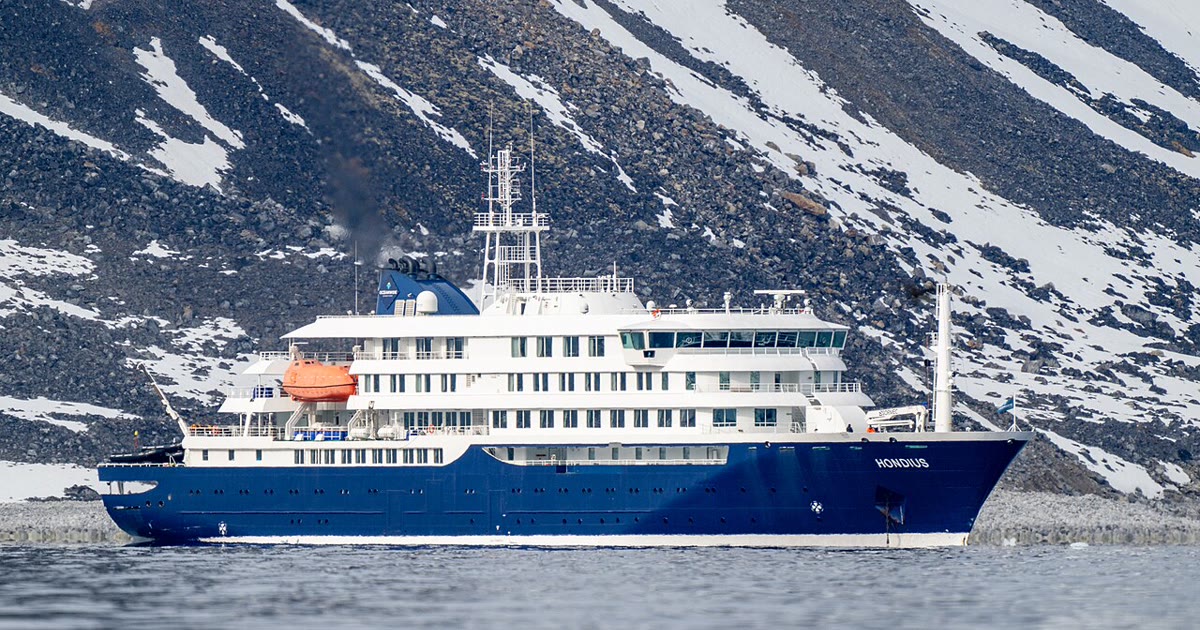
According to vessel-tracking data from MarineTraffic, the Hondius was around 1,100 kilometres from Tenerife on Wednesday evening, sailing at roughly 21 km/h. At that pace it reaches the anchorage off Granadilla on Sunday around midday. There the ship stays at anchor. Passengers will be picked up in small groups by inflatable boats — the local falúas — and brought ashore. From the pier to the sealed-off zone at Tenerife South airport is a ten-minute drive. The transfer route is separated from normal airport operations.
Three planes are waiting for the passengers — one from Spain for the 14 Spaniards, one from the US and one from the UK for their respective nationals. The Spanish passengers fly directly to Madrid and are taken to the Gómez Ulla military hospital in Carabanchel district. According to Defence Minister Margarita Robles, the quarantine there is «voluntary». The 65-strong crew remains under the responsibility of the flag state, the Netherlands; the Dutch authorities will take over the crew if needed.
Why anchor instead of pier
The decision against docking is symbolic and technical. Symbolically, because Canary Islands president Fernando Clavijo built up political pressure against allowing the ship to «touch» Canarian soil at all. Technically, because — according to expert assessments cited by eldiario.es — anchoring rules out one thing that docking would at least theoretically permit: a single rodent moving across mooring lines from ship to shore or vice versa. The probability is rated low, particularly because mooring lines have rat guards. But anchoring drops the residual risk to zero.
The choice of Granadilla port itself is deliberate. The 200 million euro facility was built up but is barely used commercially — little ship traffic, few residents, easy to seal off. For the Hondius case, that is an advantage.
The wind question at El Médano
The anchoring solution has one catch that Canarian port experts spell out plainly: the wind. The Atlantic trade winds in the south of Tenerife between El Médano and Granadilla average around 20 km/h, and the windsurfing world championships at the El Cabezo beach right next door run with peaks above 30 km/h. Those same conditions make the inflatable-boat transfer more complex than at a calmer anchorage — particularly for older passengers.
Emergency doctors and port staff are working with the weather window the day delivers. If Sunday's wind exceeds the standard values, the transfer can stretch over hours. That is built into the planning.
The political tug-of-war
The plan now in place is the result of 48 hours of negotiation between Madrid and Las Palmas. The trigger: on Tuesday Spain agreed to a WHO request and offered Tenerife as the port for humanitarian reception. Clavijo said he found out from the media, felt sidelined, threatened to fly to Madrid and on Wednesday from Brussels called the decision «not technically grounded and not adequately communicated».
Thursday brought the turning point: a phone call between Pedro Sánchez and Clavijo. Both sides now speak of coordination and mutual trust. The main union of Canarian ports, the Coordinadora de Puertos, supports the anchoring mode but demands maximum safety standards and explicitly rules out strikes or port blockades. Internationally, the Wall Street Journal, the New York Times and The Independent are following the case.
What applies to residents and tourists
Virginia Barcones, Spain's Director General for Civil Protection, put it directly on Thursday: «There is no possibility of contagion» — neither during the transport of passengers nor for the Canarian population. The Andes hantavirus strain is mainly transmitted via rodent excreta; in the ship's crew the initial contact is believed to have happened during a shore excursion at a port stop in Argentina or Chile.
For tourists in the south of Tenerife — Costa del Silencio, Los Cristianos, El Médano, Costa Adeje — there is no impact on daily life. Tenerife South airport runs normally; the sealed-off zone for the three special flights lies outside the regular flight paths. Anyone windsurfing at El Médano on Sunday will likely see nothing of the operation on the anchorage other than a grey ship on the horizon.
Capacity — clinic and quarantine
Spain has 17 high-isolation beds in total, in so-called UATAN units (Unidades de Aislamiento y Tratamiento de Alto Nivel). One of them sits at the Nuestra Señora de La Candelaria University Hospital in Santa Cruz de Tenerife. It has been on standby since Thursday. The unit comprises one high-isolation room and seven support rooms, and is Spain's reference centre for highly infectious diseases in the Canaries.
At the Gómez Ulla hospital in Madrid, the destination for the Spanish passengers, quarantine runs in a specially prepared ward. A WHO expert and two Dutch doctors plus an expert from the European Centre for Disease Prevention and Control (ECDC) have been on board the Hondius since Cabo Verde and remain there until disembarkation. The health status: ship doctors report no new symptomatic cases among the remaining passengers since 28 April.
Frequently asked questions
- When does the Hondius reach Tenerife?
- Arrival off the port of Granadilla is expected on Sunday 10 May 2026, around midday. The ship will not dock — it will anchor offshore.
- Why not berth in the harbour?
- The Canarian government argued against docking. Anchoring keeps the ship at a distance from the shore and rules out the very unlikely but theoretically possible movement of a rodent across mooring lines from ship to land.
- How many people will disembark?
- On board are 88 passengers and 65 crew, including one Spaniard among the crew. The 14 Spanish passengers go to Gómez Ulla military hospital in Madrid for voluntary quarantine. The crew will be handled by the flag state, the Netherlands, if needed.
- Are local residents at risk?
- According to Virginia Barcones, Spain's Director General for Civil Protection, there is «no possibility of contagion» for the Canarian population. Passengers are taken by inflatable boats directly to a sealed-off zone of Tenerife South airport; the transfer takes about ten minutes.
- What is the UATAN bed at Hospital Candelaria?
- A high-isolation treatment unit (Unidad de Aislamiento y Tratamiento de Alto Nivel). Spain has 17 such beds in total, one of them at Nuestra Señora de La Candelaria University Hospital in Tenerife. The unit is on standby in case any passenger deteriorates.