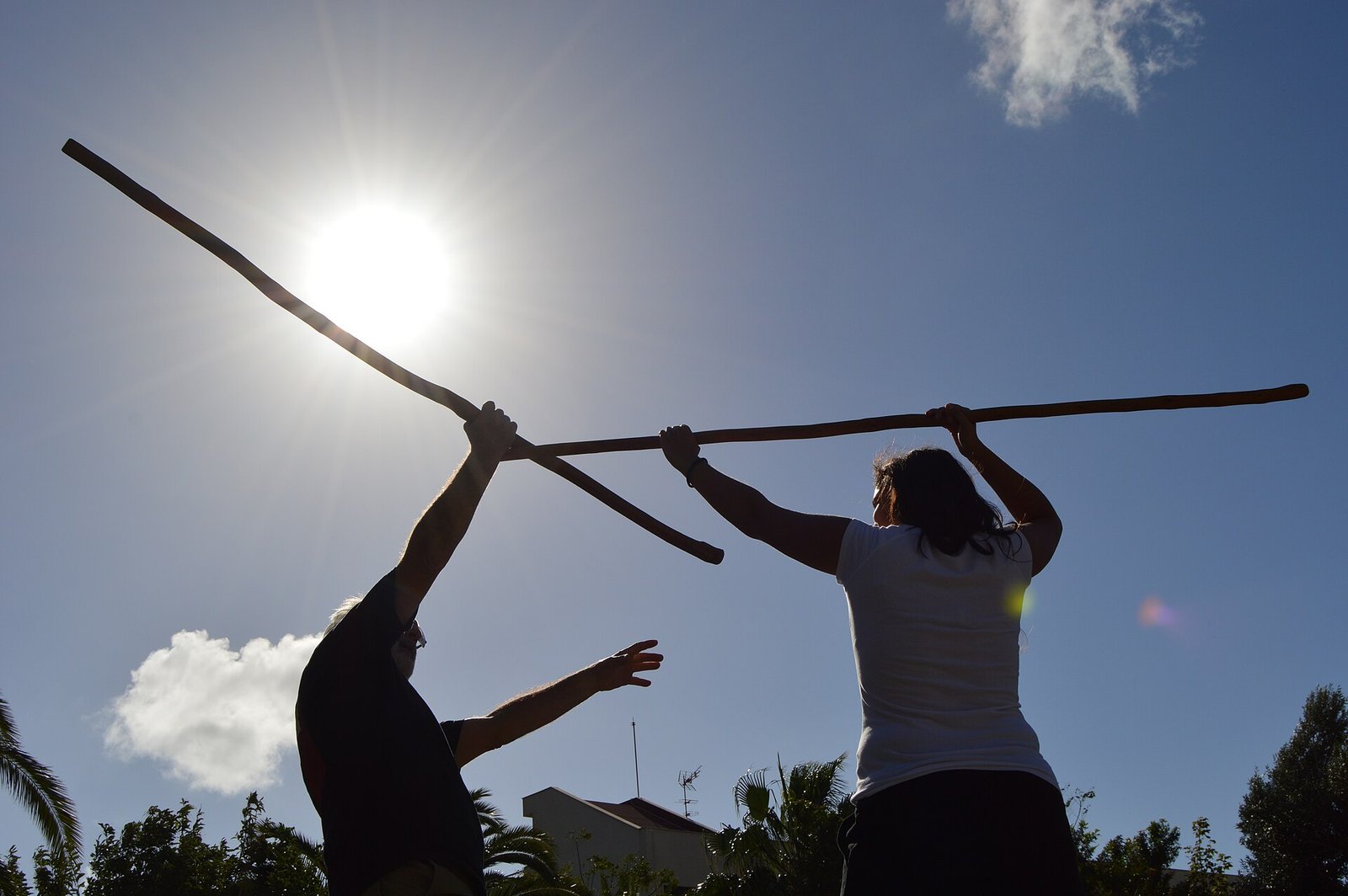
There are moments when a community's soul is officially recognised, and for the people of El Hierro, Monday the 13th of July 2026 was one of those days. The Canary Islands Government formally approved a decree declaring the Juego del Palo Estilo Quintero a Bien de Interés Cultural (BIC) in the category of traditional games and sports. This isn't just paperwork; it is a profound acknowledgement of a living heritage that has pulsed through the island's veins for centuries, a dance of honour, skill, and wood that almost faded into memory.
For those who have witnessed it, the game is mesmerising. Two opponents, armed with smooth, polished sticks, circle each other in a ritualised combat that is as much about agility and respect as it is about defence. The Quintero style, named after the family lineage that safeguarded it, is the only traditional stick-fighting method to survive on the remote island of El Hierro. Its declaration as a BIC inmaterial means this elegant, powerful art form is now legally protected, its transmission to future generations secured under the Law 11/2019 of Canarian Cultural Heritage.
A Journey from Island Tradition to Official Protection
The path to this official recognition began not in the halls of the regional government in Santa Cruz de Tenerife, but right on El Hierro itself. The Cabildo, the island's governing council, took the crucial first step. In an extraordinary and urgent session on 2 August 2024, the island government, led by the area of Education, Youth, Culture, Heritage and Sports under Councillor Emilio Hernández, approved the initiation of the BIC file. This decision was built on a solid technical foundation: a report from the Insular Inspectorate of Historical Heritage, dated 15 July 2024, which clearly recommended starting the procedure to protect this unique practice.
Following the Cabildo's approval, the official machinery began to turn. The agreement was published in the Boletín Oficial de Canarias (BOC) on 30 August 2024, making the process public and transparent. The file was then sent to the General Directorate of Heritage for a preventive entry in the BIC Register, and the three municipalities of El Hierro were formally notified. This meticulous, multi-step process, driven by the island's own institutions, laid the groundwork for the final, decisive act by the regional Consejo de Gobierno.
The People Behind the Preservation
While the declaration is about an intangible art, its protection is the result of very tangible human effort. Migdalia Machín, the regional Councillor for Universities, Science, Innovation and Culture, was the political figure who elevated the proposal to the Consejo de Gobierno for its final approval. Her role was pivotal in bringing the island's aspiration to the highest level of regional decision-making. On El Hierro, the constant push from Emilio Hernández and his team at the Cabildo ensured the file was robust, complete, and ready for the final signature.
But the true guardians are, and always have been, the practitioners and the Quintero family themselves. This style is not a re-enactment for tourists; it is a living lineage of knowledge, passed down through generations. The official BIC status is a tribute to their dedication, a shield against the erosion of time and modernity. It formally recognises what the herreños have always known: that the swift, precise movements of the juego del palo are an irreplaceable part of their identity.
What This Means for the Game's Future
Being declared a BIC inmaterial is not merely an honorary title. It brings concrete responsibilities and protections. Under Canarian law, the public administration is now obliged to safeguard the game, promote its study, and ensure its authentic transmission. This could translate into support for local associations that teach the style, the inclusion of the game in educational programs, and funding for documentation and research. It creates a formal framework that values the knowledge of the elders and creates a pathway for the youth.
For a practice that is, by its nature, vulnerable—relying on direct, person-to-person teaching—this legal shield is vital. It means the unique footwork, the specific grips, the unwritten codes of respect, and the very feel of the wooden stick in one's hand are no longer just a family or community concern; they are a matter of public interest for the entire Canary Islands. The Quintero style now stands proudly alongside other protected cultural treasures of the archipelago, its value officially and forever inscribed in the regional heritage register.
More Than a Game: A Living Museum of Movement
To understand the significance, one must look beyond the surface of a stick fight. The Juego del Palo is a sophisticated system of body mechanics, spatial awareness, and historical memory. The Quintero style, specific to El Hierro, has its own distinct character within the broader family of Canarian stick games. It is a dialogue between two bodies, a non-verbal conversation where the stick is an extension of the arm and the mind. The BIC declaration in the category of "juegos y deportes autóctonos" perfectly captures this dual nature: it is both a playful, competitive game and a serious, structured sporting tradition.
The Cabildo of El Hierro has expressed its deep satisfaction, stating that the regional government's decision "culminates" a file initiated and instructed by the island institution. This feeling of culmination is palpable. It closes a chapter of uncertainty and opens a new one of active preservation. The quiet, rhythmic clack of wooden sticks meeting under the Canarian sun is no longer just a sound of the past; it is now a protected sound of the future, a cultural heartbeat that will continue to resonate across the valleys and volcanic landscapes of El Hierro.
Common questions
- What exactly is the Juego del Palo Estilo Quintero?
- It is the unique, traditional stick-fighting style from the island of El Hierro, recognised as the only surviving method of its kind on the island. It involves a ritualised combat with wooden sticks, focusing on skill, agility, and defence.
- What does BIC inmaterial mean?
- BIC stands for Bien de Interés Cultural (Asset of Cultural Interest). It is the highest legal protection for heritage in the Canary Islands. "Inmaterial" means it protects a non-physical tradition, like a practice, knowledge, or skill, rather than a building or object.
- When did the declaration become official?
- The decree was officially approved by the Consejo de Gobierno de Canarias on Monday, 13 July 2026.
- Who was responsible for making this happen?
- The process was initiated by the Cabildo de El Hierro, led by Councillor Emilio Hernández. The final approval was proposed by the regional Councillor for Culture, Migdalia Machín, to the Consejo de Gobierno.
- Can I visit a place to see this BIC?
- No. As an intangible asset, there is no single physical location. The BIC protects the living tradition itself. The best way to experience it is by attending local festivities and cultural events on El Hierro where it might be demonstrated.
Read on
- Gran Canaria and El Hierro: 576 migrants in 3 boats in a dayEl Hierro · 13 October
- El Hierro: cayuco with 41 people reaches La RestingaEl Hierro · 8 October
- El Hierro: Luchada Cósmica fuses wrestling and electroEl Hierro · 4 October
- El Hierro yellow rain warning on 6 October until midnightEl Hierro · 7 October
- Clubs and Parties on El Hierro: Where the Night Is NowEl Hierro · 6 October
- All events on El Hierro →
Stand: 14 July 2026. This article is based on official decrees and communications from the Gobierno de Canarias and the Cabildo de El Hierro.