What changes for travellers on La Gomera?
Most travellers on La Gomera will notice nothing, because only one stretch of the TF-712 closes, and only at night. The Cabildo de La Gomera names two nights, each from 21:30 to 06:00.
The closure hits anyone who wants to use the road between kilometre points 0+336 and 3+209 in those hours. If you need to reach the coast or leave it in the evening, travel before 21:30.
The announcement names no restriction during the day. The Cabildo has not published a diversion.
The Cabildo is passing the information to scheduled bus services, tourist transport firms and other affected businesses. If you have booked a transfer or tour in that area, check with the provider to be safe.
Where exactly is the road closed, and when?
The closure applies in both directions between kilometre points 0+336 and 3+209, according to the Cabildo. Going by those figures, that is about 2.9 kilometres.
The first night runs from Monday 16 to Tuesday 17 November, the second from Tuesday to Wednesday 18 November. Each closure starts at 21:30 and ends at 06:00.
Traffic stops completely on the stretch, with temporary signs and barrier markings. Staff will control the access points and use lights and reflective items suited to night work.
Emergency vehicles get through at once in any emergency, the Cabildo says. Signs will also stand at the affected junctions and access roads.
If the work ends before 06:00, the Cabildo says it will reopen the road as soon as possible. It advises everyone to plan journeys in advance and to follow the signs and staff.
Why is the Cabildo closing the TF-712 at all?
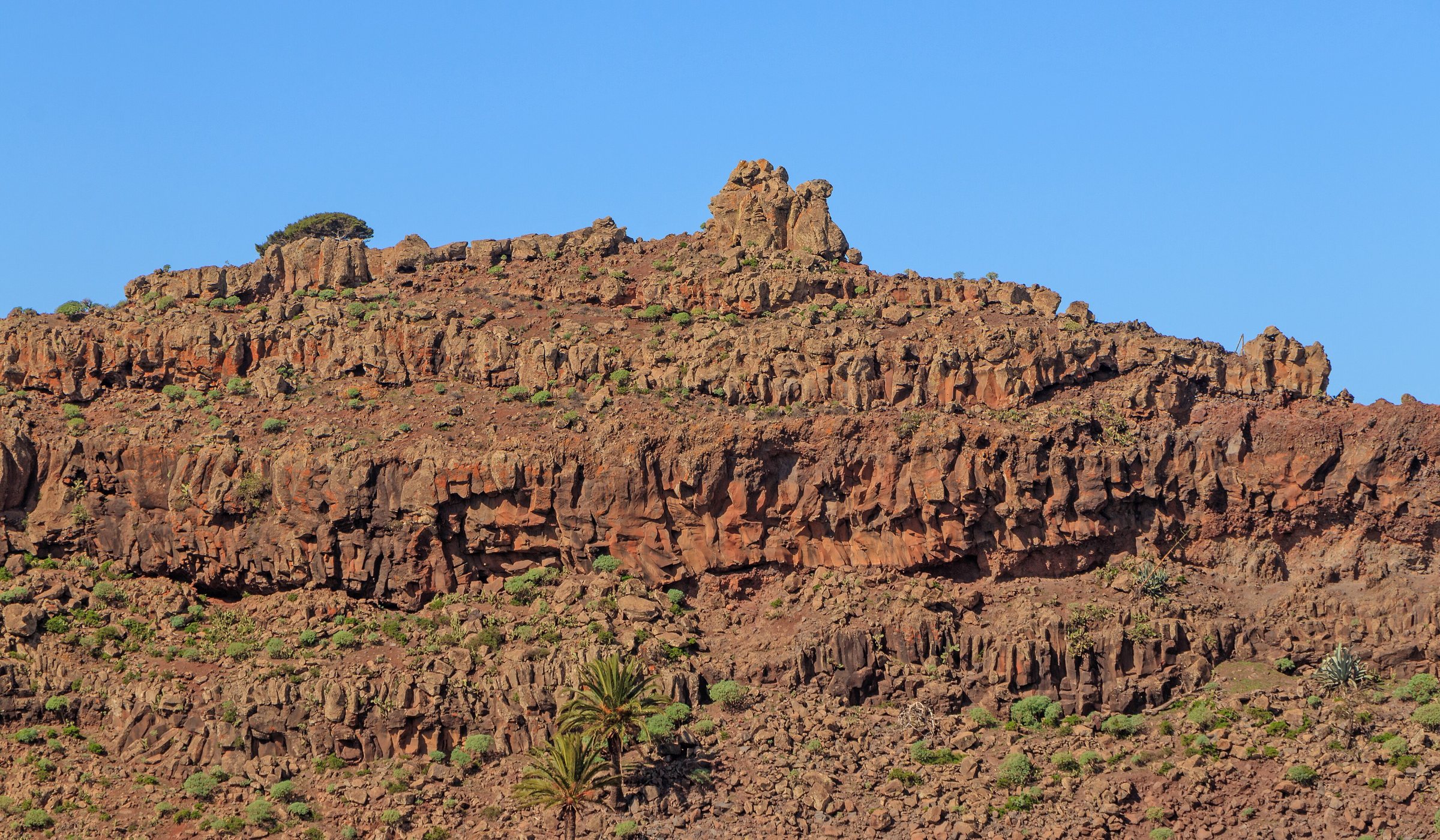
Workers are fitting a protective net, known as a malla de protección, on one of the slopes beside the road. No car can pass at night while they do it, hence the full closure.
The Cabildo does not say which slope it means. The slope belongs to the emergency works under way on this road.
Storm Therese hit La Gomera with rain and wind from 20 to 25 March 2026 and badly damaged roads. Landslides and falling debris also struck the approaches to the Vallehermoso coast.
On 30 April 2026 the Cabildo awarded four emergency measures worth more than 7.9 million euros in total. One covers the Vallehermoso coastal access road: just under 1 million euros to stabilise the slopes and guard against fresh instability.
It seems likely that the net work belongs to this measure, but the announcement does not say so. The Cabildo has not named the contractor or the cost of the net work.
What else is the Cabildo repairing after the storm?
The three other emergency measures cover the CV-3 in Hermigua at 2.6 million euros and the CV-14 near El Rejo in Hermigua at 2.7 million euros. The GM-1, GM-2 and GM-3 get 1.5 million euros, including for rockfall clearance, new protective nets and retaining walls.
The CV-14 had been closed since the storm at the end of April. President Casimiro Curbelo said at the time that it could reopen in sections with controlled traffic once the technical reports allow.
The Cabildo's reconstruction strategy puts the cost of the most important infrastructure at more than 42.7 million euros. Curbelo said the Cabildo and the municipalities cannot manage this alone and called for more involvement from other administrations.
Have there been night closures like this before?
In December 2023 the Cabildo closed the GM-1 in Valle Gran Rey on 26 and 27 December, each night from 23:00 to 05:00. The reason was an emergency project for stabilisation and rockfall protection.
That time the road stayed partly open: uphill it was closed between kilometre points 57+300 and 58+100 at the Yorima tunnel, while downhill traffic ran in alternating turns. At Vallehermoso, by contrast, the road shuts in both directions.
Do not confuse the TF-712 with the Vallehermoso bypass with a tunnel, a section of the GM-1 between Vallehermoso and Arure. The Gobierno de Canarias (Canary Islands government) is building it, not the Cabildo.
The Gobierno puts the budget at 12,089,530 euros. Progress stood at 74% according to figures from 30 September 2025, and completion is planned for 2026.
What is still unclear?
The announcement covers only the two nights of 16 to 18 November. It mentions no further closures, and no notice of later dates has been published so far.
The contractor for the net work and its exact price are also open. Who ultimately pays for the emergency measures has likewise not been settled.
The Cabildo de La Gomera itself will report current changes, such as an extension of the closure. Until then, the announced schedule applies.