Which beaches on La Graciosa are most worth visiting?
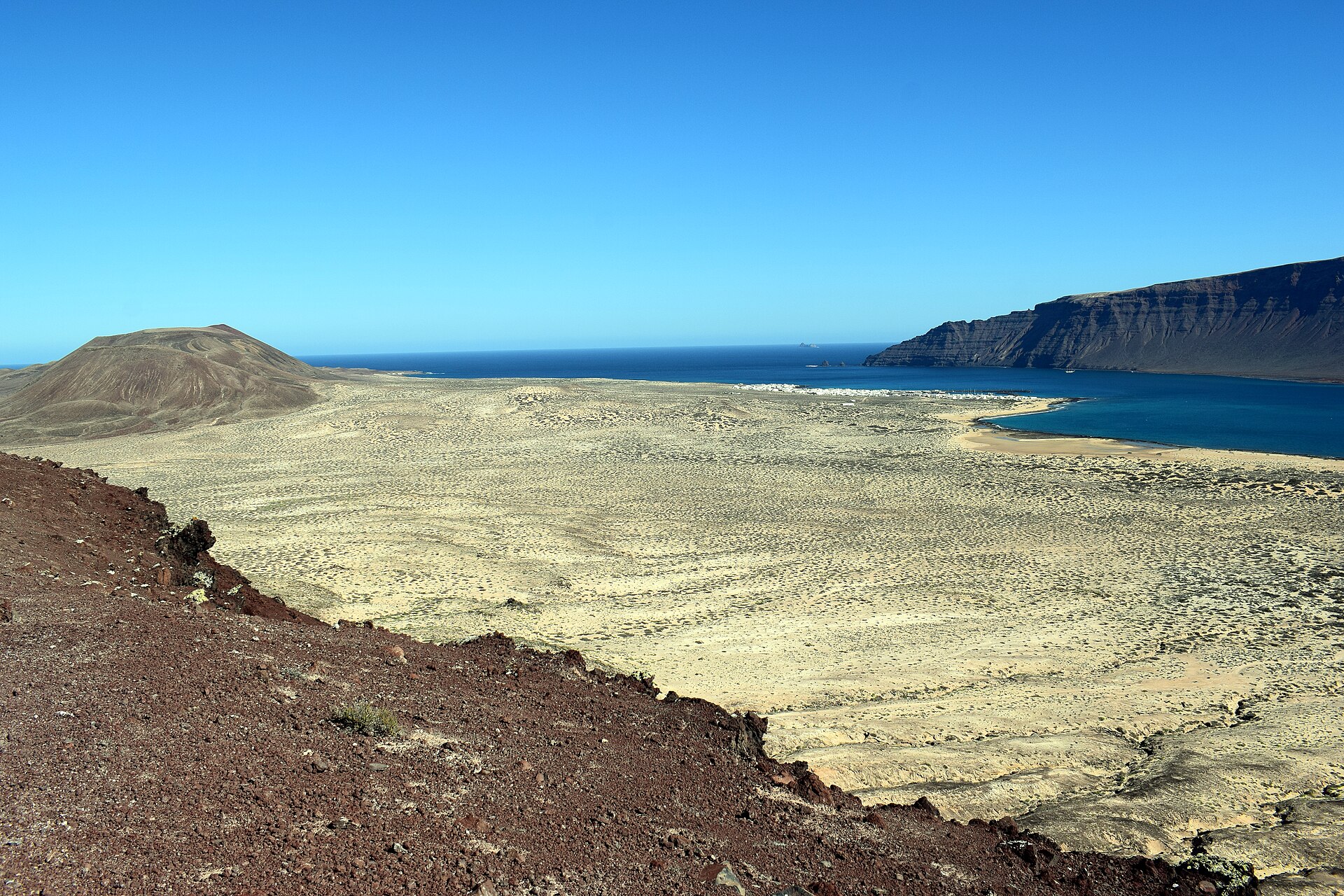
The best-known beaches on La Graciosa are Playa de Las Conchas, Playa de La Francesa, Playa de La Cocina and Playa de Caleta de Sebo. Turismo Lanzarote also names Playa del Ámbar, El Corral and El Ganado as further coastal destinations.
For surfers, El Corral, El Ganado and Montaña Amarilla are mentioned in particular because of the waves. The beaches outside Caleta de Sebo lie in largely natural landscapes.
Anyone planning a beach day without a longer walk will find the easiest options in Caleta de Sebo and La Laja. Playa del Salado, La Francesa and La Cocina can be combined as a south-western beach route.
How do I get from Lanzarote to La Graciosa?
La Graciosa is reachable all year round only by sea, unless you arrive with your own boat. Ferries depart from Órzola on Lanzarote; Líneas Romero and Biosfera Express are named as operators.
Turismo Lanzarote describes several daily connections. The main starting points on La Graciosa are the harbour and the village of Caleta de Sebo.
From there, the beaches can be reached on foot, by bicycle or by regulated taxi transfer. Bicycles can be hired on the island or brought over from Lanzarote.
Which beach is suitable for families and for snorkelling?
Playa de Caleta de Sebo lies directly at the inhabited main village and harbour. La Laja is a few steps from the landing stage and is described as a golden-sand beach with a calm sea.
La Laja is expressly described by Turismo Lanzarote as a suitable beach for families with children. These beaches are the easiest to reach for a short stay after the ferry crossing.
Playa de La Francesa lies on the south-west coast, before La Cocina, with views of the Risco de Famara and the strait between Lanzarote and La Graciosa. Turismo Lanzarote names it as a suitable spot for snorkelling.
At high tide, the beach can partly turn into a lagoon-like area. The beach can be reached on foot or by bicycle; the cycle path ends before the section at La Cocina.
What should I bear in mind at Playa de Las Conchas?
Playa de Las Conchas lies in the north. From there, there are views of the uninhabited islands of Montaña Clara and Alegranza.
Turismo Lanzarote warns of possible strong waves and dangerous sea currents. The northern coastal section is described as wilder for bathing; the warning should be clearly taken into account when planning.
Turismo Lanzarote also advises against going near the surf zone at the basaltic rock arches at Las Conchas. There is a warning there about spray and wave impact.
What rules apply in the natural area and marine reserve?
La Graciosa belongs to the Chinijo Archipelago, which is described as a marine reserve. Turismo Lanzarote describes La Graciosa as a biosphere reserve and highlights the low human impact on the natural coastal areas.
The island is part of the Reserva Marina del Archipiélago Chinijo, which was created in 1995.
There is a general ban on sea fishing and the removal of living species, with regulated exceptions for certain professional forms of fishing.
Which mistakes should I avoid as a visitor?
Outside Caleta de Sebo, the beaches lie partly without visible infrastructure beyond the village.
Before setting off, you should take sufficient water, sun protection and suitable shoes. The distances, the wind and the sun exposure can be greater than expected.
The state of the sea should not be underestimated: some beaches, especially Las Conchas, can have swell and currents. Not all are suitable for swimming.
Anyone arriving by ferry should check the return journey; the standard ticket may require a return on the same day. Unauthorised vehicles are prohibited, and rubbish must not be left behind.