Do I need to do anything as a visitor or resident?
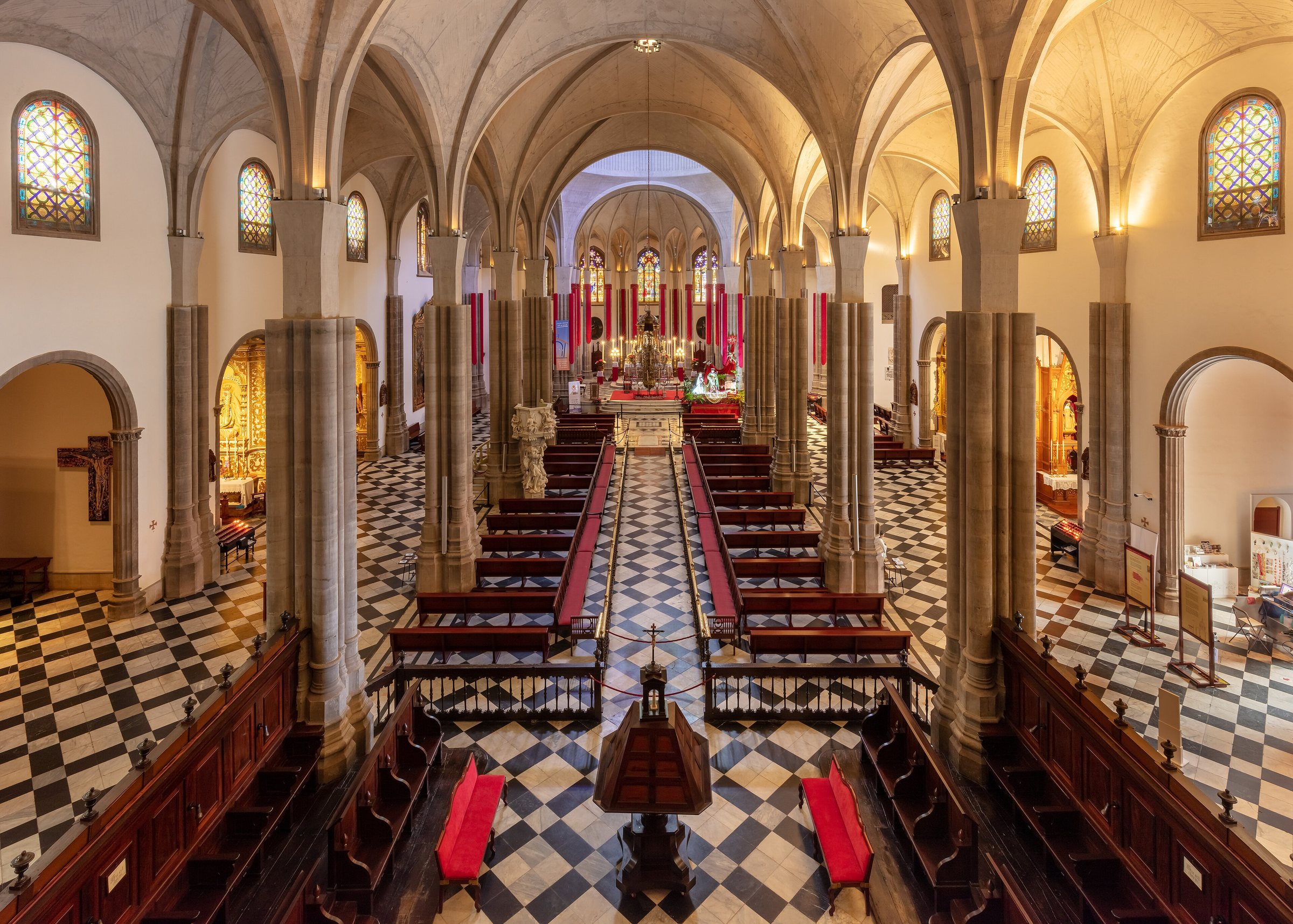
For visitors and residents, the drill on Friday 27 November 2026 was strictly a matter for the professionals, with no prices, deadlines or sign-ups. Crews rehearsed an emergency in the Convento (convent) and the Iglesia de Santo Domingo de Guzmán in San Cristóbal de La Laguna.
No road closures or access limits were officially announced before the date. No reports of disruption on the day itself turned up.
La Laguna’s old town has been a UNESCO World Heritage Site since 1999. Mayor Luis Yeray Gutiérrez calls La Laguna the only Canarian city on that list.
What did the crews rehearse in the church?
It all began with a simulated earthquake that damaged structures in the complex. The UME (Unidad Militar de Emergencias, the military emergency unit) assessed the damage and propped up parts of the building.
Firefighters secured the church’s bell gable (espadaña), and a drone team watched over the site. Then a simulated fire broke out inside the church, and crews fought it while rescuing artworks.
Up to 20 cultural items came out of the building, including paintings, books, documents, crosses and saints’ figures. At a collection point on the Plaza de Santo Domingo, teams logged, photographed and packed each piece, then moved them to two stores under police guard.
The altarpiece (retablo) was too big to move, so crews protected it where it stood. The Consorcio de Bomberos de Tenerife (the island’s fire service consortium), the UME, the Policía Local (local police) and SEPRONA, the Guardia Civil’s nature protection unit, all took part.
Why is Tenerife rehearsing the protection of artworks?
The drill came 20 years after the fire at the Palacio Salazar in La Laguna on 23 January 2006. The palace was then the seat of the Obispado (diocese) of Tenerife.
Rosa Dávila, president of the Cabildo (island government) of Tenerife, recalled that fire. Afterwards the fire service was asked what it had saved and did not know, because there was “no protocol”, Dávila said.
Florencio López, Oficial Jefe of the Consorcio de Bomberos, stressed the need for a “prior inventory that identifies the priority items”. The drill rehearsed exactly that step, as teams logged, photographed and packed the objects.
On 27 November the drill closed the Jornadas de Protección del Patrimonio, a series of expert days on protecting cultural heritage. The theory sessions ran from 24 to 26 November in the same convent.
The programme also covered lessons from the Notre-Dame fire in Paris. According to the programme, Salvador Reyes, a former head of the Consorcio de Bomberos, presented the session on the 2006 fire.
Who organised the drill, and what came before it?
The Cabildo de Tenerife and the Consorcio de Bomberos de Tenerife organised the drill. The programme lists the Ayuntamiento (town council) of La Laguna, the Obispado de Tenerife and the Asociación Profesional de Técnicos de Bomberos as contributors.
On 10 August 2026 the Cabildo announced two drills before the end of the year. The first, a volcano drill that rtvc.es says runs under the name VOLCANEX Tenerife 2026, was planned for 22 October in Guía de Isora.
The announcement names Blanca Pérez, Consejera de Medio Natural, Sostenibilidad, Seguridad y Emergencias, and Iván Martín, Director insular de Seguridad y Emergencias, as those responsible. It lists the Gobierno de Canarias and the Subdelegación del Gobierno as coordinating bodies.
In September 2025 the EU-MODEX drill took place in Garachico, observed by the European Civil Protection Mechanism. It also dealt with evacuating cultural items, and the Universidad de La Laguna was a co-organiser.
As early as July 2025, a conference in La Laguna looked at fire protection in buildings with large timber structures. Experts there said the old town’s street network makes access easier for crews, though nobody measured it.
Which questions remain open?
No written result of the drill has been published so far, and the review followed after 13:00. None of the reports we checked gave a figure for the cost.
Whether the Cabildo will introduce a formal protocol or an inventory of the key cultural items is open. Nobody gave a date by Friday.
Reports disagree on turnout: one speaks of about 50 people, two others of about 120. The sources also differ on the start, with 10:30 planned and 11:00 reported.
One report calls the drill the first devoted solely to protecting cultural heritage. That claim has not been independently checked.
Since 13 June 2019, the Ley 11/2019 de Patrimonio Cultural (cultural heritage law) has applied in the Canary Islands. It splits the duties differently between the government, the Cabildos and the town councils.
Whether the law sets rules for emergency plans for cultural items could not be established. No further drill of this kind has been announced.