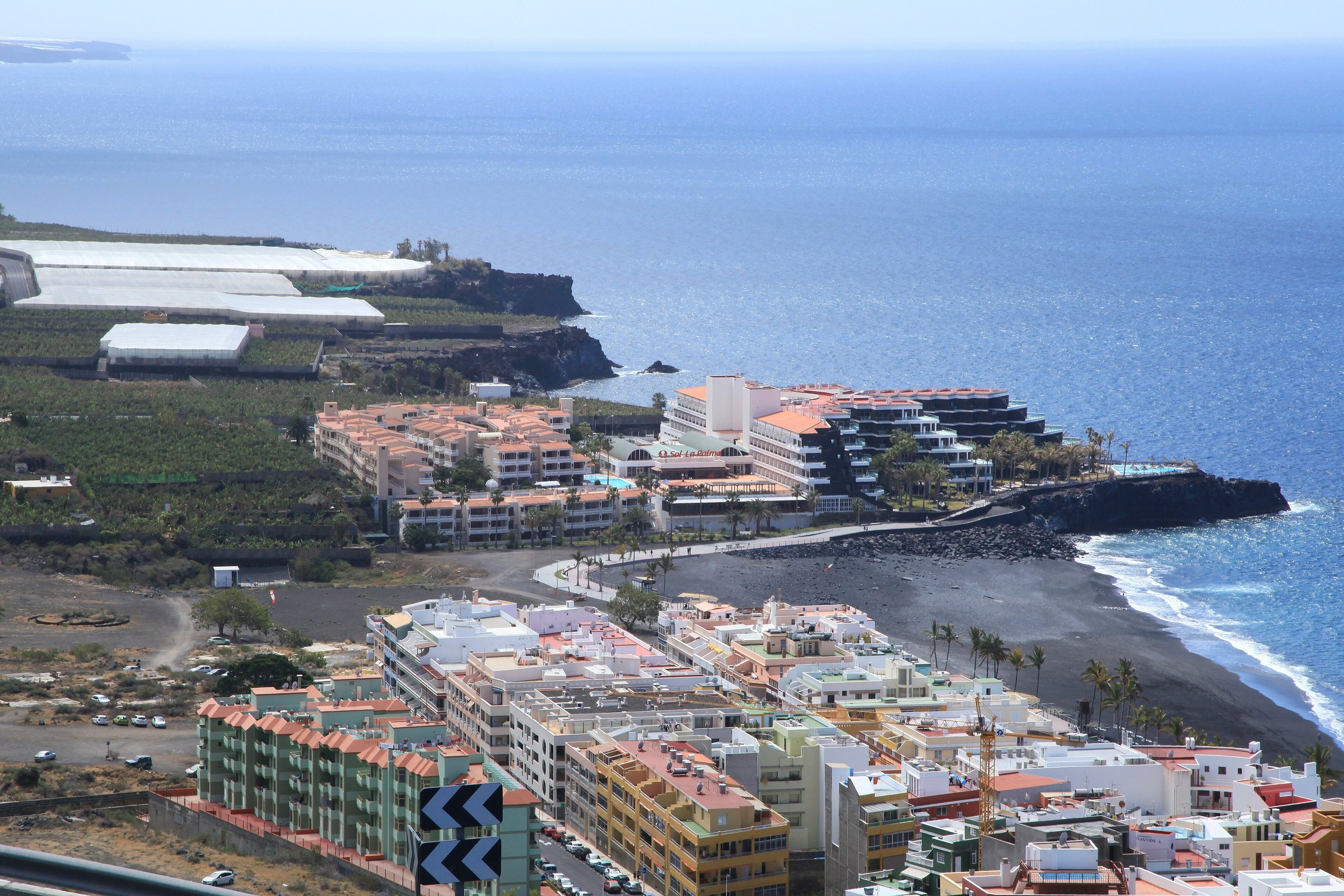
What changes for owners and visitors?
Owners of an approved home in Puerto Naos or La Bombilla may return once they have signed the safety protocol. The Cabildo requires that signature, including from shops that want to reopen.
The announcement does not affect holidaymakers, as no new rule applies to them. The Cabildo said on 14 April 2026 that both coastal villages are safe to visit.
According to the Cabildo, people applied for beach access through the official website. From 3 June the beach and approved homes should be open to all, but the year is not confirmed, so check the current rule beforehand.
Where does the figure of over 1,200 homes come from?
According to its announcement of 17 November 2026, the Cabildo has approved more than 1,200 homes for return. No split between Puerto Naos and La Bombilla is available.
On 14 April 2026 the Cabildo counted 1,163 approved homes in Puerto Naos and 58 in La Bombilla. Together that makes 1,221, a simple sum rather than an official figure.
On 12 May, Cabildo president Sergio Rodríguez said both villages stood above 1,200 approved “instalaciones” (premises). The word covers shops as well, not just homes.
It all began small: on 14 December 2023 the Cabildo approved up to 139 homes in the “zona verde” (green zone) of Puerto Naos. On 13 January 2026 it reported 1,105 homes in both villages, 55 of them in La Bombilla.
The figures differ depending on how they are counted. On 18 March 2026, 1,121 homes in Puerto Naos had permission to enter, but only 995 held the document for permanent return.
How safe is the return to the coast?
Gas caused the long closure: volcanic CO₂ seeps into buildings, mostly cellars and ground floors. The villages lie in the area of the Tajogaite eruption, which ran from 19 September to 13 December 2021.
Peinpal, the island emergency programme, checks each house individually, based on gas readings and a fire service report. Its advisory committee proposes approvals, and Rodríguez announces them.
More than 1,500 gas sensors and 220 outdoor monitors watch over both villages, the Cabildo said on 12 May 2026. The “Alerta CO2” system provides real-time readings.
On 5 May 2026 the Cabildo and the Instituto Eduardo Torroja of the CSIC began installing ventilation systems in homes. Ducts and extractors in cellars and ground floors steer the CO₂ away from living areas.
What is still open?
Approved does not mean lived in. In Puerto Naos about 163 signatures were still missing in April 2026, according to RTVC, and nobody has published how many owners have actually moved back.
Garages are a particular sticking point: on 18 March 2026, 38 of an estimated 67 in Puerto Naos had approval. Only 2 owners had signed.
On the same date, 22 of 48 lifts had permission. Twelve were running fully.
According to reports, Peinpal is working to subdivide the “zona naranja” (orange zone). No official source has said how many households are still locked out.
What the return costs, and whether grants or fees apply, has not been published. Beyond the protocol, it is also unknown how owners apply for approval.
What happens next?
Since 2025 the number has grown in small steps, from a handful to about 25 homes per advisory committee session. In June 2026 four more homes were added after better CO₂ readings.
The Cabildo gave no date for further approvals. All that is known is that the committee meets regularly, without set dates.
Rebuilding runs in parallel: according to the Comisión Mixta (joint commission) on 17 October 2025, a total of 1,100 million euros has flowed since 2021. Of that, 365 million euros went to housing for 1,415 beneficiaries.
The Canary Islands housing programme totals 78.5 million euros. Under it, 74 protected homes will be built in Los Llanos and El Paso.