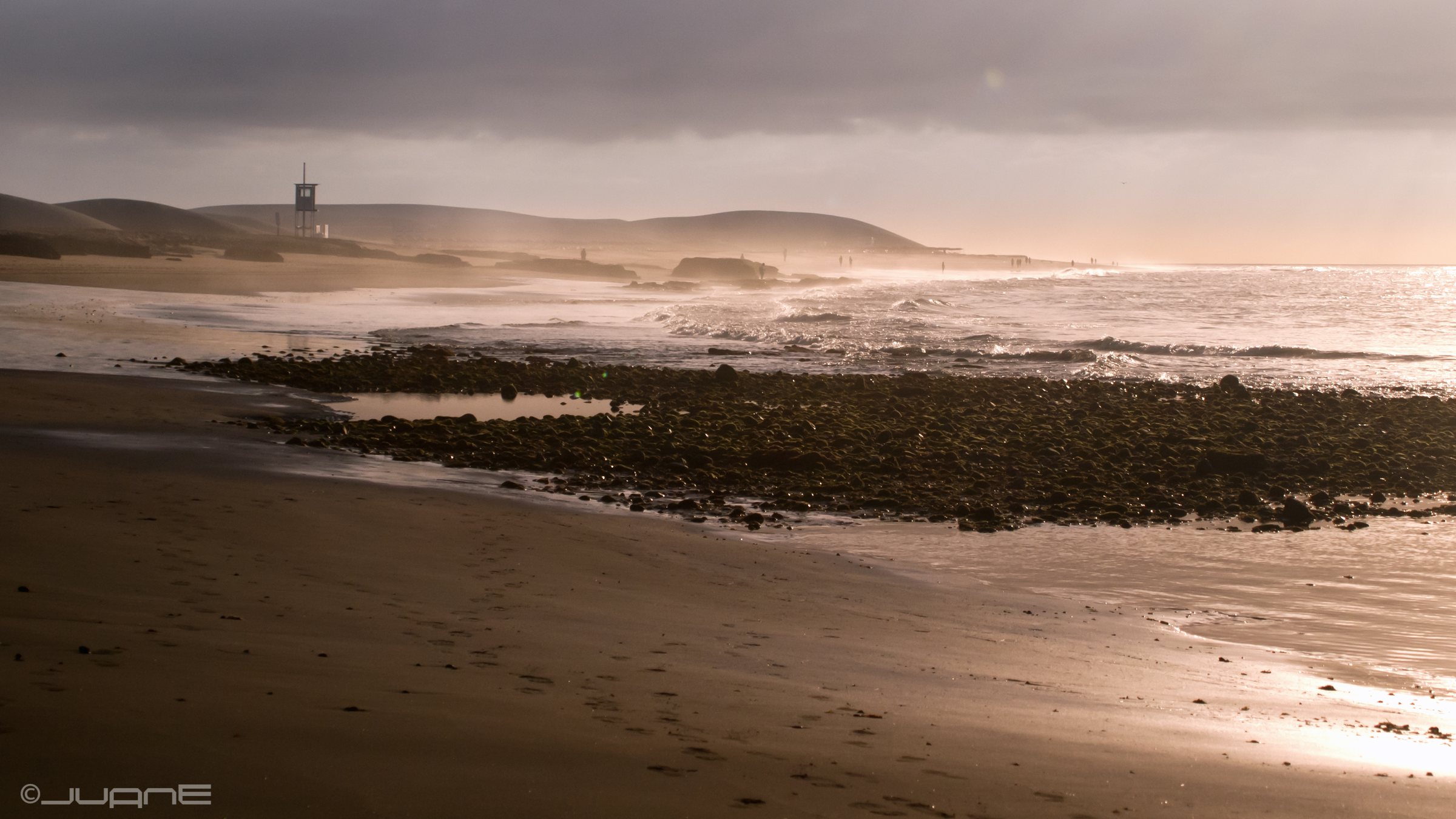
What did the council decide?
The Pleno (full council) of San Bartolomé de Tirajana unanimously approved €9,957,011 on Thursday 26 November 2026. The money covers monitoring, prevention, first aid, lifeguarding and sea rescue on the municipality’s beaches from 2027 to 2030.
Spread over four years, that is about 2.49 million euros a year (our own calculation). The council did not say whether the Canary Islands consumption tax, IGIC, is included.
The Pleno also told the Concejalía de Seguridad y Emergencias (the council department for security and emergencies) to start the tender. By Friday the council had given no dates for publication, bids or award.
What will swimmers notice in Playa del Inglés and Maspalomas?
For now swimmers notice nothing, because this is an approval and a procedure. There are no reports of new charges or beach closures.
Cruz Roja Española (the Spanish Red Cross) provides the service so far, under a contract that expired in September 2017. It has carried on since then without a new tender.
More staff on the beaches is the stated aim of the increase, says mayor Marco Aurelio Pérez. The council has not published how many lifeguard posts will go where, or from which date.
In practice, until further notice, swim at stretches with a lifeguard tower or first-aid post. There are no official staffing hours for 2027.
Why is the service 73% dearer?
The budget rises by about 73% on the previous one, mayor Marco Aurelio Pérez explained. He gives two reasons: more staff on the beaches and higher wage costs since the new sector-wide collective agreement.
The Canary Islands sector agreement was signed in summer 2026 and runs to 2029. Its pay improvements make the service dearer, according to reports on the tender.
The run-up took years: in January 2024 a tender worth about €5.5 million was announced, but it never started. According to those reports, the council’s financial oversight office (Intervención) had objected to earlier service specifications.
Samuel Henríquez, spokesperson for the opposition party Primero Canarias, criticises a delay of about two and a half years. He also doubts that the 2024 cost estimates still hold.
Which beaches and lifeguard towers are included?
According to the papers for the earlier tender, the service covers six beach stretches 365 days a year: Meloneras, Maspalomas, Playa del Inglés, El Cochino, Las Burras and San Agustín. The council has not confirmed whether the new contract covers the same stretches.
The safety and rescue plans of January 2023 provided for 74 items of equipment. These include 28 lifeguard towers or chairs, 9 first-aid posts and 7 SOS posts.
The first phase began at the end of November 2024 with four new towers costing €95,765. They stand in El Inglés (two), Las Burras and Maspalomas.
On 10 April 2025 the contract for eight more towers went to Serviplustotal SL of A Coruña, for €187,084.37. The firm was to deliver and install them within four months, and the old towers are over 20 years old.
The equipment is paid for from leftover funds of the cooperation plan with the municipalities. That plan runs separately from the staffing contract the Pleno has now decided on.
How safe is swimming on Gran Canaria?
The association “Canarias, 1.500 km de costa” counted 60 drowning deaths in the Canary Islands from January to November 2025. In the same period of 2024 there were 67, a fall of 10%.
Gran Canaria recorded 16 deaths in those eleven months, while Tenerife had the most with 19. For the whole of 2024 the association gives 72 deaths.
Beach supervision in the Canary Islands is a matter for the municipalities, with no regional rules of its own. Decree 116/2018 of 30 July 2018 had required municipalities with up to 20,000 residents to run a rescue service.
Spain’s Supreme Court annulled the decree in ruling 1192/2023 of 27 September 2023. It held that such a duty needs a norm with the force of law and adequate funding; San Bartolomé de Tirajana, as a tourist centre, was not affected anyway.
When will the new contract come?
The council gives no date for the tender. In September 2026 security councillor José Carlos Álamo confirmed that the Mancomunidad de Medianías (an association of municipalities) is handling the tender documents.
He cited an overloaded procurement department and the contract that has been expired since 2017. The reports do not explain how this fits with the November instruction to the Concejalía.
On the same day the Pleno approved 15.7 million euros for cleaning municipal buildings and schools to 2030. Another 3.1 million euros went to a new five-year contract for municipal communications.
Both items concern other contracts and have nothing to do with the beach lifeguards. Until an award is made, it stays open what the service will look like from 2027.