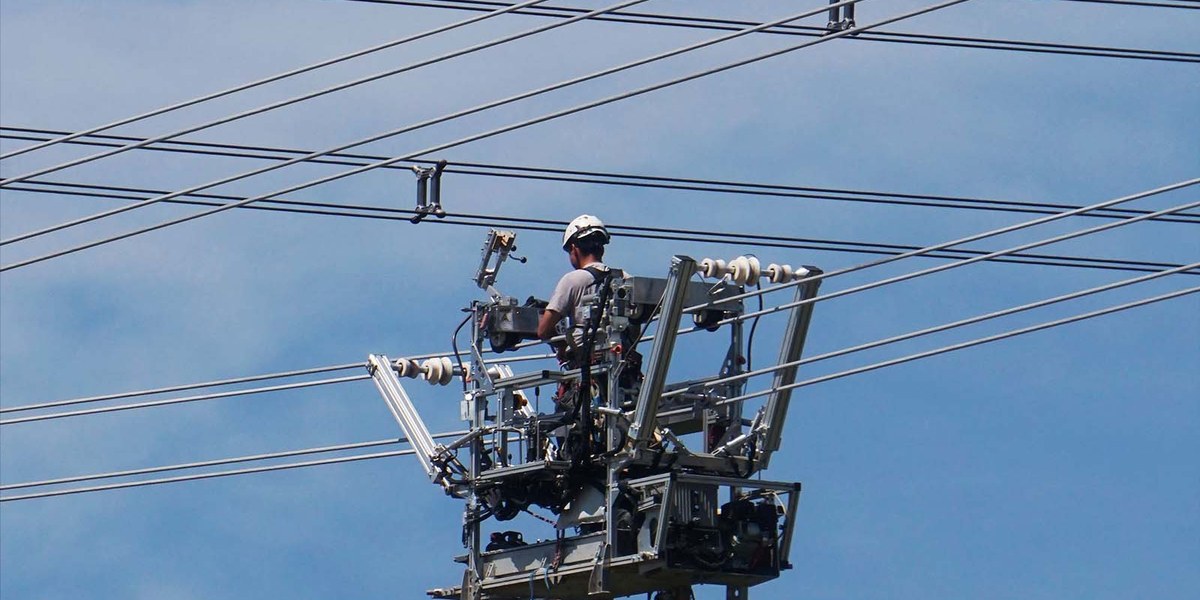
Let's start with what makes the step so special. The cable linking the Chío substation on Tenerife and El Palmar on La Gomera is about 36 kilometres long.
It reaches a maximum depth of 1,145 metres. According to Red Eléctrica, that makes it the world's deepest three-pole alternating-current subsea link — a technical record.
Technically, it is a double alternating-current circuit at 66 kilovolts with a transport capacity of 50 megawatts. That is above La Gomera's maximum demand, so there is spare capacity.
Why it matters for La Gomera
Until now, La Gomera was an isolated power system depending solely on its own plants. Such island systems are structurally more vulnerable — an outage can quickly hit the whole island.
How real the risk is became clear in February: La Gomera then suffered a 17-minute total blackout, a so-called "cero energético". With the new grid, the island now gains a real backstop when disruptions occur.
The second gain concerns renewable energy. The cable increases the capacity to feed in and carry off power from wind and solar plants on La Gomera.
A milestone — with a substation and a record
The infrastructure also includes the new El Palmar substation, run by Endesa. It cost over eight million euros, covers 2,700 square metres and serves the island's 15,610 customers.
Two transformers of 40 MVA each provide more capacity and faster response to faults. A third can be added if needed.
Frequently asked questions
- What changed on 1 July?
- La Gomera and Tenerife have since run as one synchronous power grid, joined by a subsea cable.
- Why is the cable a world record?
- At 1,145 metres deep it is, according to Red Eléctrica, the world's deepest three-pole alternating-current subsea link.
- What does the link cost?
- Over 145 million euros for the interconnector, plus over 8 million for the new El Palmar substation.
- What does it bring residents?
- A more stable, less outage-prone supply and more capacity for renewable power from the island.
- Is the grid now complete?
- No. The next step is closing the island grid's ring via Valle Gran Rey, which is still pending.
Read on
- Lanzarote power link stalled, desalination cut backFuerteventura · 10 November
- Lanzarote: Clavijo links outage to ageing infrastructureLanzarote · 4 October
- La Gomera: 12 cruise stops cancelled, no border postLa Gomera · 20 November
- La Gomera: Rebelión de los Gomeros programme, 21 NovemberLa Gomera · 20 November
- La Gomera: Christmas Cross and Parranda Chigadá concertLa Gomera · 20 November
- All events on La Gomera →
As of 02/07/2026. Sources include Red Eléctrica (Redeia), Endesa/e-distribución, the Cabildo de La Gomera, Diario de Avisos and Canarias7. Technical figures (length, depth, capacity, investment) per official statements. This article is general information. Illustration.