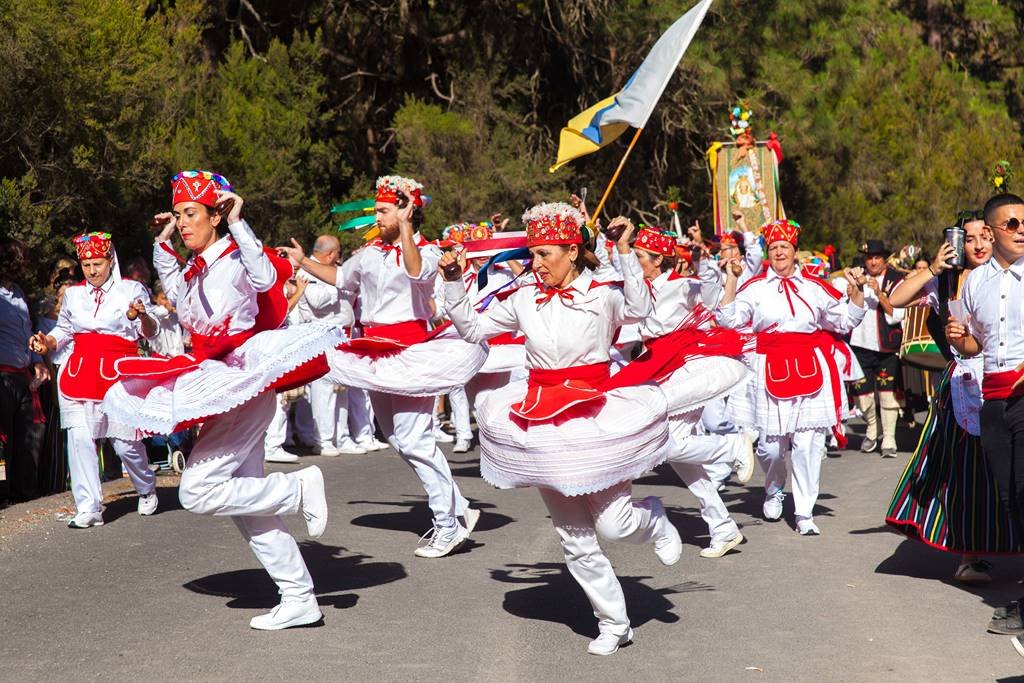
There are moments when an entire island seems to hold its breath, and then exhale in a wave of colour, music, and heartfelt tradition. The Romería de La Esperanza is precisely one of those moments. In 2026, this beloved pilgrimage in the highland village of La Esperanza, part of the El Rosario municipality, reaches a milestone that few events can claim: its 50th anniversary. For five decades, the first Sunday of August has transformed this tranquil Tenerife town into the epicentre of Canarian folk culture, and this year the celebration promises to be more profound and memorable than ever.
What makes a romería truly special is not just the spectacle, but the genuine, unforced participation of the people. Here, the line between spectator and participant blurs. Locals and visitors alike, many dressed in the traditional costumes of the islands, walk alongside ox-drawn carts groaning with local produce, dance to the rhythm of timple and drum, and share in a collective expression of identity that feels both ancient and vibrantly alive. The 2026 edition, dedicated to Nuestra Señora de La Esperanza, is not merely a repetition of this cherished ritual; it is a conscious celebration of its history and a warm embrace of the wider Canarian family, specifically the island of La Gomera.
A Historic Shift to the Cool of the Evening
For the first time in its fifty-year history, the rhythm of the day has been fundamentally rethought. Heeding both common sense and the realities of a changing climate, the El Rosario town council has officially moved the main events to the late afternoon and evening. The solemn mass, presided over by the Bishop of the Diócesis Nivariense, Eloy Santiago, will begin at 18:00 in the parish church of Nuestra Señora de La Esperanza. The pilgrimage itself, with its procession of the Virgin's image, will set off around 19:00.
This is a landmark decision, driven by a commitment to the well-being of everyone involved—the families, the elders, the children, and not least the animals that are such an integral part of the romería. The traditional midday start, under the fierce August sun, has been replaced by the softer, golden light of a Canarian summer evening. This change ensures that the energy remains high, the atmosphere more comfortable, and the experience more enjoyable for the thousands who will line the route from the church down to the plaza del Ayuntamiento. While some older tourist listings may still show a morning schedule, the official word from the municipality is clear: the 50th-anniversary romería is an evening affair.
A Journey of Faith, Music, and Offerings
The heart of the romería is its journey. The traditional route remains unchanged, a symbolic path that connects the spiritual heart of the village with its civic centre. Following the mass, the image of the Virgin of La Esperanza is carried out of the church, and the procession begins its descent towards the town hall square. This is the signal for the romería to truly come alive. Behind the patron saint, a vibrant, moving tapestry of Canarian culture unfolds.
In 2026, the cortege is set to be particularly impressive, featuring around thirty decorated carts, or carretas, each one a miniature float celebrating agricultural life and local pride. These are not merely vehicles; they are moving works of art, laden with offerings of fruits, vegetables, and traditional foods. Accompanying them are numerous folk groups, their music providing the irresistible soundtrack to the afternoon. The air fills with the sounds of isas and folías, while dancers in vibrant costumes perform on the cobblestones. The presence of livestock, carefully adorned for the occasion, reinforces the deep rural roots of a celebration that the town council rightly calls one of the most important and emblematic romerías in the entire Canary Islands.
An Island Embraces Its Neighbour: The Tribute to La Gomera
A 50th anniversary demands a special gesture, and the municipality of El Rosario has chosen one that speaks volumes about the interconnectedness of the Canarian archipelago. The 2026 fiestas, which run roughly from mid-July to mid-August, are dedicated not only to the Virgin of La Esperanza but also to the island of La Gomera. This is a full-throated cultural embrace, with the traditions, music, and spirit of the Columbian island woven into the fabric of the celebrations.
This tribute is more than a symbolic title. Throughout the weeks of the fiestas, specific acts have been designed to highlight Gomeran culture, strengthening the historical and emotional ties between the two regions. For a visitor, this adds an extraordinary layer of discovery. You come to experience a classic Tenerife romería and find yourself also immersed in the unique whistling language, the potent pottery, and the deeply moving folklore of La Gomera. It is a rare opportunity to experience the diversity of Canarian identity in a single, joyful setting, making the 2026 edition a truly pan-island celebration.
More Than a Day: A Full Month of Fiesta
While the romería on 2 August is the undisputed highlight, it is just the crowning jewel in a much larger programme. The Fiestas de La Esperanza 2026 transform the village for an entire month, from approximately 15 July to 15 August. The town council has prepared a dense and varied schedule of activities designed to engage every generation. Families can enjoy sports competitions and dedicated children's events, while culture lovers will find exhibitions and performances. As night falls, the musical programme takes over, with concerts that cater to a wide range of tastes.
The festivities build to a spectacular close on 15 August with a high-adrenaline show: the "Freestyle Zombies" motorcycle display. This modern, thrilling finale provides a fascinating contrast to the deeply traditional romería, perfectly illustrating the dynamic spirit of a community that honours its past while embracing the present. For anyone seeking an authentic immersion into Canarian life, these weeks in La Esperanza offer an unrivalled window into the soul of Tenerife, far from the coastal resorts. The entire romería will also be broadcast live by Televisión Canaria, projecting this local treasure to every corner of the archipelago.
Common Questions
- What exactly is a romería?
- A romería is a traditional Canarian pilgrimage that blends religious devotion with a festive, folkloric celebration. Participants often wear traditional dress and accompany a patron saint's image with music, dance, and offerings of local produce.
- Is the 2026 romería in the morning or evening?
- For the first time ever, it is in the evening. The official mass is at 18:00, and the pilgrimage procession begins around 19:00 to avoid the intense midday heat.
- Do I need to wear traditional costume to attend?
- Not at all. While many locals and participants wear traje típico, visitors are welcome to attend in comfortable, respectful clothing. Wearing something white or light-coloured is a nice way to blend in.
- What makes the 50th anniversary special?
- Beyond the milestone itself, the 2026 edition features a historic evening schedule, a special cultural tribute to the island of La Gomera, and a live television broadcast across all the Canary Islands.
- How do I get to La Esperanza from other parts of Tenerife?
- La Esperanza is accessible by car via the TF-24 road from La Laguna. Public buses, known as guaguas, also connect the village with Santa Cruz and La Laguna, but services are often busier than usual during the fiestas.
Read on
- Tenerife: Bossa nova with Márcio Faraco on 7 NovemberTenerife · 1 November
- Tenerife power cut on 1 November: 160,000 homesTenerife · 1 November
- Tenerife: Paul Lewis plays on 24 November for 15 eurosTenerife · 1 November
- CD Tenerife v FC Andorra, 1 Nov 20:00: tickets from 20 eurosTenerife · 1 November
- Adeje: White Party and Jaleo Urbano on 5 and 7 NovemberTenerife · 1 November
- All events on Tenerife →
Stand: 3 August 2026. This article is based on official information from the Ayuntamiento de El Rosario and verified local media reports.