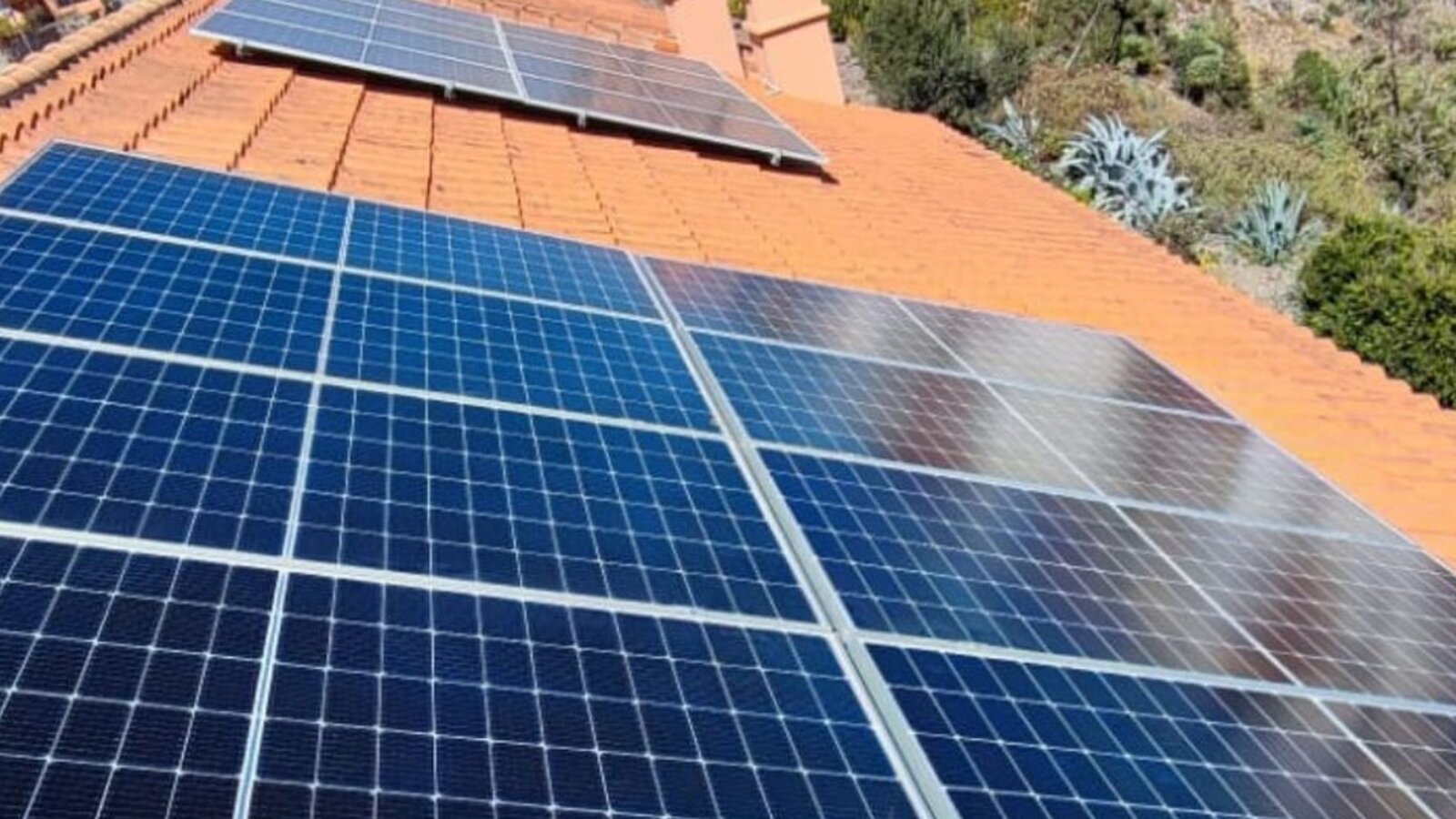
The pace: in 2023 around 20 new systems a day at times — one every 72 minutes on the maths
Front-runner: Gran Canaria leads low-voltage self-consumption with 38% of the whole archipelago
Still trending: in the first half of 2024 self-consumption grew 22.3%, collective systems even 142%
The target: the strategy envisages a tenfold rise in self-consumption capacity to 264 MW by 2030
Sources: Gobierno de Canarias (Dirección General de Energía), Consejo Insular de la Energía Gran Canaria, La Provincia, Canarias7
Why does solar from your own roof boom precisely here? The answer has to do with the islands' special situation.
The Canaries are an isolated grid with no link to the mainland, electricity is traditionally expensive to generate, and the solar radiation is among Europe's highest — around seven hours of sun a day versus about five on the mainland. Anyone generating their own power here therefore saves above average.
No wonder the islands are fondly called "the Saudi Arabia of renewable energy".
The figures — and why we treat them with care
Various multiples circulate about the scale of the boom, and it is worth looking closely at what they refer to. According to data from the Canary energy authority, the number of self-consumption systems rose from around 360 to 400 in 2019 to over 11,000 in 2023 — a 23- to 31-fold increase depending on the cut-off date.
Installed self-consumption capacity grew about nine- to twelvefold over the same period. So anyone reading of a blanket "sixteenfold" rise should know: that is a simplified mixed figure.
The huge leap is well documented either way — it just depends on whether you count systems or capacity.
The pace was especially striking: in 2023 around 20 new systems a day were being commissioned at times — one every 72 minutes on the maths. And the trend continues: in the first half of 2024 self-consumption rose 22.3 percent, while collective systems — where several households or a whole building share one installation — even rose 142 percent.
Gran Canaria as the engine
Among the islands, Gran Canaria has become the front-runner for low-voltage self-consumption and now accounts for 38 percent of the whole archipelago. The public sector is joining in too: the island council runs its own solar systems on the roofs of theatres, sports halls and administrative buildings and keeps expanding them.
The islands' overall target is ambitious — self-consumption capacity is to rise tenfold by 2030, to 264 megawatts.
Frequently asked questions
- How much has self-consumption really grown?
- The number of systems rose from around 360–400 (2019) to over 11,000 (2023) — 23 to 31 times, depending on the cut-off date. Installed capacity grew about 9 to 12 times.
- Why is solar especially worthwhile in the Canaries?
- High solar radiation (around seven hours a day), an isolated island grid and traditionally expensive power generation make self-generated electricity especially attractive.
- Which island leads?
- Gran Canaria, with 38 percent of all low-voltage self-consumption in the archipelago.
- Are there subsidies in 2026?
- Yes. Cabildo programmes (Gran Canaria, Fuerteventura and others), FEDER funds and tax deductions. Conditions differ by island and are in part time-limited.
- How much of my electricity can I cover?
- A well-sized system typically covers 50 to 80 percent of annual consumption, depending on consumption habits and system size.
Read on
- 61 percent want to build their own home — why the Canaries lead on self-buildCanary Islands · 9 September
- The Canaries will help pay your loan interest: a 2026 subsidy for the self-employed and small firmsCanary Islands · 13 July
- Solar eclipse on 12 August: why the Canaries miss the best of it — and still get a dream sunsetCanary Islands · 20 June
- Canary Islands holiday lets: deadline now 31 December 2027Canary Islands · 10 November
- Canaries general strike 11N: rent €1,211, buses unclearCanary Islands · 9 November
- All events on the Canary Islands →
As of 26/06/2026. Sources include the Gobierno de Canarias (Dirección General de Energía), the Consejo Insular de la Energía de Gran Canaria, La Provincia and Canarias7. Multiples depend on the cut-off date and the reference figure (number of systems vs. installed capacity) and are framed accordingly here. Subsidy conditions vary by island and can change; the current official calls are what count. This article is general information and not energy, tax or legal advice. Illustration.