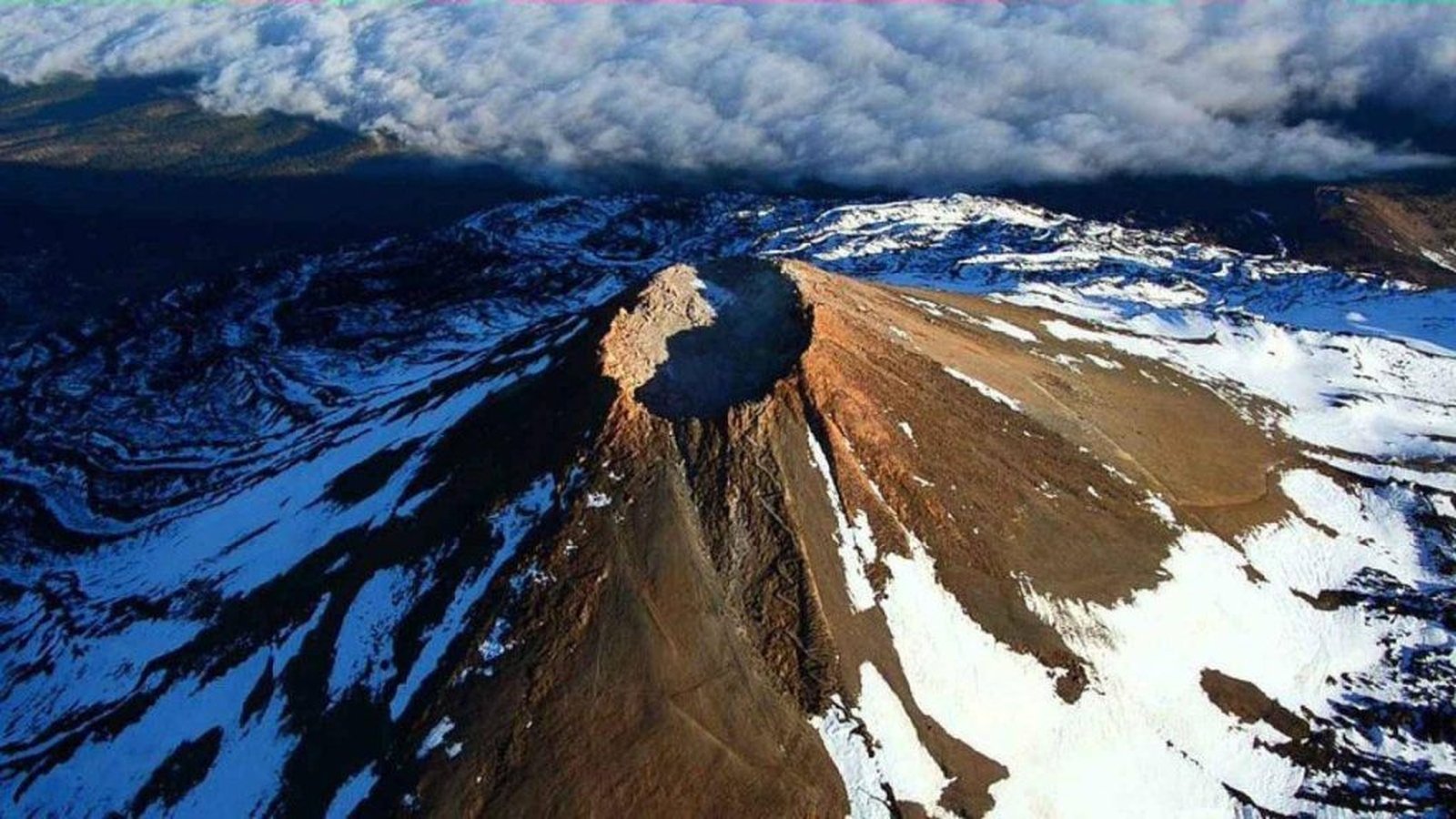
Current occasion: per the IGN, around 50 quakes in 24 hours west of the Teide caldera
Magnitude: very low, mostly below magnitude 0.8 — recorded only by sensors, not felt by the population
Depth: around 7 to 12 kilometres below sea level
The experts' reading: per the IGN, it does not raise the likelihood of an eruption in the short or medium term
Sources: Instituto Geográfico Nacional (IGN), INVOLCAN
Let's start with the word everything revolves around: earthquake swarm. It means a cluster of many small quakes occurring in quick succession at the same place. Beneath Teide this has happened repeatedly since 2016 — the current one is not the first and won't be the last. In one particularly active phase in February 2026 alone, the IGN counted several thousand micro-quakes across several swarms. Sounds dramatic. On closer inspection, it isn't.
Why you can't feel them
The reason no one on Tenerife notices these quakes lies in their tiny magnitude. The vast majority are below magnitude 0.8 — so weak that even the sensitive sensors of the national network struggle to capture them cleanly. For humans, none of it is perceptible: no wobble, no rattling crockery, nothing. Anyone hiking on Teide these days simply notices nothing at all.
Then there's the depth: the quakes occur around 7 to 12 kilometres below sea level, west of the Cañadas. That is deep inside the volcanic system — far from the surface where people move about.
What's actually happening down there
This is where it gets interesting. The experts speak of "hybrid" events — a mix of rock fracturing and the movement of hot fluids. Put simply: deep down, volcanic gases and hot liquids push through the cracks in the rock. Each time they force a new path, there's a little tremor. The Canary Islands Volcanology Institute (INVOLCAN) describes it as an injection of magmatic fluids into the island's hydrothermal system — figuratively, the volcano's internal "plumbing" protesting under the pressure.
What matters is what it is not: it is not magma forcing its way upwards. That would be the warning sign — and that is precisely what the monitoring networks are not currently seeing.
Why the scientists stay calm
The IGN's director has said it clearly several times: these swarms do not raise the probability of an eruption in the short or medium term. The typical precursors of an eruption are all absent — there are no strong quakes, no rapid ground deformation, no migration of the seismicity towards the surface, and the gas and fumarole readings around Teide also remain normal. More than a hundred monitoring stations from the IGN and INVOLCAN watch the island around the clock. "All eyes are on it," as the IGN director put it in substance — and if anything changed, it would be communicated at once.
Frequently asked questions
- As a visitor or resident, should I be worried?
- According to the current view of the IGN and INVOLCAN, no. The quakes are imperceptible, deep, and do not raise the eruption probability in the short to medium term.
- Why can't the quakes be felt?
- Because they are extremely weak (mostly below magnitude 0.8) and deep (7 to 12 km). They are recorded only by sensors.
- Does an earthquake swarm mean an imminent eruption?
- No. The precursors of an eruption — strong quakes, rapid ground deformation, seismicity towards the surface, unusual gas readings — are currently all absent.
- How often does this happen?
- Several times since 2016 with the current network; the latest is one of several swarms this decade. Beneath active volcanoes this is a normal phenomenon.
- Who monitors Teide?
- The IGN and INVOLCAN, with over a hundred stations around the clock, integrated into the PEVOLCA emergency plan. Any change would be communicated promptly.
Read on
- 641 earthquakes in July: a swarm beneath the TeideTenerife · 21 August
- From today you pay in Spain with your phone instead of a card — what Bizum Pay really means for tourists and expatsCanary Islands · 18 May
- Tenerife: Teide summit only with winter gear from 1 NovemberTenerife · 2 November
- Tenerife: hacked alert apps, ES-Alert needs no appTenerife · 2 November
- CD Tenerife v Andorra: no result, move unconfirmedTenerife · 2 November
- All events on Tenerife →
As of 19/06/2026. Sources: Instituto Geográfico Nacional (IGN) and Instituto Volcanológico de Canarias (INVOLCAN). Figures for quake count, magnitude and depth are per IGN/INVOLCAN; individual values may still change on closer analysis. This article is a general explainer of the official state of research, not a hazard forecast.