When is a beach in Tenerife closed, and who decides?
The municipality decides whether a beach in Tenerife stays shut. When bacteria are in the water, the health authority Salud Pública (Servicio Canario de la Salud) recommends the closure.
The Ayuntamiento (town hall) orders the bathing ban and puts up the signs, as Diario de Avisos described on 5 October 2026. The reports name no role for the Cabildo (island government).
There are three kinds of reason: polluted water, dangerous seas and structural risks such as rockfalls. Press reports say jellyfish, microalgae and hydrocarbons also shut individual beaches for a time.
Usually only single stretches of beach or single towns are hit, not the whole island. One example is Playa Jardín in Puerto de la Cruz.
There the municipality closed the beach on 7 October 2026 by Bando (a mayor’s order), according to RTVC. It followed an Oficio (official letter) from the health directorate, which ordered a temporary bathing ban on the Playa Grande centro stretch.
Water testing rests on Real Decreto 1341/2007 of 11 October on managing bathing waters. It sets limits for intestinal enterococci and E. coli, and the results go to the national platform NÁYADE.
How often is a beach in Tenerife closed because of bacteria?
Diario de Avisos puts the average at about nine closure recommendations a year in Tenerife for short-term pollution. The figures: 13 (2020), 12 (2021), 6 (2022), 5 (2023), 12 (2024) and 8 (2025).
The paper sees no rising trend. By 24 September 2026 it had counted 11 recommendations, three of them for Playa Jardín.
El Camisón, Los Cristianos, El Médano, Leocadio Machado, El Socorro, La Pinta, Castillo-Bajamar and the natural pools of Bajamar were each hit once. The paper says that is about 1% of the sampling points.
The paper speaks of “episodes of short duration” and gives neither dates nor causes for each closure. The 2026 programme covers 50 bathing zones in 17 municipalities, with 62 sampling points.
Of 891 samples taken by 24 September 2026, 99% came back negative, from 1,782 microbiological determinations. Year-round points are checked 13, 15 or 21 times, and seasonal points nine times between May and September.
In 2025, 57 of the 62 points were rated “excellent”, 4 “good” and 1 “sufficient”. German-language outlets such as Blick, Web.de and Travelbook report such cases as a “faeces alert”.
The Diario de Avisos figures put this in perspective: the vast majority of samples were clean. The count ends on 24 September 2026, so the full-year total is probably higher.
According to RTVC, Playa Jardín was closed for the fourth time in 2026 on 7 October 2026. Two cases from September 2026 show how it works.
Los Realejos closed El Socorro beach as a precaution from Wednesday 23 September because of raised enterococci, RTVC reported on 24 September. The closure runs at least until Friday 25 September, pending new analyses.
El Médano in Granadilla de Abona was also closed, and RTVC calls it the second restriction there within three months. Whether both beaches have reopened is not confirmed.
Why was Playa Jardín closed for so long?
From June 2024, bathing at Playa Jardín in Puerto de la Cruz was advised against for 347 days because of faecal bacteria, according to a Salud Pública report of 21 June 2024. The newsroom describes an open investigation into the source of the pollution.
On 12 August 2026 the municipality ordered a “precautionary closure” (cierre preventivo) at the Punta Brava stretch, after a notice from the Área de Salud. Diario de Avisos reports that sampling point PM4 read 470 on 10 August and 850 on 11 August, in UFC (colony-forming units) per 100 millilitres.
The municipality’s own five samples were “optimal”, though, and the mayor demanded a counter-sample. So the municipality and the health authority can assess the same readings differently.
The ban stays until counter-analyses by Salud Pública show that the water meets the legal requirements. The municipality gave no fixed duration.
In 2025 Garachico denied any discharge when a beach closed there, Diario de Avisos reported. RTVC named the sewage infrastructure as a possible cause on 17 May 2025.
The Canaries have 434 discharge points, almost half of them on Tenerife. 24 of them are underwater pipes.
In February 2025 the Cabildo approved a new sewage treatment plant for the Valle de La Orotava (phase I), RTVC reported, at a cost of 20.8 million euros. Construction is to take two years.
Which beaches in Tenerife are closed for other reasons?
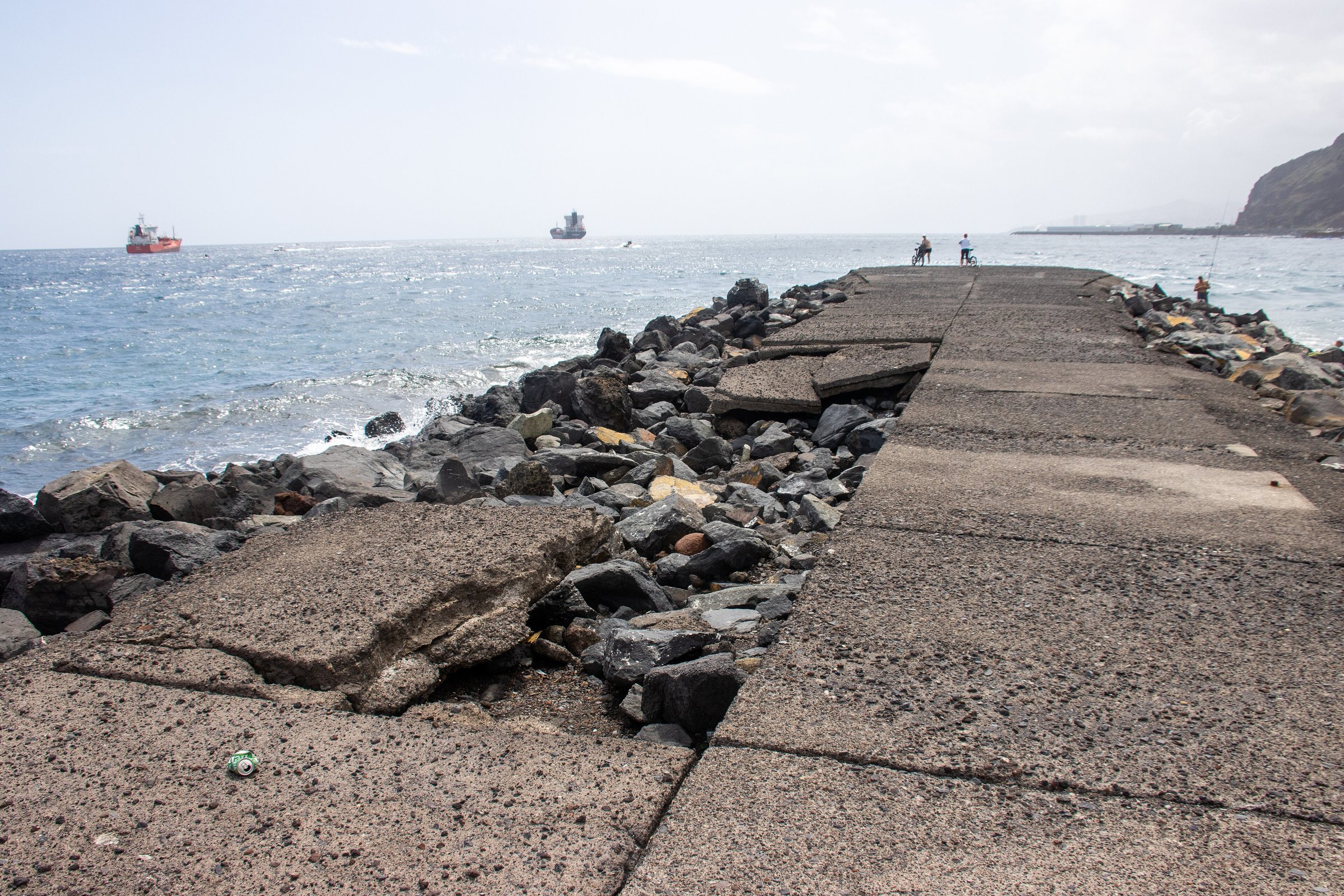
According to the official website and Diario de Avisos, Benijo beach in the Anaga mountains (Santa Cruz) has been closed since 2024 for rockfall risk, pending safety work. On 30 July 2026 police cleared more than 70 bathers, and the municipality announced complaints, more drone patrols and a spoken warning by drone.
Las Gaviotas (Santa Cruz) has been closed since early June 2026 after landslides on the access slope. RTVC reported on 16 June 2026 that the beach stays shut for summer 2026.
The emergency work takes about a year, and the councillor in charge hopes it can be back in use in summer 2027. Whether the beach has reopened since is not confirmed.
In February 2026 Diario de Avisos ran headlines on a closure of Los Patos (La Orotava) because of rockfall and on a wall collapse in Garachico. No details are available.
After storm Emilia, which opened a sinkhole, Playa Jardín was also closed to bathing in December 2025, RTVC reported. Jellyfish and Portuguese man o’ war led to yellow flags at Las Teresitas, according to press reports.
In February 2026 British and German media reported on Portuguese man o’ war. The reasons and dates of these cases are not verified.
Microalgae closed beaches in Candelaria and Granadilla, and hydrocarbons closed Almáciga and Roque de las Bodegas. Both reports are undated.
The environmental group Ecologistas en Acción gave Las Teresitas a “black flag” in 2026. The Santa Cruz municipality disagrees and points out that the official annual rating is still “excellent”.
The black flag is the verdict of an environmental group, not an official closure. Between access points 5 and 8, bathing was banned at times recently, according to Diario de Avisos.
Where can you find out whether a beach in Tenerife is closed?
Water quality values are on the NÁYADE platform of the Spanish Health Ministry. The citizen portal of the official website shows bathing zones and test results.
Tenerife has no official list of all currently closed beaches. How quickly new results appear is not confirmed.
The fastest signal on site is the flags on the beach, and health closures also come with a sign or barrier. A Diario de Avisos guide says red means no bathing, also shown for pollution, and yellow means bathing with caution.
Heavy seas trigger coastal warnings from the emergencies directorate of the Canary government, under the PEFMA plan (Decreto 18/2014) and forecasts by AEMET, the state weather service. Each autonomous community sets its own bathing season, and no dates for the Canaries were found.
The levels are prealerta (pre-alert), alerta (alert) and alerta máxima (highest alert).
Municipalities close access when warnings come. La Laguna shut its bathing areas in January 2026, Puerto de la Cruz its beaches in November 2025, and the local police of La Orotava closed beach access in 2024.
According to RTVC, the 112 emergency number advised in November 2025 to avoid piers and breakwaters and not to film close to breaking waves. For current values and warnings, see CITA Weather (cita.news/de/wetter.html) and AEMET.
What does it cost to ignore a closure, and what is still open?
It can cost up to 600 euros: RTVC reported on 23 January 2026 fines of 100 to 600 euros for minor breaches. In a national civil protection alert the fine would be up to 1,500 euros.
The article names Roque de las Bodegas, Benijo and Los Patos as places. It names no law and no fining authority, so the legal basis is not confirmed.
At Los Patos beach, RTVC says, people had to be rescued after jumping over barriers, and offences there were punished. For Benijo there are no fine amounts and no confirmed penalties, only the announced complaints.
Many beaches have no confirmed current status: El Socorro, El Médano, Playa Jardín, Los Patos, Garachico and Las Teresitas are not confirmed for 21 November 2026. Press reports cite recurring problems: jumping over barriers, entering closed beaches and bathing during a closure.
The sources also name no alternatives, but open beaches can be checked via NÁYADE or the municipality concerned. Building deadlines come next, since the municipality hopes to have Las Gaviotas in use in summer 2027.
Work on the discharge point at Punta Brava had not begun in early June 2026, according to Diario de Avisos. The treatment plant in the Valle de La Orotava is to take two years to build, RTVC says, and no completion date was given.