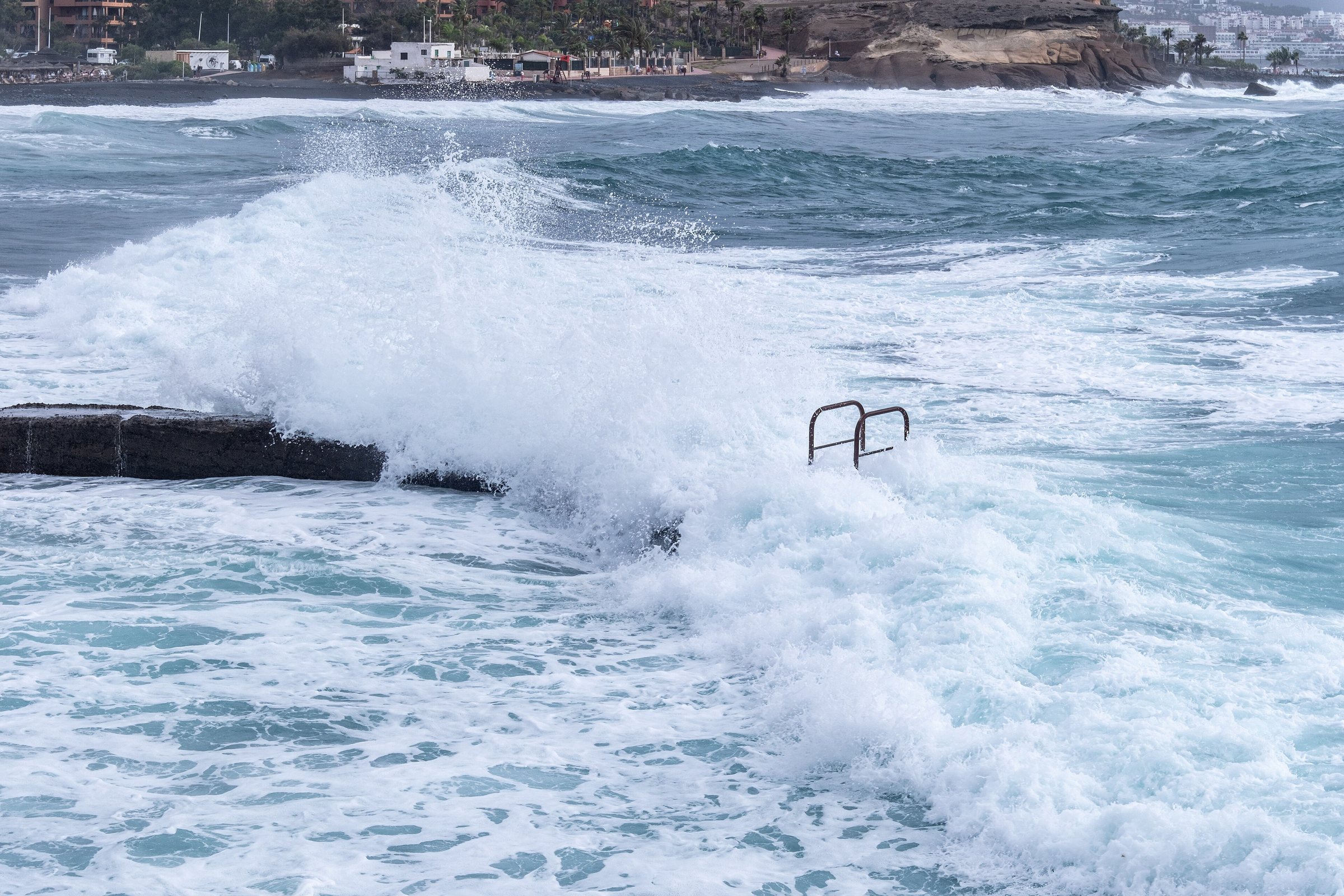
Do I need to change anything as a holiday-maker in Tenerife?
As of Friday 27 November 2026, none of the sources reviewed reports beach closures, price changes or travel restrictions. No Canarian authority appears anywhere in the response.
The wreck lies about 19 nautical miles north-west of Ibiza and 57 nautical miles east of Valencia, according to the reports. That puts it in the Balearic Islands, not the Canaries.
If you are booked in the south of Tenerife, this evidence gives you no reason to rearrange anything. The authorities have published no advice for bathers so far, so if you want to be certain, ask the town hall (Ayuntamiento) of your resort.
SOCIB, the Balearic coastal observation system, expects in four preliminary scenarios that the diesel stays off the shore for 24 hours. Because the runs are preliminary, travellers to Ibiza face no reported closure, but nobody has given an all-clear for the future either.
What happened to the tanker Med Emre?
The Med Emre sails under the Maltese flag, is 120 metres long and 17 metres wide, and was built in 2019. The Turkish firm YMN owns the ship, which was heading from Algeciras to Barcelona.
According to one report, the distress call came on Wednesday 25 November 2026 at 21:30, and the ship rolled to about 90 degrees in less than an hour. Another report puts the time in the early hours of Thursday, and the discrepancy is unresolved.
There were 17 people on board, and a 46-year-old Turkish seaman died. Nine crew members were injured, and four survivors are still in the Policlínica Nuestra Señora del Rosario hospital on Ibiza, according to the reports.
The cause is not established. The maritime authority is examining water ingress or flooded ballast tanks in waves of up to 4 metres, and Elena Delgado, capitana marítima (harbour master) of Valencia, called the rapid capsize baffling.
What do the researchers at the University of the Balearic Islands say?
Manuel Miró, professor of chemistry, and Samuel Pinya, a biologist, both of the University of the Balearic Islands (UIB), consider a possible spill risky for various marine organisms. They stress that it is too early to say how far the effects would reach.
Miró explains that diesel floats because it is less dense, so barriers can contain it and pumps can suck it off. It becomes critical once it spreads: “If it spreads, it gets out of control,” he says.
Miró considers diesel easier to remove than the crude oil of the Prestige, but that does not make it harmless. First, he says, crews should lay barriers, then pump the diesel off mechanically.
Pinya expects plankton, small algae and the larvae of fish, crustaceans and molluscs to be hit first. “The exposure time will be decisive,” he warns, as brief contact means stress at first and longer contact can cause more serious damage.
After the freighter Don Pedro sank off Ibiza in 2007, mussels suffered from the fuel for months and then recovered, says Pinya. The Don Pedro went down just over a mile offshore, the Med Emre lies several miles out, and a closer spill does more harm.
How much diesel has leaked, and how will the salvage go on?
The ship carries about 7,000 tonnes of gas oil, which one report converts to more than 8 million litres. An early figure of 1.2 million litres was wrong.
An oil film 2.6 miles long, spotted on Thursday, has evaporated, according to the maritime authority in Valencia. Delgado says there is currently no pollution, and early observations point to oil residues on board rather than a leak from the tank.
The SOCIB simulations have the diesel drifting south-east, then east and north-east along the north coast of Ibiza. They do not explicitly factor in waves or spread through the water column, and about 70% of the 48 kilometres of north coast is high rocky cliff.
On Friday, inspectors were due to examine the hull and the underwater section to check draught and damage. By Friday the authorities had not decided how to tow the hull and remove the 7,000 tonnes.
How serious is emergency level 2, and would the Canaries be prepared?
Under order FOM/1793/2014 in the BOE (the official state gazette), any hydrocarbon pollution triggers situation 2 of the national maritime emergency plan. The merchant navy has put this accident in situation 2, which alone proves no large spill, and the Balearic plan PLATERBAL stays at situation 0.
The Canaries also have a regional plan, PLATECA, which the Dirección General de Emergencias of the Canarian regional government (Gobierno de Canarias) activates. Cases in recent months show what that looks like.
On 29 September 2026 the tuna boat Monte Arballu sank at the Naos quay in Arrecife (Lanzarote), with about 10,000 litres of diesel in its tank. The oil film measured roughly 30 by 15 metres, two barriers contained it, and PLATECA went to pre-alert at 14:00.
The Med Emre carries about 7,000 tonnes of gas oil, while the fishing boat off Arrecife had about 10,000 litres in its tank. The comparison shows the scale but is no forecast for the Canaries.
What is still open?
Cause, condition of the tanks, salvage method and dates were unpublished by Friday. The Capitanía Marítima de Valencia is reviewing the owner’s plan for flotation, towing and salvage.
None of the sources reviewed says who will pay in the end. According to specialist sources, Law 14/2014 provides limited liability for the shipowner, backed by compulsory insurance.
A yacht off the port of Ibiza shows how long a salvage can take: after the fire on 10 April 2026, it was towed to the Botafoc breakwater on 17 April. No such timetable is known for the Med Emre.