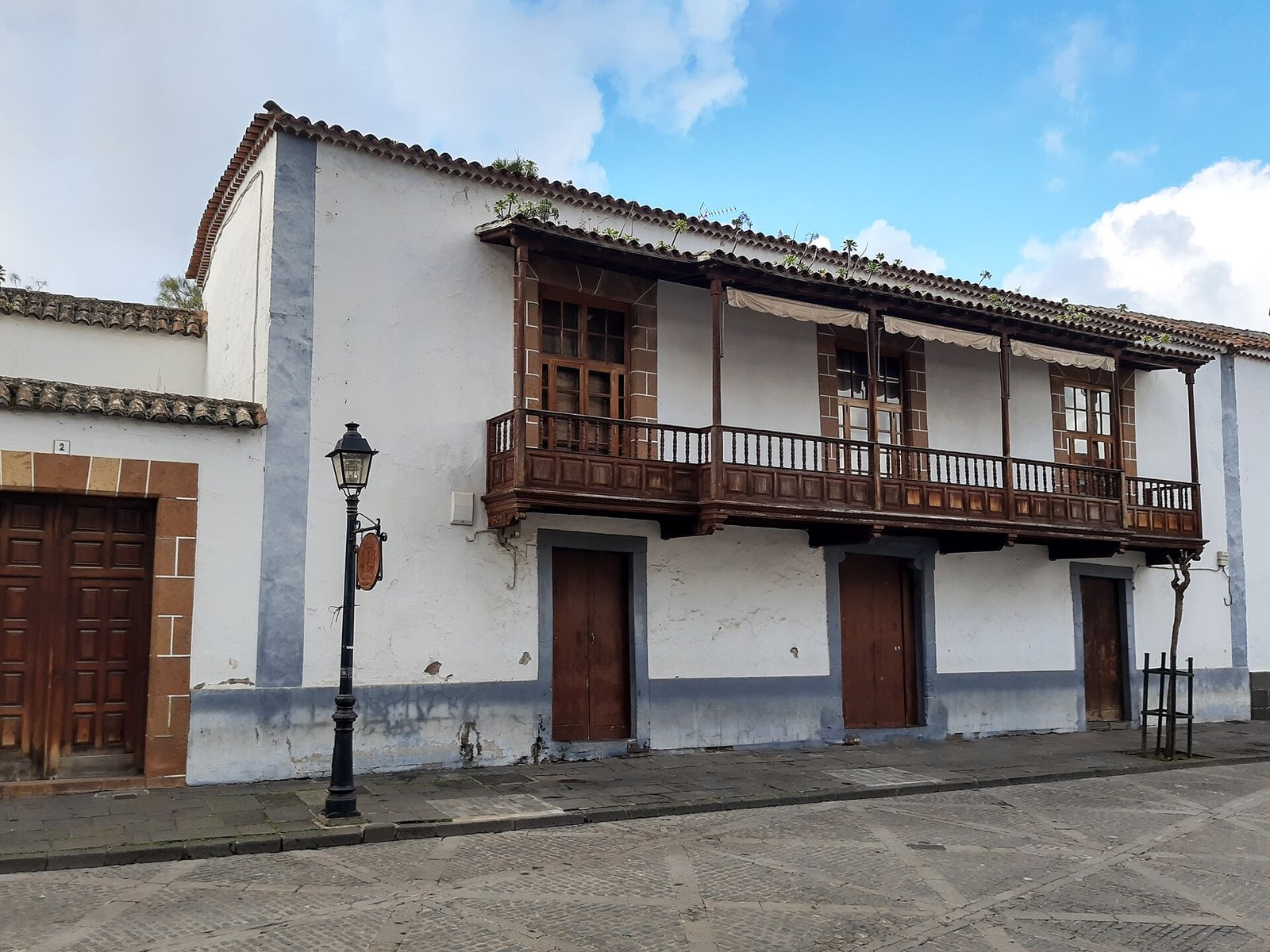
Forget the coast for a day. Just a short drive inland from Las Palmas, the air gets cooler and the landscape turns a deep, lush green. This is Teror, a town often called Gran Canaria's "green heart," and it feels a world away from the island's busy southern resorts. It's a place of deep tradition, where the main attractions aren't water parks, but the quiet beauty of a historic square and the taste of a legendary local sausage.
The town's old centre is a protected monument area, and for good reason. Walking down the Calle Real de la Plaza, your eyes are naturally drawn upwards to the intricate, dark-wood balconies that adorn the whitewashed houses. These aren't just decorative; they are a hallmark of traditional Canarian architecture, many dating back centuries. The social heart of Teror is the Plaza del Pino, a picturesque square framed by these colourful, balcony-lined houses and lively cafés. It's the perfect spot to simply sit, order a coffee, and watch local life unfold. A short stroll away, the shaded Plaza Teresa de Bolívar offers a quieter, equally charming corner, with a bust of its namesake, the locally born wife of Simón Bolívar.
The Basilica: An Island's Spiritual Anchor
Dominating the Plaza del Pino is the Basílica de Nuestra Señora del Pino, the undisputed focal point of Teror and the most important pilgrimage site on Gran Canaria. This isn't just a beautiful church; it's the spiritual home of the island's patron saint, the Virgen del Pino (Virgin of the Pine). The story goes that a Marian apparition appeared here in 1481, cementing the town's destiny as a place of worship. The basilica you see today largely dates from the 18th century, its neoclassical façade and older bell tower a commanding presence against the mountain backdrop.
Stepping inside is a must, whether you're religious or not. The atmosphere is one of profound calm, and the ornate altarpiece housing the revered image of the Virgin is a stunning sight. For a deeper dive into local history, the nearby Museo de los Patronos de la Virgen is housed in a historic building with beautiful carved ceilings and period rooms. You can also pop into the Casa de los Alvarado, which now serves as the tourist office and has a small exhibition on local traditions. The basilica's opening hours are generally generous, from 9 am to 8:30 pm on weekdays, but they can shift on religious holidays, so it's wise to check locally.
The Sunday Mercadillo: A Feast for the Senses
If you can, plan your visit for a Sunday. This is when Teror truly bursts into life with one of Gran Canaria's oldest and most authentic street markets. The Mercadillo de Teror spills through the plazas around the basilica from morning until early afternoon. It's a vibrant, bustling affair that feels genuinely local, where residents shop for weekly groceries alongside visitors hunting for souvenirs. The air is thick with the scent of fresh produce, spices, and grilling chorizo.
This is where you must try the town's signature product: chorizo de Teror. Forget the firm, sliced chorizo you might know. This version is soft, spreadable, and intensely flavoured with paprika and garlic. The best way to eat it is in a simple bocadillo, a crusty bread roll, often with a drizzle of local honey for a sweet and savoury kick. Beyond the chorizo, you'll find stalls laden with local cheeses, olives, sweet morcilla (blood sausage), and the famous nun-made pastries from the Cistercian monastery. Handicrafts, from baskets to embroidery, add to the treasure-hunt feel of the market.
A Royal "Refuge" in the Hills
In June 2026, Teror found itself in the national spotlight for a very special reason. Princess Leonor of Spain, the heir to the throne, visited the town during a training period with the Spanish armed forces in the Canary Islands. Spanish media widely reported on the visit, describing Teror as a kind of "refuge" or welcoming retreat for the young princess. The coverage emphasized that she was warmly received by residents, and the event drew notable media attention.
It's important to frame this correctly: the visit was linked to her military training schedule, not a permanent move or a personal holiday home choice. The "refuge" wording appears to be a journalistic characterization of the town's peaceful, authentic charm, rather than an official status. Still, the fact that Teror was chosen as a place for the future queen to find a moment of calm speaks volumes about its unique, unspoiled character. It's a powerful endorsement of the town's magic, a place where even royalty can feel sheltered from the world.
Beyond the Balconies: Nature and Nuns' Pastries
While the historic centre is the main draw, Teror's surroundings offer a breath of fresh, green air. Just two kilometres from the centre lies the Finca de Osorio, a protected rural estate with walking trails that wind through hills, farmland, and lush woods. It's an easy escape into nature, open daily from about 9 am to 6 pm. For more ambitious hikers, Teror is a gateway to the Doramas Nature Park and the dramatic Caldera de Pino Santo, though trail conditions can vary, so it's best to get current local advice before setting out.
Before you leave, make a small pilgrimage of your own to the Monasterio del Cister on the edge of town. The Cistercian nuns here are famous for their artisan pastries, simple, shortbread-like sweets that are utterly delicious. You can buy them directly from the monastery, typically on weekday mornings and afternoons. It's a wonderfully quiet, uncommercial experience and the perfect, sweet ending to a day in Gran Canaria's most traditional town. Teror doesn't have a beach, but it has something far more rare: a soul you can feel in every cobblestone and carved balcony.
Common questions
- Is Teror on the coast?
- No, Teror is an inland mountain town in northern Gran Canaria, surrounded by green hills and valleys. It has no beach.
- What is Teror famous for?
- It's famous for its historic old centre with traditional carved wooden balconies, the Basílica del Pino, and its soft, spreadable chorizo de Teror.
- When is the market in Teror?
- The Mercadillo de Teror is held every Sunday morning until early afternoon, typically starting around 8 or 9 am.
- Did Princess Leonor move to Teror?
- No, Princess Leonor visited Teror in June 2026 during a military training period. It was a temporary visit, not a permanent residence.
- What is chorizo de Teror?
- It's a soft, spreadable pork sausage seasoned with paprika and garlic, a local speciality often eaten in a bread roll.
Read on
- Las Palmas: Gran Cabalgata parade on 20 FebruaryGran Canaria · 14 October
- Vecindario: San Rafael 2026 fiestas with Braulio, GofionesGran Canaria · 14 October
- Maspalomas Winter Pride: 2–8 November 2026Gran Canaria · 12 October
- Maspalomas restaurants: 4 Guía Repsol picks for 2026Gran Canaria · 13 October
- Gran Canaria: 95 petrol €1.375/l, cheapest on 13 OctGran Canaria · 13 October
- All events on Gran Canaria →
Stand 15 July 2026. Opening hours and market times can vary, especially on public holidays. Please check locally for the most current information.