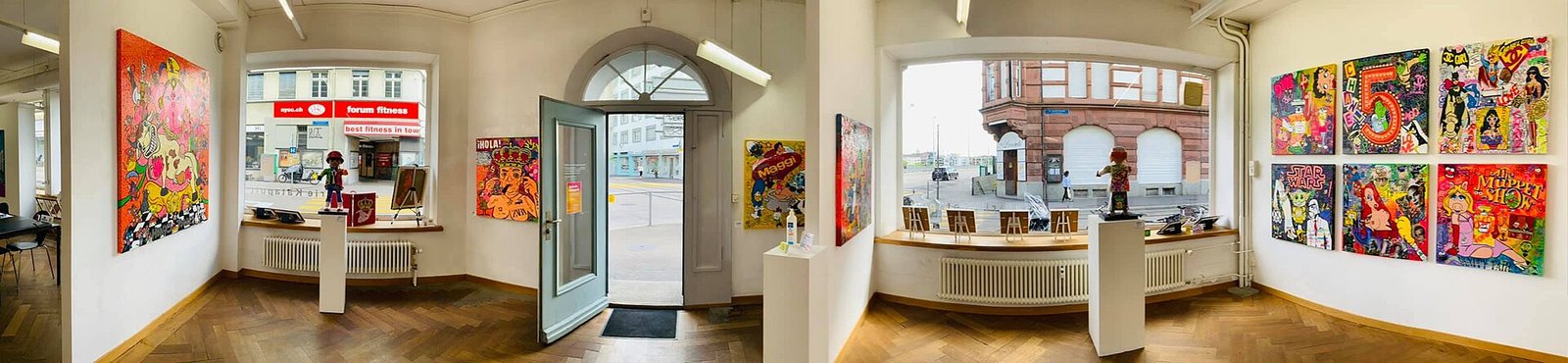
There is a quiet but persistent conversation happening in the Canary Islands right now. It is about land, about the sea, about the concrete that climbs up hillsides and the plastic that washes ashore. This August, that conversation finds a public stage at the Museo de Arte Contemporáneo Eduardo Westerdahl, better known as MACEW, inside the old Casa de la Aduana in Puerto de la Cruz. The Phe Gallery collective exhibition, titled “Formas de habitar”, gathers emerging artists from across the archipelago to ask a simple but urgent question: how are we inhabiting these islands, and what are we turning them into?
The show opens its doors on Friday, 7 August at 19:00, and remains on view until 5 September 2026. It is the latest edition of a project that has steadily grown into one of the most reliable barometers for new artistic talent in the Canaries. The call for proposals, which closed earlier this year, specifically sought out artists residing in the islands whose work engages with ideas of sustainability, recycling, and the environmental crisis affecting the coasts. The result is a group show that promises to be less a polite gallery affair and more a critical, sometimes uncomfortable, mirror held up to the region.
A Critical Look at the Territory
The title “Formas de habitar” – ways of inhabiting – is deliberately open-ended. It suggests both the physical structures we build and the daily rituals, economic pressures, and emotional ties that define our relationship with a place. In the Canarian context, that relationship is often fraught. Mass tourism, urban sprawl, and a fragile ecosystem create tensions that are visible everywhere, from the lava fields of Lanzarote to the crowded coastlines of southern Tenerife. The exhibition invites viewers to consider these tensions not as abstract policy problems but as lived experiences.
While the final list of participating artists for the 2026 edition has not been publicly released in the materials we have, the exhibition’s track record gives a strong sense of what to expect. Previous editions have featured painters, sculptors, photographers, and installation artists whose work ranges from the quietly poetic to the overtly political. Names like Cristóbal Tabares, Fernando Miñarro, and Carmen Cólogan have appeared in past Phe Gallery shows, alongside a rotating cast of emerging talents. The 2025 edition, for instance, brought together over two dozen artists including Rubén Guedes, Elena Casanova, and Marina Valls, each offering a distinct perspective on contemporary Canarian identity.
The Venue: A House with History
The choice of MACEW as the venue is significant. The Casa de la Aduana, a historic building in the heart of Puerto de la Cruz, carries layers of the island’s past within its walls. It once served as the old customs house, a place where goods – and people – entered and left, shaping the economic and cultural flows of northern Tenerife. Today, as a contemporary art museum named after the pioneering critic Eduardo Westerdahl, it stands as a bridge between the island’s history and its creative future. Showing “Formas de habitar” here adds a layer of meaning: the building itself is a form of inhabiting, a structure that has been adapted and reimagined over time, much like the territory the artists are examining.
Puerto de la Cruz itself is a fitting backdrop. Unlike the purpose-built resort zones of the south, this northern town has evolved more organically, mixing tourism with a strong local identity. Walking from the museum to the nearby harbour, you pass old fishermen’s houses, bustling plazas, and the dark volcanic sand of Playa Jardín. It is a place where the questions raised by the exhibition feel immediate and real.
Art as a Conversation, Not a Monologue
What sets Phe Gallery apart from many institutional exhibitions is its commitment to being a platform rather than a curator in the traditional sense. The open call model means the selection is driven by the proposals artists themselves submit, often resulting in a raw, unfiltered energy. The organisers have consistently emphasised that they are looking for work that engages with the here and now of the Canary Islands – not postcard views, but honest, sometimes difficult reflections on what it means to live on islands under pressure.
Environmental themes have become increasingly central. The 2026 call explicitly highlighted sustainability and the coastal crisis as key areas of interest. This reflects a broader shift in Canarian society, where concerns about overdevelopment, water scarcity, and the impact of climate change are no longer niche issues but mainstream debates. For visitors and residents alike, the exhibition offers a chance to see these debates translated into visual form – a painting that captures the melancholy of a half-built urbanización, a sculpture made from recycled marine debris, a video piece documenting a disappearing coastal community.
Why This Matters Now
There is a tendency, when talking about emerging art, to focus on the “emerging” part – the promise of future greatness, the discovery of new names. But “Formas de habitar” deserves attention for what it is right now: a snapshot of a generation’s concerns, rendered in paint, clay, pixels, and found objects. It matters because the questions it asks are not going away. How we inhabit these islands will determine what kind of place the Canaries become in the next twenty, thirty, fifty years.
The exhibition also serves as a reminder that culture is not a luxury item, something to be tacked onto a holiday itinerary when the beach gets boring. It is part of the fabric of a place, a way for communities to understand themselves and for visitors to connect with something deeper than sun and sand. The opening on 7 August is free, as is admission throughout the run, making it one of the most accessible cultural offerings of the summer in northern Tenerife.
Common Questions
- When does “Formas de habitar” open?
- The opening event is on Friday 7 August 2026 at 19:00, and the exhibition runs until 5 September.
- Where exactly is the exhibition?
- It takes place at MACEW, the Museo de Arte Contemporáneo Eduardo Westerdahl, inside the Casa de la Aduana in Puerto de la Cruz, Tenerife.
- Is there an entrance fee?
- No, admission to the exhibition is free of charge.
- Who are the artists?
- The exhibition features emerging artists residing in the Canary Islands. The final list of selected participants for 2026 has not yet been published.
- What is the theme of the show?
- The exhibition explores how the islands are inhabited and transformed, with a critical focus on territorial change, sustainability, and the environmental crisis of the coasts.
Read on
- Tenerife: Trail El Tanque 8 November, 09:00 start in ErjosTenerife · 7 November
- Tenerife: Trump defeat changes nothing for holidaymakersTenerife · 7 November
- Garachico Christmas lights from 4 December, free entryTenerife · 7 November
- Tenerife storm Bruna: all trails closed, orange alert 8 NovTenerife · 7 November
- Parque García Sanabria: free theatre tours to 27 NovemberTenerife · 7 November
- All events on Tenerife →
Stand: 8 August 2026. Details are based on the official exhibition announcement and may be subject to change.