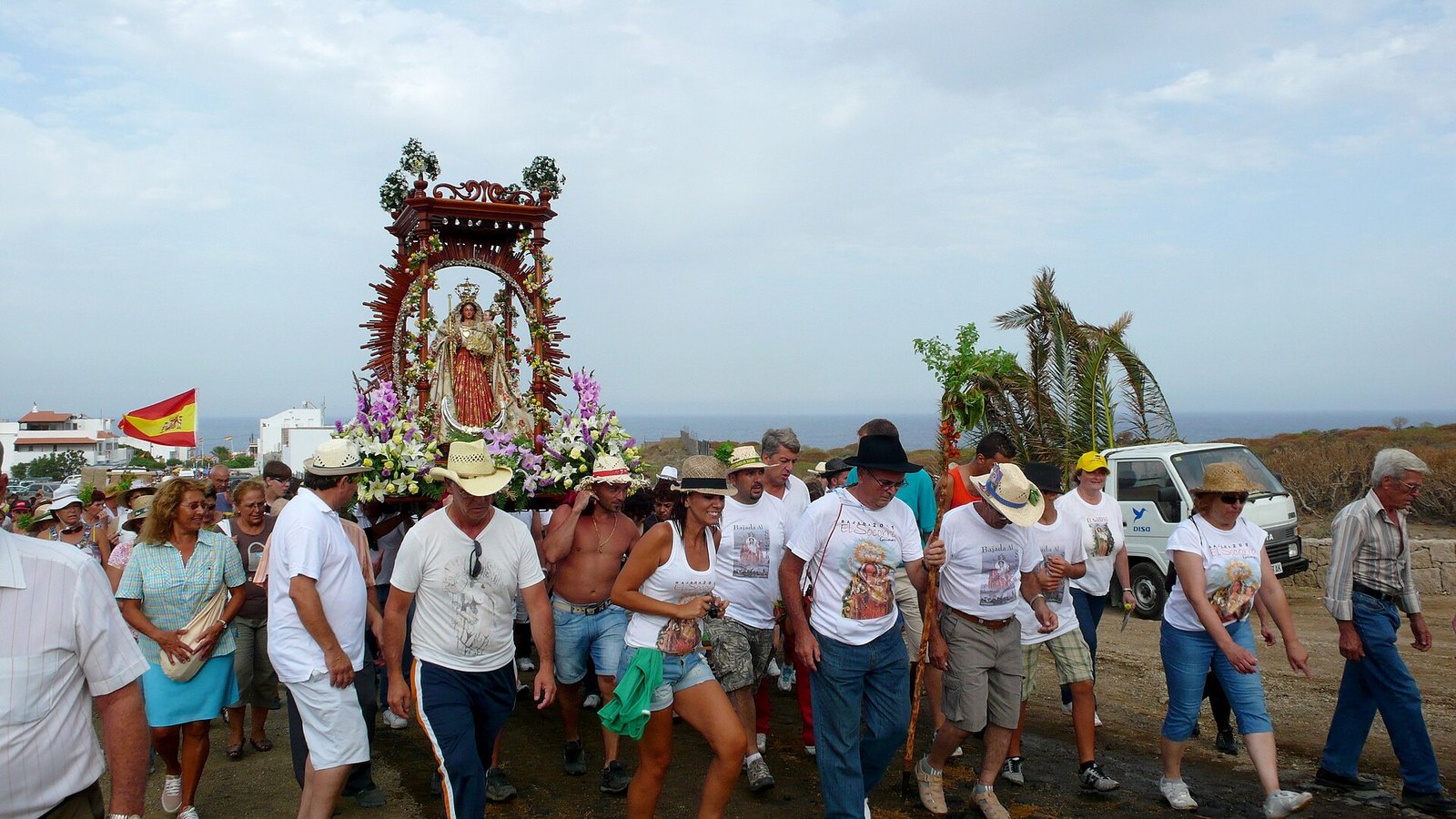
A romería is a pilgrimage that turns into a village party: people in Canarian dress walk beside decorated ox carts to the church of the local patron saint, dancing and singing, and hand out wine, cheese and Canarian treats from the carts to everyone lining the street. You don't need to know a soul — joining in is exactly the point.
Between July and September these festivals come thick and fast. Spend a summer on the islands and you will almost certainly stumble into one. Here is your map.
July: the first highlights
July belongs to the Virgen del Carmen, patron of fishermen: in Puerto de la Cruz (Tenerife) and Arguineguín (Gran Canaria) her figure is carried out to sea in a boat procession — a wonderfully atmospheric evening. Add the Romería de San Isidro in Teror and the Santiago pilgrimage in Gáldar (both Gran Canaria) around Saint James's Day on 25 July.
August: rama, rama, rama
The summer's most spectacular event is the Bajada de la Rama in Agaete (Gran Canaria) on 4 August: thousands march to the sea with green branches and beat them into the water — an ancient rain-calling rite, today a vast, joyful crowd. Las Palmas celebrates San Lorenzo on 1 August, and in northern Tenerife San Roque (16 August) fills the narrow lanes of Garachico.
Late August & September: the great pilgrimages
The season builds to a finale: the Corazones de Tejina (La Laguna, last weekend of August), with their elaborately decorated "hearts", are part of the intangible cultural heritage. And on 7–8 September tens of thousands make the pilgrimage to the Virgen del Pino in Teror — Gran Canaria's biggest — while on Tenerife the Bajada de la Virgen del Socorro heads to Güímar.
How to join in, the easy way
A romería needs no ticket, just good spirits. Come a little early, wear comfy shoes, bring water and respect the religious side of the procession. If you fancy it, borrow a Canarian costume — everyone is welcome.
Frequently asked
- What is a romería?
- A pilgrimage to the local patron saint that becomes a village fiesta — with costumes, ox carts and food shared with everyone.
- Is there an entry fee?
- No. Romerías and fiestas are public and free.
- Which is the biggest?
- The pilgrimage to the Virgen del Pino in Teror (7–8 September) is Gran Canaria's largest.
- When is the Bajada de la Rama?
- In Agaete on 4 August, the heart of the Fiestas de Las Nieves.
- Do I have to wear a costume?
- No, but it's fun. Many locals do, and guests are warmly welcome to.
Read on
- Canary Islands on 13 Oct: fiestas, opera and storytellingCanary Islands · 13 October
- Grandchildren’s Law: vote suspended for 163,020, report saysCanary Islands · 13 October
- La Guancha Celebrates Its Summer Fruit Festival on SaturdayTenerife · 5 September
- La Carpa 2026: The Canary Islands' longest summer festival returns to the beachFuerteventura · 18 July
- Canaries 12 Oct: Pilar fiestas, Fetish Pride, DJ brunchCanary Islands · 12 October
- All events on the Canary Islands →
Details as of July 2026, per organisers and town halls. Dates, times and routes may change.